
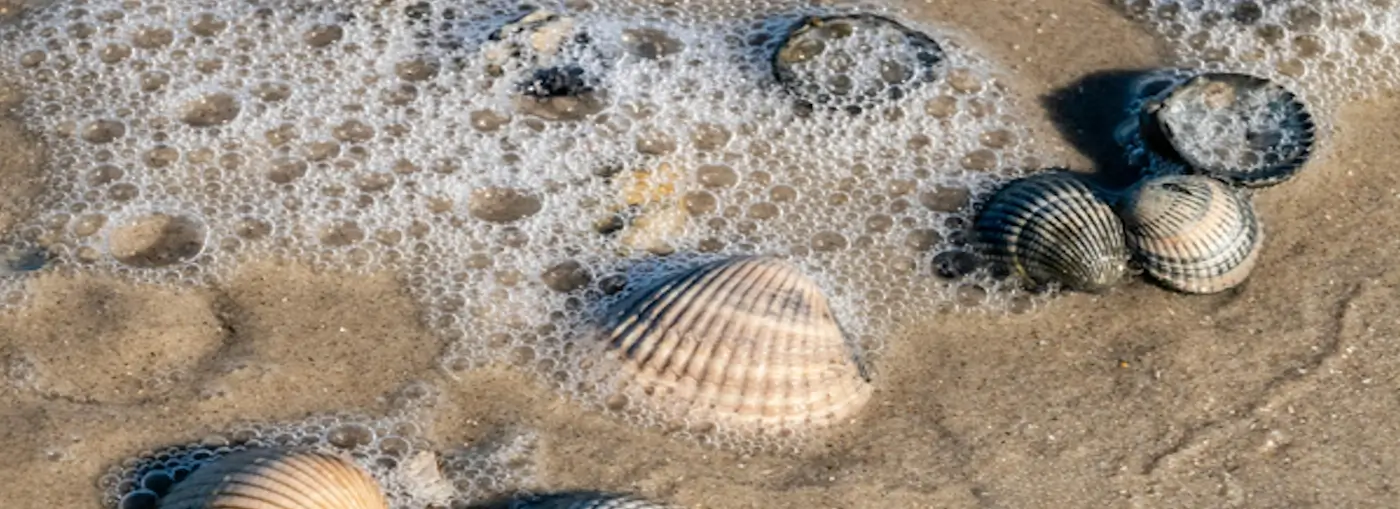
There’s a very specific kind of excitement that happens when you spot the edge of a perfect shell in the surf while Shell Collecting.
At first, you think it’s broken. Then the wave pulls back and suddenly you’re holding a flawless Lettered Olive or an intact Scotch Bonnet still glistening with saltwater. Every beachcomber knows the feeling, that tiny rush of treasure hunting that somehow turns a simple walk down the shoreline into a full-blown obsession.
And the Carolinas are surprisingly excellent for shell collecting.
Thanks to the unique geography of the Outer Banks, barrier islands, tidal inlets, and South Carolina’s sprawling lowcountry marshes, the coastline here constantly shifts and deposits new shells onto the sand. Storm systems, changing tides, and offshore currents create ideal conditions for beachcombers willing to put in a little patience.
But successful shelling in the Carolinas isn’t completely random.
Timing matters enormously. Low tide is your best friend. The morning after a storm can feel like winning the lottery. And having the right gear can make the difference between carefully carrying home pristine finds or crushing them accidentally in the bottom of a soggy beach tote.
If you’re ready to start beachcombing like a pro, these are the Carolina shelling spots worth planning an entire coastal road trip around.
The Essential Carolina Shelling Strategy & Gear Guide
Experienced shellers know something most casual beachgoers don’t:
The gear matters almost as much as the beach itself.
A dedicated shell collecting bag is one of the smartest investments you can make before heading onto the sand. Fragile finds like sand dollars, Scotch Bonnets, and delicate olive shells, crack surprisingly easily when tossed into regular backpacks alongside sunscreen bottles and water containers.
Heavy-duty canvas shelling bags help protect fragile shells while keeping them separated from heavier gear. Some beachcombers even wrap especially rare finds in soft cloth towels before carrying them back to the car.
And then there’s the real beachcomber essential: the mesh tote bag.
A proper mesh tote allows sand and water to sift naturally through the fabric instead of collecting in the bottom of your bag. This sounds minor until you realize how quickly wet shells, trapped sand, and standing saltwater create an unpleasant mess especially during long beach days.
Mesh bags also help keep your car cleaner after shelling trips, which becomes incredibly important after a week of coastal exploring.
If you’re planning serious shell hunting along the Carolinas coastline, a mesh tote honestly becomes non-negotiable.
Sun protection is equally important because shelling often means hours spent slowly scanning open beaches with almost zero shade.
And Carolinas sun can be deceptively intense.
Wide-brimmed UV-protection hats help shield your face, neck, and shoulders while reducing glare bouncing off the water. Polarized sunglasses also help tremendously when scanning shallow surf zones where shells collect along sandbars.
Most experienced shellers work slowly, methodically, and for long stretches of time especially after storms or during extreme low tides.
Comfort matters far more than people expect.
The best shelling happens right around low tide, when the widest stretch of sand is exposed and freshly uncovered finds are easiest to spot. Timing your walk matters; use our daily tide and weather tracker to see exactly when low tide hits at your beach before you head out.
Top 5 Shelling Spots in the Carolinas
1. Ocracoke Island, North Carolina (Outer Banks)
Ocracoke feels wonderfully remote in a way that’s increasingly rare on the East Coast.
Accessible only by ferry, this Outer Banks island has long been famous among serious shell collectors thanks to its open Atlantic exposure and constantly shifting shoreline conditions. The beaches here regularly produce Scotch Bonnets, which are North Carolina’s official state shell, along with olive shells, moon snails, and whelks after strong surf activity.
South Point is especially productive because currents naturally funnel shells into the area after storms.
The best strategy here is patience. Walk slowly after a nor’easter or strong offshore winds and keep your eyes trained near the wrack line where waves deposit heavier shell clusters.
And honestly, even if you leave with empty pockets, Ocracoke still feels magical for shell collecting.
2. Portsmouth Island, North Carolina (Cape Lookout National Seashore)
Portsmouth Island feels less like a beach destination and more like stepping into another century.
This completely uninhabited barrier island sits within Cape Lookout National Seashore and offers some of the wildest shelling conditions anywhere on the East Coast. Because development is nonexistent, the shoreline remains beautifully untouched.
The beaches here are especially known for massive Lightning Whelks, Knobbed Whelks, Scotch Bonnets, and enormous shell piles after storm systems roll through.
Getting here takes planning.
Most visitors arrive via dedicated passenger ferry from Harkers Island, and once you’re on Portsmouth, you’re entirely responsible for your own supplies. Bring water, snacks, sunscreen, bug spray, and protective gear because there are absolutely no services available.
But that isolation is exactly what makes the shell collecting so rewarding.
3. Holden Beach, North Carolina (Brunswick Islands)
Not every excellent shelling destination has to involve hardcore ferry logistics.
Holden Beach offers one of the most family-friendly shelling environments in North Carolina while still producing genuinely impressive finds. The tidal ecosystem here stays extremely active thanks to nearby inlets and shifting currents.
The eastern end near Lockwood Folly Inlet is particularly productive for fossilized shark teeth, coquina clams, moon snails, and occasional olive shells.
What makes Holden Beach especially appealing is how accessible everything feels.
Families can comfortably shell for an hour, take a swim break, grab lunch nearby, and head back out again for sunset beachcombing. It’s a much easier introduction to shell collecting for beginners compared to more remote Outer Banks destinations.
And sometimes that accessibility makes all the difference for younger beach explorers.
4. Bulls Island, South Carolina (Cape Romain National Wildlife Refuge)
Bulls Island feels hauntingly beautiful.
Part of the protected Cape Romain National Wildlife Refuge, the island is best known for “Boneyard Beach,” where massive sun-bleached trees stand scattered along the shoreline like driftwood sculptures frozen in time.
And the shelling here can be extraordinary.
The unusual currents surrounding Bulls Island regularly deposit intact sand dollars, Lettered Olives, which are South Carolina’s official state shell, scallops, and delicate clam varieties along both the beachfront and interior marsh zones.
Many visitors focus only on the ocean side, but experienced shellers often explore the island’s interior salt marsh trails as well, where tidal pools can reveal surprisingly intact specimens after storms.
Bring serious sun protection here because shade is extremely limited and the reflective glare off both sand and marsh water can become intense by midday.
5. Edisto Beach State Park, South Carolina
Edisto Beach somehow manages to feel both accessible and wonderfully undeveloped at the same time.
Located near the ACE Basin, one of the largest undeveloped estuaries on the Atlantic Coast, the area benefits from nutrient-rich tidal flow and constantly changing sediment patterns that create excellent shelling conditions year-round.
Unlike the bright white shells common in other regions, Edisto often produces darker fossilized shells, coral fragments, shark teeth, and beautifully weathered shell pieces smoothed by tidal action.
Early morning low tide is absolutely the move here.
By sunrise, the beach often feels peaceful and almost empty, giving shellers first access to overnight deposits before crowds begin arriving later in the day.
Walk slowly near changing tide lines and keep an eye on shell clusters gathering near exposed sandbars.
That’s often where the best finds hide.
Conclusion & Best Practices
The best shell collectors know that responsible beachcombing matters just as much as finding beautiful treasures.
Low tide is prime shelling time, but it’s also when rip currents run strongest. Before you head out with a sand bucket, it’s worth knowing which stretches of the Carolina coast carry the highest rip current risk, the answer surprised us too. Full data here.
Always check shells carefully before taking them home, especially larger whelks or conchs that may still house hermit crabs or living organisms. Leaving live creatures behind protects the fragile coastal ecosystems that make the Carolinas such incredible shelling destinations in the first place.
Then grab your mesh tote bag, pack your UV hat, check the local tide charts, and head for the coast.
Because somewhere out there, your perfect Carolina shell is probably waiting in the next wave.
For more Carolina vacation area guides and Carolina coastal travel inspiration, keep exploring explorecarolinabeaches.com
FAQ
What are the best shelling beaches in the Carolinas?
Some of the top shelling destinations include Cape Lookout National Seashore, Shackleford Banks, Hunting Island State Park, Bald Head Island, and North Topsail Beach.
When is the best time to go shelling?
Early morning, low tide, and the hours following a storm often produce the best shelling conditions. Fewer people on the beach also means a better chance of finding unique treasures.
What equipment should I bring for shelling?
A mesh shell bag, water shoes, sunscreen, a small bucket, and a shell identification guide are useful. Serious shell collectors often carry a small scoop and a backpack for longer beach walks.
Can I take shells home from Carolina beaches?
Usually yes, but regulations vary. Avoid collecting live shells or protected marine life, and always follow local park, state, and federal guidelines.
Which shells are most commonly found in the Carolinas?
Popular finds include whelks, olive shells, scallops, moon snails, coquinas, augers, and sand dollars. Rare finds become more common after strong tides and coastal storms.
Are barrier islands better for shelling?
Often, yes. More remote destinations such as Cape Lookout and Shackleford Banks typically see less foot traffic, increasing the chances of discovering intact and unusual shells.
What’s the biggest mistake new shell collectors make?
Arriving at high tide and searching only near beach access points. Experienced shellers often walk farther from crowds, follow the tide cycle, and focus on shell lines deposited by recent waves and currents.
Planning a Carolina beach trip? Use our Beach Finder Quiz to get a personalized recommendation, or compare any two beaches side by side with the Carolina Beach Comparison Tool.
📱 Download our free Carolina Beaches app — Get it here