
Let’s get one thing straight: Myrtle Beach has a reputation. And honestly? Some of it is earned. But before you cancel your beach trip and spend your vacation staring at your ceiling, hear me out. Millions of people visit this stretch of South Carolina coastline every single year, and most of them make it home with nothing worse than a sunburn and an empty wallet. So, is Myrtle Beach actually safe? The answer is nuanced, and I’m going to break it all down for you.
The Crime Stats (Yes, We Have to Talk About Them)
Look, I’m not going to sugarcoat the numbers. Myrtle Beach has one of the higher crime rates in the United States. According to FBI data, the city reports roughly 68 crimes per 1,000 residents which is well above the national average. At one point, it ranked among the top three most dangerous cities in America. That sounds alarming, doesn’t it?
Here’s the critical context though: Myrtle Beach’s permanent population sits at just under 35,000 people.
However, the city welcomes over 20 million visitors a year. When you factor in that massive tourist volume, the numbers look dramatically different. More people means more opportunity for petty theft, scams, and pickpocketing, not necessarily a culture of violence targeting vacationers like you.
Furthermore, the Myrtle Beach Police Department actively responds to this challenge. Officers are added each year, and during peak events, hundreds of additional law enforcement personnel flood the area. The city clearly takes safety seriously.
Where to Stay (and Where to Think Twice)
On the Grand Strand, North Myrtle Beach earns a much better safety grade, a C versus Myrtle Beach’s D-minus. The crime rate there runs about half that of the main city. Areas like Cherry Grove, Crescent Beach, and Windy Hill are consistently praised for quieter streets and a more residential feel. Families especially love it up there.
Back in Myrtle Beach proper, the northern end of the city tends to be safer than the southern end. Residents and longtime visitors point to neighborhoods around 52nd Street North and up as solid options. Surfside Beach, just south of the main strip, also gets frequent shoutouts as a calmer, family-friendly alternative.
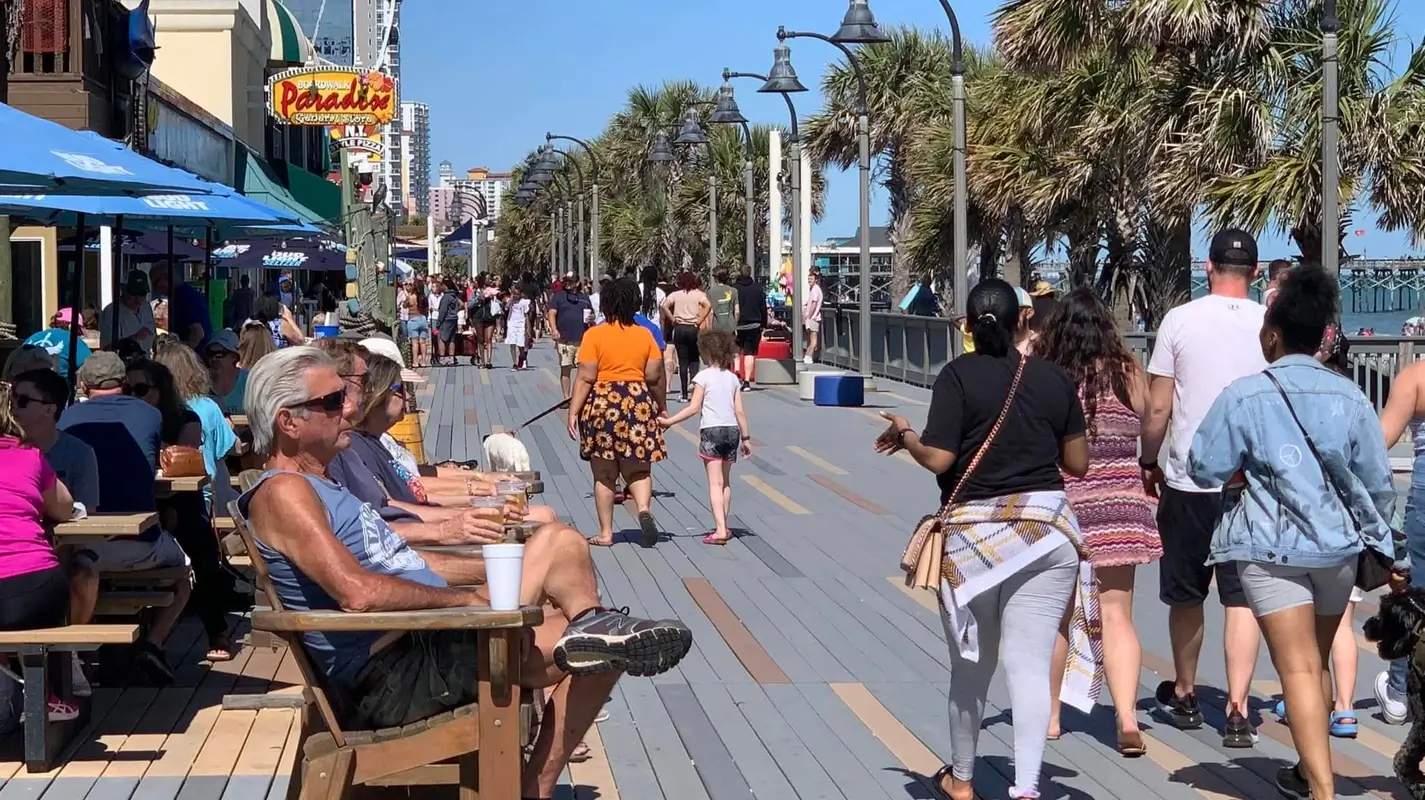
On the flip side, the stretch roughly between 10th Street North and 20th Street South, the area surrounding the Boardwalk, sees more foot traffic, more nightlife, and consequently more petty crime. That doesn’t mean you can’t visit or even stay there. It just means you should stay alert, keep valuables secure, and stick to well-lit, busy areas after dark.
Additionally, upscale communities like Grande Dunes and Carolina Forest (about 10–15 minutes inland) rank among the safest in the whole region. If peace of mind is your top priority, those areas deliver.
Is It Safe to Walk Around at Night?
This question comes up constantly, and the honest answer is: it depends on where you are and how smart you’re being about it.
Stick to the tourist corridors, and you’ll generally be fine. The busy beachfront areas, restaurant rows, and entertainment districts have constant foot traffic, good lighting, and regular police patrols. Solo wandering through poorly-lit side streets at 2 a.m.? That’s a different conversation, and honestly, that advice applies in any city in America.
Moreover, common sense goes a long way here. Don’t flash expensive jewelry. Keep your phone in your pocket. Don’t leave bags unattended on the beach (yes, even for “just a minute”). Petty theft and opportunistic crimes make up the bulk of tourist-related incidents in Myrtle Beach. Avoid making yourself an easy target and you’ve already solved most of the problem.
Rip Currents: The Safety Threat Nobody Talks About Enough
Here’s something that doesn’t show up in crime statistics but absolutely deserves your attention. Between 2010 and June 2024, the Grand Strand recorded 29 surf zone fatalities with rip currents played a leading role. June and July see the highest number of incidents.
So while you’re busy worrying about crime stats, don’t forget to check the beach flags before you swim. Beach safety is just as important. Green means calm, yellow means use caution, and red means stay out of the water. Lifeguards are posted at many beaches during peak season so pay attention to them.
Practical Tips for a Safe Trip
You don’t need to arrive in Myrtle Beach wearing a full suit of armor. Instead, just follow a few simple rules:
Affiliate Disclosure: This page contains affiliate links. If you book through them, we may earn a small commission at no extra cost to you.
Book well-reviewed accommodations. A higher-rated hotel in a solid location removes a lot of variables immediately. We recommend Travelocity for the best rates and best reviews!
Keep your car clean. Myrtle Beach has notably high rates of motor vehicle theft. Don’t leave anything visible on your seats.
Stay in populated areas at night. Foot traffic is your friend.
Watch your drinks. This goes for any party-forward destination.
Know the beach rules. No alcohol on the beach period. No thong bathing suits either (yes, that’s actually a law, and yes, you can get ticketed).
The Bottom Line
Myrtle Beach gets a bad rap that’s partly deserved and partly overblown. Yes, the crime rate is higher than you’d expect from a sunshine-and-golf-carts beach town. But context matters enormously. Millions visit every year without incident. The city invests in policing. And frankly, staying aware of your surroundings is something you should do everywhere not just here.
Choose your accommodations wisely, stick to the lit-up tourist areas after dark, and lock your car. Do that, and Dirty Myrtle is going to treat you just fine.
FAQ: Is Myrtle Beach Safe?
Is Myrtle Beach safe for tourists?
Yes, for the most part. Millions visit each year without serious incident. Like any tourist-heavy city, petty theft and pickpocketing are the biggest risks. Staying in well-reviewed hotels and keeping valuables secure dramatically reduces your risk.
What are the safest areas to stay in Myrtle Beach?
North Myrtle Beach, Surfside Beach, and neighborhoods like Grande Dunes consistently rank as the safest options. Within Myrtle Beach proper, the northern end of the city is generally considered safer than the southern end.
Is it safe to walk on Myrtle Beach at night?
Yes, as long as you stick to busy, well-lit tourist areas. Avoid isolated streets and poorly lit spots after dark, especially away from the main beachfront and entertainment zones.
What is the biggest safety risk at Myrtle Beach?
Beyond petty theft, rip currents pose a serious and underappreciated danger. Always check the beach flag system before swimming, and pay attention to lifeguard instructions.
Why does Myrtle Beach have a high crime rate?
Much of the elevated crime rate reflects the huge tourist population relative to the small permanent residential base of under 35,000 people. More visitors means more opportunity for opportunistic crimes like theft, which inflates the per-resident statistics.
For more Myrtle Beach and other area guides along with Carolina coast travel inspiration, keep exploring explorecarolinabeaches.com
Planning a Carolina beach trip? Use our Beach Finder Quiz to get a personalized recommendation, or compare any two beaches side by side with the Carolina Beach Comparison Tool.