
The Lowcountry does something to people.
You drive in from the north, past Charleston, past the Francis Marion National Forest, past the point where the highway narrows, and the landscape opens. Somewhere along the way, the Spanish moss starts hanging heavier, and the tidal creeks multiply, and the salt marsh stretches wide in every direction. Then you reach the coast and everything about what a beach vacation feels like shifts completely.
South Carolina’s Lowcountry occupies the four southernmost counties of the state: Beaufort, Jasper, Hampton, and Colleton. It’s bordered by the Atlantic Ocean to the east and the Savannah River and Georgia to the west. It’s a region shaped equally by ocean, marsh, tidal creek, and maritime forest, and its beaches reflect that layered, richly textured landscape in ways that no other stretch of the Carolina coast quite matches.
Every July, downtown Beaufort trades its usual quiet charm for ten straight days of parades, concerts, and river races. The Annual Beaufort Water Festival has been a Lowcountry summer tradition for 70 years, drawing crowds to Henry C. Chambers Waterfront Park for everything from fireworks and live music to boat parades on the Beaufort River. If you’re planning a Lowcountry trip around summer, this is one local event worth building your dates around.
Two beaches anchor the Lowcountry’s coastal identity: Hilton Head Island and Hunting Island State Park. Each one delivers a completely different experience. Together, they make a compelling case for this region as the most underrated coastal destination on the entire East Coast.
What Makes the Lowcountry Different
Before we talk beaches, let’s talk landscape because the Lowcountry’s setting is inseparable from its beach experience.
Salt marsh defines this coast. Tidal creeks wind through it constantly. Dolphins feed in those creeks with regularity. Loggerhead sea turtles nest on multiple beaches here every summer. Alligators patrol the lagoons. Painted buntings, among the most brilliantly colored birds in North America, inhabit the maritime forest. The whole region operates with a biodiversity that genuinely stops people mid-walk.
The Gullah-Geechee cultural heritage runs just as deep. Descendants of West Africans developed a distinct language, cuisine, and cultural tradition on these Sea Islands. It’s a tradition that survives today in storytelling, sweetgrass basket weaving, and Lowcountry cooking built on local shrimp, oysters, red rice, and Frogmore stew. Eating well in the Lowcountry isn’t just a dining experience. It’s a cultural one.
Additionally, the Lowcountry moves at its own pace. That pace is slower than anywhere north of it on the Carolina coast. Coming from the Grand Strand or the Charleston area beaches, the deceleration is immediately noticeable. Give it an hour. Your shoulders drop, and your agenda dissolves. You start to understand why people who visit once tend to come back every year.
Hilton Head Island: The Lowcountry’s Polished Masterpiece
Hilton Head Island sits at the northern edge of the Lowcountry proper, 45 minutes from Savannah and approximately two hours from Charleston. It’s 12 miles of Atlantic beach rank among the widest and most beautiful on the South Carolina coast. The island draws approximately 2.5 million visitors annually and manages that number with a calm, organized grace that most popular destinations never achieve.
The key to Hilton Head’s success is deliberate preservation. No billboards exist anywhere on the island. Building height limits keep the skyline low. The result is an island that looks remarkably similar today to how it looked decades ago, when conservation-focused developers first established its distinctive character.
The beach itself runs wide and flat, with sand compacted enough for beach biking, one of Hilton Head’s most distinctive and enjoyable activities. Over 50 miles of public paved bike trails wind through maritime forest, along the shoreline, and through resort communities. Rent a bike within the first hour of arriving and use it constantly.
What To Notice
Beach access requires knowing one important rule: while all 12 miles of beach are public by South Carolina law, many access points route through private resort communities.
Coligny Beach on the southern end provides the only public beach access with free parking year-round. All other public access points charge $3 per hour Monday through Friday and $5 per hour on weekends during peak season from March 1 through September 7.
Accommodations on Hilton Head are organized into distinct resort communities called plantations. Sea Pines Resort anchors the southern tip and delivers the most complete experience: golf, biking, beaches, restaurants, and the iconic Harbour Town marina and lighthouse all in one gated community. Palmetto Dunes suits families and couples who want luxury resort amenities alongside oceanfront rental homes. Forest Beach near Coligny suits visitors who prefer walkable access to restaurants and a more casual beach-town atmosphere.
Summer weeks book four to six months in advance. The off-season from December through February delivers exceptional value: mild weather, full facilities, and dramatically lower rates.
On the water: Bottlenose dolphins feed in Hilton Head’s tidal creeks reliably enough that dolphin tour companies offer guaranteed sighting experiences. Plan at least one morning on the water. Furthermore, loggerhead sea turtles nest on Hilton Head beaches from May through October, finding a marked nest on a morning beach walk stops people every time.
Hunting Island State Park: The Wild Counterpoint
Drive 16 miles east of Beaufort and Hunting Island State Park arrives with zero fanfare and maximum impact.
This 5,000-acre barrier island is South Carolina’s most visited state park drawing over one million visitors annually. It earns that distinction without a single hotel, restaurant, or commercial development on the island. The experience is purely natural. Five miles of wild Atlantic beach, thousands of acres of salt marsh and maritime forest, a saltwater lagoon, and a freshly restored historic lighthouse create one of the most complete wild coastal environments on the entire East Coast.
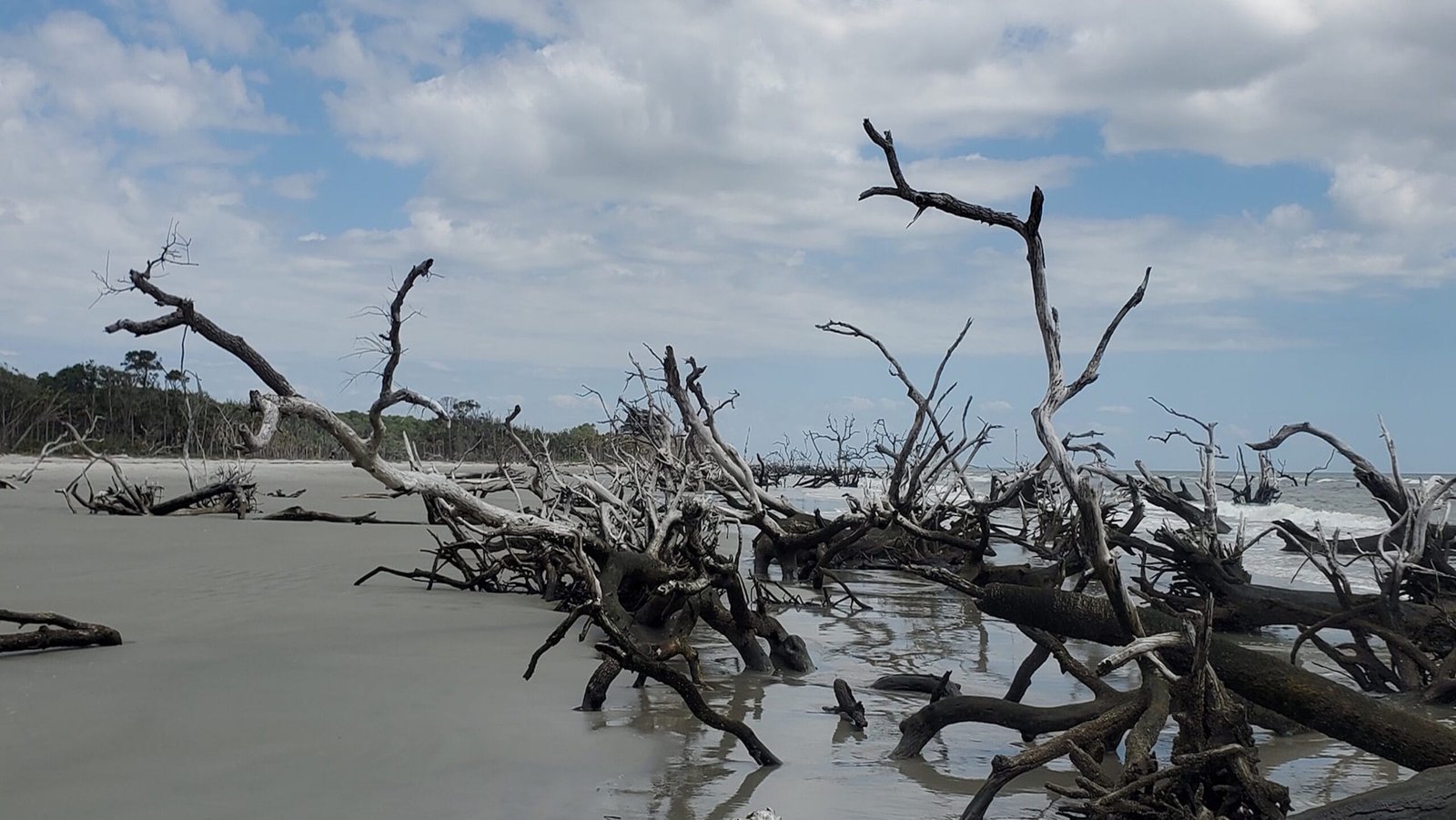
The beach at Hunting Island is actively shaped by coastal erosion, and that ongoing process creates something remarkable. Boneyard Beach on the northern end features sun-bleached, skeletal tree trunks rising directly from the sand, the hauntingly beautiful remains of a maritime forest claimed by the advancing shoreline. Visit at low tide for the widest access and the most dramatic reflections. Sunrise here on a clear morning is genuinely unforgettable.
The Lighthouse
The lighthouse reopened to the public on May 26, 2026, after years of major structural repairs. Built originally in 1859 and rebuilt in 1875 after the Civil War, it stands 132.5 feet tall and holds the distinction of being the only historic lighthouse in South Carolina open for public climbing, costing $2 beyond standard park admission. The 360-degree view from the top, spanning the Atlantic, the surrounding salt marsh, and the maritime forest, ranks among the best elevated views in the entire Lowcountry.
Eight miles of trails wind through the park’s multiple ecosystems. The 0.4-mile Marsh Boardwalk delivers the park’s most immediately rewarding birdwatching, as hundreds of species move through the salt marsh year-round. The full 8-mile Island Bike/Hike Trail loops the entire island and suits both hikers and cyclists.
Accommodations at Hunting Island run lean by design. Beachfront campsites rank among South Carolina’s most sought-after; book them months in advance through southcarolinaparks.com. A single park cabin sits near the lighthouse with full amenities, including linens, WiFi, a screened porch, and an outdoor grill. The cabin books out well in advance and requires a minimum two-night stay. No restaurants operate on the island, so bring a full cooler and plan dinner in nearby Beaufort.
Beaufort: The Lowcountry’s Most Charming Base Camp
Beaufort sits 16 miles from Hunting Island and roughly 45 minutes from Hilton Head. It serves as the perfect base for exploring both beach destinations, and it’s worth several evenings of its own.
The historic waterfront downtown along Bay Street features antebellum architecture, excellent seafood restaurants, independent shops, and a genuinely relaxed small-city atmosphere that reflects the Lowcountry‘s character precisely. Hudson’s Seafood House on the Docks near Hilton Head opened in 1967 and remains one of the region’s most beloved restaurants for fresh local seafood and sunsets over the Intracoastal Waterway.
Beaufort also provides the region’s best grocery options for Hunting Island campers and cabin guests. Stock up at the Harris Teeter or Publix before crossing the bridges because you won’t find anything open on the island itself.
For some of the best, fresh seafood you can find anywhere, check out Where to Eat in Beaufort, SC
Comparing the Two: Which Lowcountry Beach Is Right for You?
The honest answer: they suit completely different travelers.
Choose Hilton Head if you want resort infrastructure, a full restaurant scene, championship golf, 12 miles of beach with bike trail access, and a polished experience that balances nature and luxury exceptionally well.
Hunting Island if you want a genuinely wild, undeveloped coastal experience: camping or a park cabin, trails through salt marsh and maritime forest, a historic lighthouse, and five miles of beach that looks nothing like anything else on the Carolina coast. Some places it may even be legal to sleep on the beach.
Choose both and stay in nearby Georgetown for a week, as they sit close enough that a day trip between them works perfectly, and they deliver completely different things. While there, try one of the Lowcountry’s best restaurants, The Independent.
Practical Planning for the Lowcountry
Getting there: Savannah/Hilton Head International Airport sits approximately 45 minutes from Hilton Head and about an hour from Hunting Island. A car is essential throughout the region.
Best time to visit: April through June and September through October deliver the sweet spot: warm weather, manageable crowds, and full wildlife activity. Sea turtle nesting season runs from May through October on both islands. Winter remains remarkably mild and delivers the year’s best rates.
While there, you will find that while many restaurants serve seafood. Hudson’s Seafood House on the Docks serves history with a side of shrimp, and it’s been doing it since 1912. We highly recommend it.
What the Lowcountry asks of you: Slow down. Bring bug spray. Eat the shrimp and grits. Watch for dolphins in every creek you cross. And give yourself enough time to feel the pace of this coast rather than just photograph it.
If parking near your favorite beach access point feels tighter than it used to, retiree migration is part of the story. Jasper County, SC, alone added over 2,000 new residents in a single year, and similar growth is reshaping towns up and down both coastlines. Read how it’s playing out in our look at America’s fastest-growing county.
The Bottom Line
The Lowcountry doesn’t need to compete with the Outer Banks or the Grand Strand. It operates entirely on its own terms.
Wild beaches shaped by active erosion. Twelve miles of resort-fronted Atlantic shoreline. Salt marsh stretches to the horizon in every direction. Dolphins, sea turtles, alligators, painted buntings, and the Gullah-Geechee culinary tradition all share the same extraordinary landscape.
Come once. Come for long enough to actually feel it.
You won’t regret a single mile of the drive.
For detailed guides to Hilton Head Island and Hunting Island State Park, keep exploring explorecarolinabeaches.com
The Lowcountry’s identity runs deeper than marsh views and shrimp boats; it’s a region with real musical roots, and Charleston carries that legacy every Labor Day. Our full guide to the Lowcountry Jazz Festival covers the lineup, the festival’s ties to Charleston’s early jazz history, and how to build a weekend around it without missing the rest of the coast.
FAQ
Are South Carolina’s Lowcountry Beaches good for families with young children?
Yes. Many Lowcountry beaches offer calm surf, wide sandy shores, tidal creeks, and a relaxed atmosphere that appeals to families with young children.
When is the best time to visit South Carolina’s Lowcountry Beaches?
April through June and September through October provide warm temperatures, fewer crowds, and comfortable beach weather. Summer is busiest but ideal for swimming.
Are dogs allowed on South Carolina’s Lowcountry Beaches?
Most beaches allow dogs, but leash requirements and seasonal restrictions vary by community. Check local rules before visiting.
Is parking free at South Carolina’s Lowcountry Beaches?
Parking policies vary. Some public beach accesses offer free parking, while others charge fees or require permits during peak season.
How far are South Carolina’s Lowcountry Beaches from Charlotte, Raleigh, Cleveland, and Nashville?
(Using Hilton Head Island as a general Lowcountry reference point.)
Charlotte: about 275 miles (4.5–5 hours)
Raleigh: about 330 miles (5–6 hours)
Cleveland, Ohio: about 800 miles (12–13 hours)
Nashville, Tennessee: about 550 miles (8–9 hours)
What are South Carolina’s Lowcountry Beaches known for?
They are famous for natural beauty, maritime forests, sea islands, historic communities, wildlife viewing, shrimping culture, golf resorts, and classic Lowcountry cuisine.
What are the best restaurants near South Carolina’s Lowcountry Beaches?
Popular favorites include The Old Oyster Factory for waterfront seafood, Skull Creek Boathouse for sunset views, Bowens Island Restaurant for oysters and marsh views, and The Crab Shack for casual coastal dining.
📱 Download our free Carolina Beaches app — Get it here