Vibe: Family-friendly, nature-forward, quietly magical with equal parts beach day and conservation adventure
Let’s get one thing straight: a summer beach trip with sea turtles involved is a completely different animal than a summer beach trip without them.
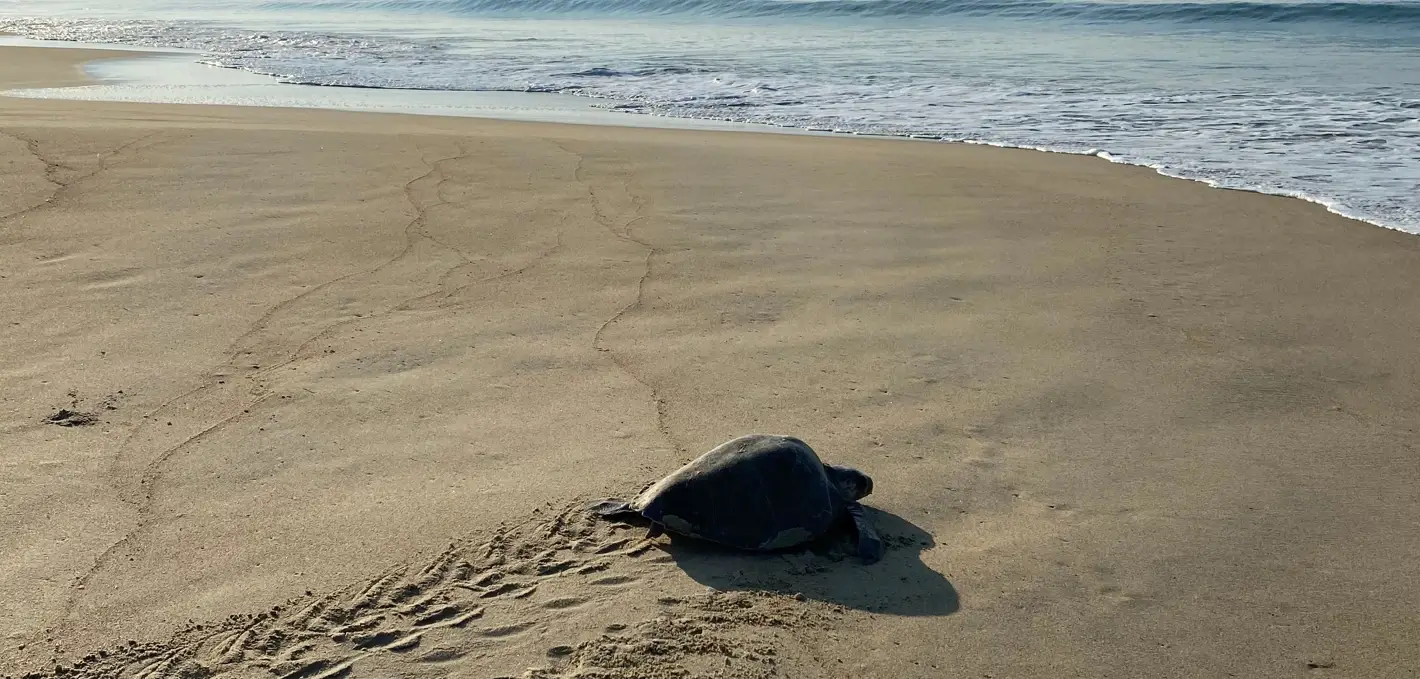
Both involve sand. Both involve the ocean doing its ocean thing. But one of them includes ancient reptiles hauling themselves ashore under a full moon to continue a ritual they’ve performed for 100 million years and you get to be there for it. So. Easy choice.
The Carolina coasts, both North and South, ranks among the most active sea turtle nesting grounds on the entire East Coast. And with the right timing, the right beach, and a little advance planning, you can witness something that will make every other vacation feel ordinary by comparison: Sea Turtles on the Carolina Coast.
What’s Actually Happening Out There
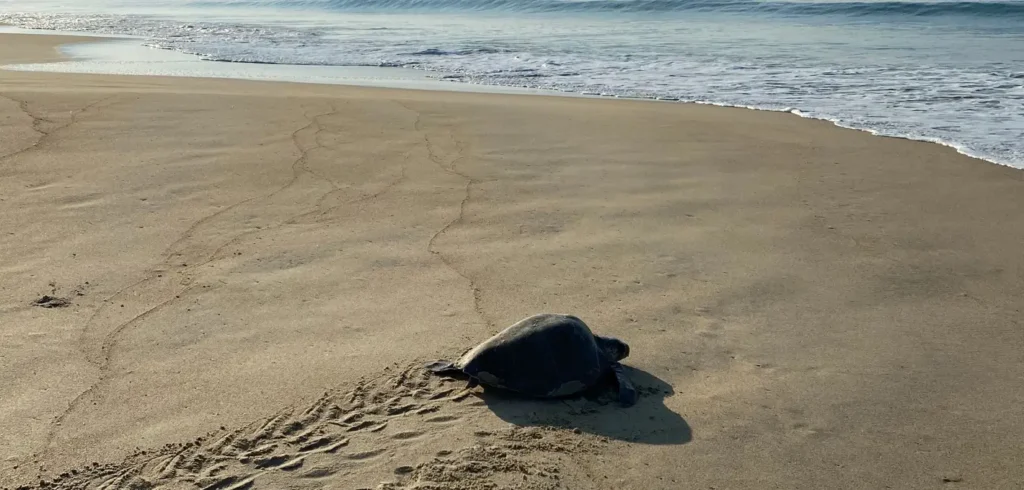
First, the science because it’s genuinely cool. Sea turtles as old as 30 years travel thousands of miles to lay their eggs on the same beach they originally hatched from. She crawls ashore at night, digs a chamber up to two feet deep, deposits around 120 eggs, covers the nest, and returns to the sea. The eggs incubate for approximately 45 to 70 days before hatchlings emerge.
Then those hatchlings do something extraordinary. They follow the moonlight and starlight reflecting off the water and race toward the ocean; a journey that imprints the beach into their memory. Decades later, they return to the exact same stretch of sand to nest themselves.
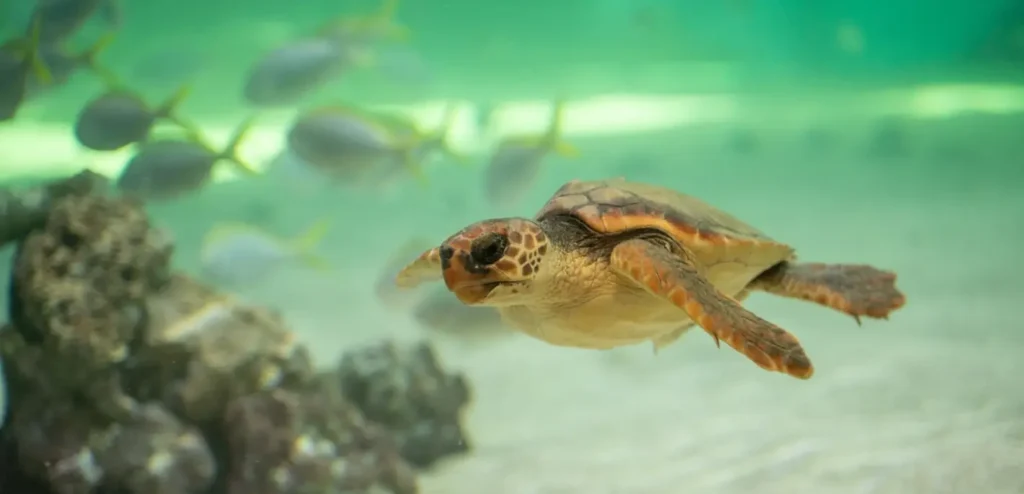
The primary species along the Carolinas is the loggerhead. The four sea turtle species that nest in South Carolina are loggerheads, greens, Kemp’s ridleys, and leatherbacks, all considered endangered or threatened. North Carolina sees the same cast of characters, with loggerheads leading the count by a wide margin.
North Carolina: Three Spots That Deliver
Topsail Island: The One With an Actual Hospital
Topsail Island doesn’t just watch over its turtles. It heals them.
The Karen Beasley Sea Turtle Rescue and Rehabilitation Center, the only sea turtle hospital in North Carolina, makes Topsail Island an instant hit among sea turtle enthusiasts of all ages. Founded from a volunteer project started by Karen Beasley, the center grew into a full 13,000-square-foot facility in Surf City. The Topsail Turtle Project surveys 26 miles of beach on Topsail Island between May 1 and August 31, searching for sea turtle tracks. Once volunteers find tracks, they mark the nest location, install protective barriers and signage, and record data about the nest.
Visitors can tour the hospital (reservations required), attend free Turtle Talks, and, on lucky days, watch turtle releases that draw hundreds of onlookers. Turtle Talks run at 9 am on Mondays and Tuesdays, beginning June 1 through August 31.
Want to volunteer? The Karen Beasley Center accepts volunteers for beach walking, nest sitting, and hospital care. Most active volunteer positions run May 1 through August 31, with nest sitting continuing through October. Note: the center requires a minimum four-month commitment, so this suits locals or long-term visitors rather than weekend travelers.
Oak Island and Caswell Beach: Quiet and Covered
Just south of Wilmington, Oak Island and Caswell Beach run their own dedicated monitoring operation. From May through September, sea turtles return to Caswell Beach and Oak Island beaches to nest. Local conservation groups carefully monitor the beaches, and the groups hold authorization from the North Carolina Wildlife Resources Commission to monitor nesting activity, mark and protect nests, assist hatchlings, and respond to stranded or injured turtles.
The beaches here stay calmer than Topsail. Families with young kids particularly love Oak Island for the wide, uncrowded shoreline and the very real chance of spotting a marked nest during a morning walk. The NC Wildlife Resources Commission maintains a 24-hour hotline at 252-241-7367 for strandings.
Wrightsville Beach: Where the Science Meets the Surf Town
Wrightsville Beach handles its turtle monitoring with the same polish it applies to everything else. During May, June, July and August, loggerhead sea turtles crawl out of the Atlantic to lay their nests on the shores of Wrightsville Beach. In North Carolina, all sea turtle nests remain “in situ”, left in place and not relocated to a nursery.
The Wrightsville Beach Sea Turtle Project (WBSTP) monitors the beach daily during nesting season. Spotting a nest here means stumbling upon an orange-staked perimeter in the dunes on your morning coffee walk, a genuine thrill that costs exactly nothing.
South Carolina: Where the Numbers Get Serious
Edisto Beach: A State Park, a Patrol, and a Night Walk
Edisto Beach operates at a different frequency than the rest of the South Carolina coast. Quieter. Older. Deeply serious about its turtles. At Edisto Beach State Park, visitors can take a ranger-guided nighttime beach walk for a chance to witness a loggerhead nesting or hatchlings making their trek to the sea.
The Edisto Beach Turtle Patrol walks sections of the beach with teams on one or more days per week, identifying turtle tracks and locating nests during nesting season and assisting hatchlings later in the season. The patrol runs entirely on volunteers and donations. New volunteer slots fill fast so check their website each spring before the season opens.
Folly Beach: Where Conservation Meets Cool
Folly Beach doesn’t look like a conservation hub. It looks like a surf town with good tacos and a certain attitude. But underneath all that, over 1,500 volunteers and biologists regularly patrol South Carolina’s beaches through October to count, monitor, and protect sea turtle nests: and Folly Beach leads that charge with the active Folly Beach Turtle Watch Program (FBTW), a permitted 501(c)(3) organization.
In 2025, the season started early after Folly Beach Turtle Watch volunteers found a loggerhead nest in late April — a couple days before the official May 1 season start. That early activity signals a coast paying close attention.
Huntington Beach and Hunting Island State Parks: Nature’s Best Seats
Huntington Beach and Hunting Island state parks both offer educational programs on sea turtles during the summer season. Huntington Beach State Park, just south of Myrtle Beach, consistently earns recognition as one of the best-preserved stretches of South Carolina coastline. The turtle monitoring program here gives visitors structured access to nest sites and education about what they’re seeing.
Hunting Island, near Beaufort, adds dramatic maritime forest scenery to the mix. The lighthouse, the boardwalk, and the turtle programs combine into one of the most genuinely memorable nature experiences on the entire Carolina coast.
Comparison: NC vs. SC for Sea Turtle Experiences
| Info | North Carolina | South Carolina |
|---|---|---|
| Nesting Season | May 1 – August 31 | May 1 – October 31 |
| Hatching Season | September – November | September – November |
| Primary Species | Loggerhead | Loggerhead |
| Top Volunteer Hub | Karen Beasley Center, Topsail Island | Edisto Beach Turtle Patrol / Folly Beach Turtle Watch |
| Hospital Access | Karen Beasley (NC’s only sea turtle hospital) | SC Aquarium Sea Turtle Care Center, Charleston |
| Best for Families | Topsail Island (Turtle Talks, hospital tours) | Edisto & Hunting Island State Parks (ranger programs) |
| Best for Volunteers | Topsail (long-term), Oak Island, Wrightsville | Edisto Beach, Folly Beach, Huntington Beach SP |
| Nest Count (approx.) | 1,000–1,725+ nests/year | 4,000–8,000+ nests/year |
South Carolina consistently records higher nest counts due to its longer coastline and warmer average temperatures. However, North Carolina offers the most immersive hands-on access, especially through the Karen Beasley Center.
How to Be a Good Human About All of This
The turtles don’t need your help getting to the water, they need you to stay out of the way. A few rules every visitor should know cold:
Turn off beachfront lights after dark. Hatchlings follow the brightest light source. Artificial lights disorient them fatally. Keep the beach dark and let the moon do its job.
Never approach or touch a nesting turtle. Approaching may cause her to abandon the nest entirely. Give her at least 50 feet of space and stay behind her.
Leave nests marked with stakes alone. Those orange flags aren’t decoration. Walk around them.
If you find a stranded turtle in North Carolina, call the NC Wildlife Resources Commission hotline at 252-241-7367. In South Carolina, call the SCDNR stranding hotline at 1-800-922-5431.
Plan Your Trip Around the Season
The sweet spot for witnessing nesting runs from mid-May through July. Early mornings give you the best shot at finding fresh tracks or a returning mama. August and September bring hatching action when the nests start opening and the hatchlings begin their run to the water, often at night or in the early morning.
Book a beachfront or near-beach rental within walking distance of active nesting beaches. Oceanfront properties at Topsail, Oak Island, Edisto, and Folly Beach all put you in prime position. Check with your rental manager about local turtle watches and whether your beach participates in a monitoring program.
September and October quietly offer some of the best hatching viewing. Crowds thin. Prices drop. The ocean stays warm. And somewhere in the sand, a nest that’s been incubating for 60 days finally decides to open.
That moment, dozens of tiny loggerheads scrambling toward the surf under a September moon, doesn’t make the brochure nearly often enough. It should be the whole reason you go.
For more Carolina vacation area guides and Carolina coastal travel inspiration, keep exploring explorecarolinabeaches.com
Frequently Asked Questions: Sea Turtles on the Carolina Coast
Do sea turtles hatch in October? Yes, and October is one of the coast’s best-kept secrets. Along NC, hatching runs July through October, with the Outer Banks seeing action well into fall. South Carolina’s season extends through October 31. Nests laid late in summer finish incubating right as crowds thin out, giving you quieter beaches and a real shot at watching hatchlings race to the surf.
What beach has the most sea turtles? Cape Island, South Carolina, a remote barrier island near Georgetown, averages 1,000 loggerhead nests per season, making it the highest-volume nesting beach on the coast. Among accessible beaches, Kiawah Island averages 300 nests per season. On the NC side, North Topsail Beach historically leads Topsail Island for nests and hatchlings.
Why can’t we touch baby sea turtles? Because that crawl to the water actually matters. Hatchlings imprint on the beach as they make their journey, that trek encodes the beach location into their memory so they return decades later to nest. Picking them up disrupts that process entirely. Human handling also stresses them, and every second out of the water burns precious energy they need to survive.
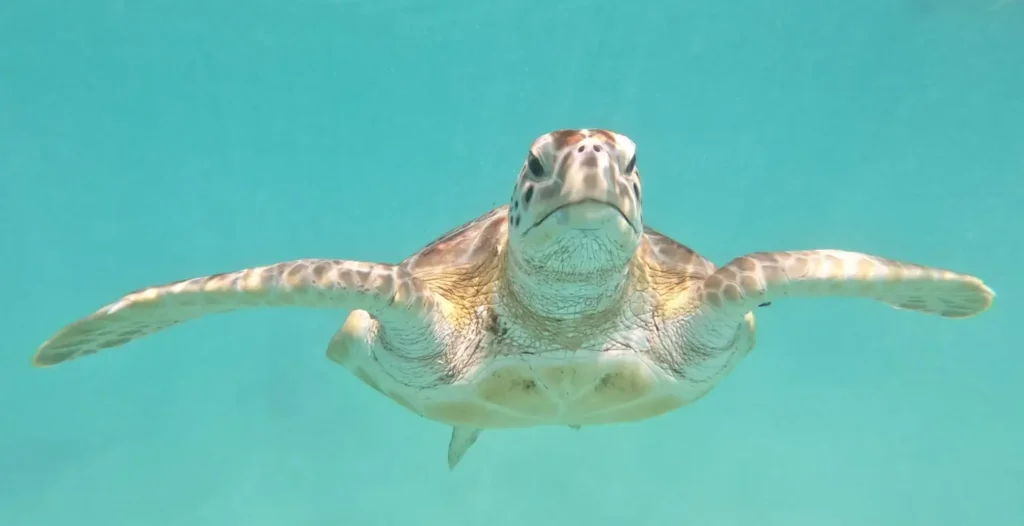
What if a sea turtle swims up to you? Stay calm, stay still, and enjoy it. Don’t chase, grab, or block its path. These encounters happen occasionally in Carolina waters, a curious animal doing its thing, not an invitation to interact.
Is petting a sea turtle illegal? Yes. All sea turtle species on the Carolina coast receive federal protection under the Endangered Species Act. Touching, harassing, or disturbing a sea turtle, in the water or on the beach, carries federal penalties. Watch from a distance and let them be wild.
Planning a Carolina beach trip? Use our Beach Finder Quiz to get a personalized recommendation, or compare any two beaches side by side with the Carolina Beach Comparison Tool.