
Nobody warns you about Hunting Island.
You drive out of Beaufort, cross a series of bridges over salt marsh and tidal creeks, and then you arrive on a 5,000-acre barrier island that operates completely outside the normal rules of South Carolina beach tourism. No resort complex waits at the entrance. No gift shop strip lines the main road. What meets you instead is five miles of wild, undeveloped Atlantic beach, thousands of acres of maritime forest and salt marsh, a saltwater lagoon, and a historic lighthouse that SC State Parks just announced is reopening to the public after years of restoration.
South Carolina’s most popular state park, drawing over one million visitors per year, earns that distinction without any of the commercial infrastructure most tourist destinations rely on. Hunting Island earns it purely on the strength of what it is.
The Beach: Five Miles of Wild South Carolina Shoreline
Hunting Island’s beach runs five miles along the Atlantic. No hotels crowd the dune line. No condos interrupt the view. The shoreline stays wild in a way that feels almost radical for a park attracting a million visitors annually.
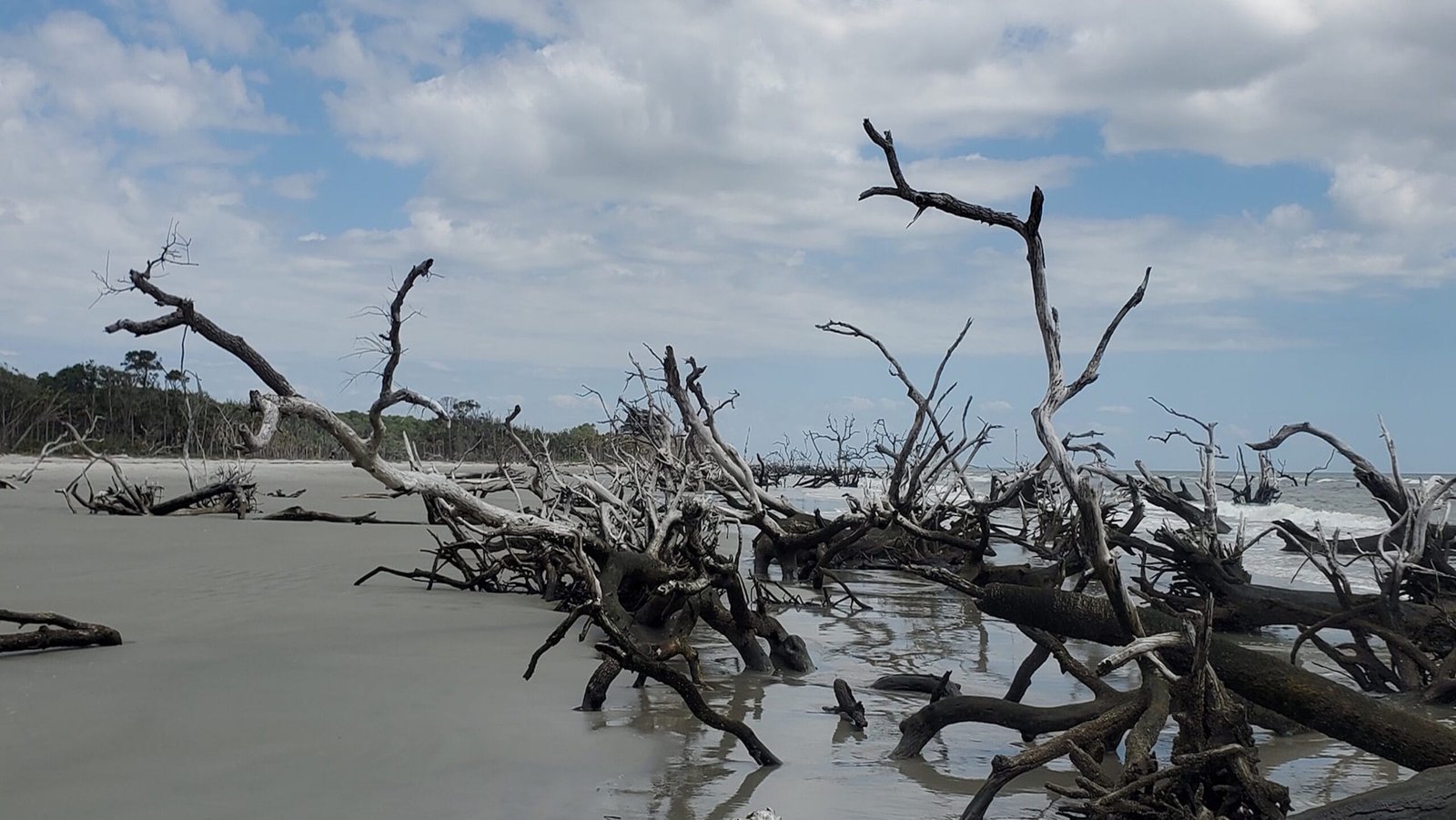
Coastal erosion actively shapes the beach here, and that process creates one of the most photographed landscapes on the entire Carolina coast. Boneyard Beach on the northern end features sun-bleached, skeletal tree trunks rising directly from the sand. Decades of erosion have reclaimed the maritime forest along this stretch, leaving the ghostly remains of fallen trees half-buried in the shoreline. Visit at low tide for the widest access and the most dramatic reflections. Sunrise delivers the best light and the fewest other photographers.
The beach varies considerably from north to south. The northern end near Boneyard Beach stays wilder and less visited. The central area near the campground and parking areas attracts the most day visitors. The southern end near the lagoon inlet runs calmer and suits families with young children especially well.
What to know before you go:
No restaurants or grocery stores exist on the island. Bring everything you need including food, drinks, sunscreen, and bug spray.
The lighthouse gift shop carries limited snacks, drinks, sunscreen, and insect repellent for forgotten essentials.
Dogs are not permitted on the tip of North Beach past the posted markers, this protects critical shorebird nesting habitat.
A track chair for visitors with mobility impairments is now available. Call the park at least 48 hours in advance to reserve it at no extra charge beyond standard park admission.
Park admission is required for all visitors, check current rates at southcarolinaparks.com/hunting-island before you go.
The Lighthouse: South Carolina’s Only Publicly Climbable Historic Lighthouse
Here’s the news worth knowing right now. The Hunting Island Lighthouse, closed since February 2022 for major structural repairs due to cracks and corrosion in the historic cast-iron structure, officially reopens to the public on May 26, 2026.
That’s genuinely exciting. This lighthouse is the only one in South Carolina open for public climbing, and its restoration makes it accessible again after years of waiting.
The lighthouse originally went up in 1859. The Civil War destroyed it, and workers rebuilt it in 1875 using interchangeable cast-iron sections; a forward-thinking design that allowed the entire structure to be dismantled and moved when beach erosion threatened it in 1889. Workers relocated the lighthouse 1.3 miles inland. It still stands there today at 132.5 feet tall.
Climbing the 167 iron steps costs $2 per person beyond standard park admission. The view from the top spans the Atlantic, the surrounding salt marsh, and the maritime forest below. It’s one of the best elevated views in the entire Lowcountry. Go early on weekdays to avoid the line that forms once the day-tripper crowds arrive.
The lighthouse was decommissioned in 1933 but retains a functional light in its tower. Additionally, several buildings on the grounds feature exhibits about the lighthouse’s history and ecology.
Trails and Salt Marsh: Eight Miles of Lowcountry Wilderness
Hunting Island’s trail system covers eight miles and winds through multiple distinct ecosystems: beach, maritime forest, salt marsh, and lagoon edges. No two sections feel alike.
The 8-mile Island Bike/Hike Trail loops the island and covers the full range of Hunting Island’s landscapes. Pack water and bug spray for this one. Furthermore, the trail accommodates bikes as well as hikers, making it the most complete way to experience the park.
The Marsh Boardwalk Trail runs 0.4 miles along the soundside of the island and stands as the park’s most accessible and immediately rewarding trail. The wooden walkway crosses directly over the salt marsh, delivering birdwatching opportunities that stop photographers mid-stride. Hundreds of migrating and resident species move through here year-round with herons, egrets, pelicans, kingfishers, and painted buntings among them.
The Lighthouse Loop covers 0.3 miles and suits visitors who want a short walk combined with the lighthouse visit. Additionally, a one-mile trail near the campground provides a quick nature walk for families staying overnight.
The saltwater lagoon on the sound side deserves a dedicated hour. Locals call it the “quiet side of the beach”, calm, warm, and home to hundreds of wildlife species. Raccoons, deer, alligators, loggerhead sea turtles, dolphins, and even the occasional Eastern diamondback rattlesnake share the park’s interior. Wildlife sightings happen regularly and require no special effort, just patience and attention.
Lodging: Camping, Cabins, and the Best Base Camp in the Lowcountry
Hunting Island offers two types of on-park accommodation: campgrounds and a single rental cabin, and both book well in advance. Understanding your options before you plan matters enormously here.
Camping runs the full range of options. Beachfront campsites sit directly adjacent to the sand and rank among the most sought-after state park campsites in South Carolina. Interior campsites closer to the marsh and forest offer more shade. RV sites run approximately $23-$25 per night. Tent sites run approximately $17-$19 per night. All reservations go through southcarolinaparks.com, book as early as the system allows for summer and holiday weekends.
Want to camp elsewhere? Check out this to find out where it’s legal to sleep on the beach.
The Park Cabin sits near the lighthouse and steps from the beach. It accommodates up to six guests and includes linens, basic cookware, a screened porch, satellite television, free WiFi, a microwave, dishwasher, washer/dryer, coffee maker, and central air and heat. An outdoor grill and picnic table complete the setup. Pets are not permitted in the cabin or the cabin area. The cabin requires a minimum two-night stay on most dates and books out significantly in advance. Treat it like a hot restaurant reservation and plan accordingly.
Staying nearby in Beaufort makes an excellent alternative for visitors who miss out on park accommodation. Beaufort sits 16 miles from the park and offers a full range of hotels, inns, and vacation rental homes. The historic waterfront town is genuinely charming in its own right and worth an evening walk regardless of where you sleep.
Food: There Isn’t Any on the Island, Plan Accordingly
This is the one thing most visitors get wrong about Hunting Island. No restaurants operate inside the park. No grocery stores exist on the island. The lighthouse gift shop carries limited snacks and drinks, but that’s the extent of on-island food options.
Pack a full cooler before you cross the bridges. Pack more than you think you need.
Before you arrive from Beaufort: Stock up at the Harris Teeter or Publix in Beaufort. Both sit within easy reach of the highway before you head to the island. Grab sandwich fixings, snacks, breakfast food, plenty of water, and anything else your group needs for however many days you’re staying. Cold brew and camp coffee taste better on a screened porch steps from the beach than any restaurant coffee ever has.
For evenings in Beaufort: The 16-mile drive into town makes dinner in Beaufort a genuinely appealing option for campers and cabin guests who want a real meal.
Plums Restaurant on Bay Street earns consistent local praise for its Lowcountry seafood and is a reliable dinner choice after a full park day. Additionally, Breakwater Restaurant and Bar on Port Republic Street offers waterfront dining with a menu built around local ingredients and fresh catch. Both restaurants deliver the kind of honest, unfussy Southern coastal cooking that Beaufort does exceptionally well.
Practical Planning
Getting there: Hunting Island sits 16 miles east of Beaufort on US Highway 21. From Hilton Head Island, the drive runs approximately 45 minutes. From Charleston, plan on about 90 minutes. A car is essential as no public transportation serves the island.
Best time to visit: April through June and September through October hit the sweet spot with manageable crowds, warm weather, and full wildlife activity. Summer delivers warm water and the most active sea turtle nesting season, but also the most visitors. The beachfront campsites go fastest during summer so book months ahead.
What to pack: Reef-safe sunscreen, bug spray (non-negotiable), plenty of water, a full cooler, comfortable hiking shoes, binoculars for birdwatching, a camera for Boneyard Beach, and $2 in cash or card for the lighthouse climb.
Hunting Island’s eerie Boneyard Beach is stunning in daylight, but it’s just as striking after dark. Ranger-led “Park After Dark” programs pair beachcombing with real stargazing, planets included. Read our full breakdown of the best dark-sky spots on the Carolina coast to plan your night.
The Bottom Line
Hunting Island State Park asks one thing of you: come prepared and come ready to slow down.
Five miles of wild beach. Eight miles of trails through salt marsh and maritime forest. A freshly restored lighthouse with 167 steps leading to one of the best views in the Lowcountry. And over a million visitors a year who understand exactly why this place deserves that devotion.
Book early. Bring your food. Climb the lighthouse. Walk Boneyard Beach at low tide.
You won’t regret a single mile of the drive to get there.
For more Lowcountry beach guides and South Carolina coastal travel inspiration, keep exploring explorecarolinabeaches.com.
FAQ
Is Hunting Island State Park good for families with young children?
Yes. Hunting Island is one of South Carolina’s most family-friendly state parks, offering wide beaches, nature trails, wildlife viewing, and a relaxed setting away from large resort crowds.
When is the best time to visit Hunting Island State Park?
March through May and September through November offer pleasant temperatures, fewer crowds, and excellent opportunities for beach walks, hiking, and wildlife viewing. Summer is popular for swimming and camping.
Are dogs allowed on Hunting Island Beach?
Yes. Dogs are welcome in most outdoor areas of the park and on the beach, provided they are kept on a leash and owners follow park regulations.
Is parking free at Hunting Island State Park?
No. Visitors pay a South Carolina State Park admission fee, which includes parking and access to the beach, trails, and park facilities.
How far is Hunting Island State Park from Charlotte, Raleigh, Cleveland, and Nashville?
Charlotte: about 260 miles (4.5–5 hours)
Raleigh: about 340 miles (5.5–6 hours)
Cleveland, Ohio: about 790 miles (12–13 hours)
Nashville, Tennessee: about 570 miles (8.5–9.5 hours)
What is Hunting Island State Park known for?
Hunting Island is famous for its undeveloped beach, maritime forest, abundant wildlife, scenic boardwalks, campground, and the historic Hunting Island Lighthouse, one of the most recognizable lighthouses in the state.
What are the best restaurants near Hunting Island State Park?
Popular local favorites include Johnson Creek Tavern for waterfront dining, Fishcamp on 11th Street for Lowcountry seafood, Dockside Restaurant for waterfront views, and Old Bull Tavern for creative Southern cuisine.
Planning a Carolina beach trip? Use our Beach Finder Quiz to get a personalized recommendation, or compare any two beaches side by side with the Carolina Beach Comparison Tool.
📱 Download our free Carolina Beaches app — Get it here