
Welcome to the one sea turtle guide that actually answers the weird questions.
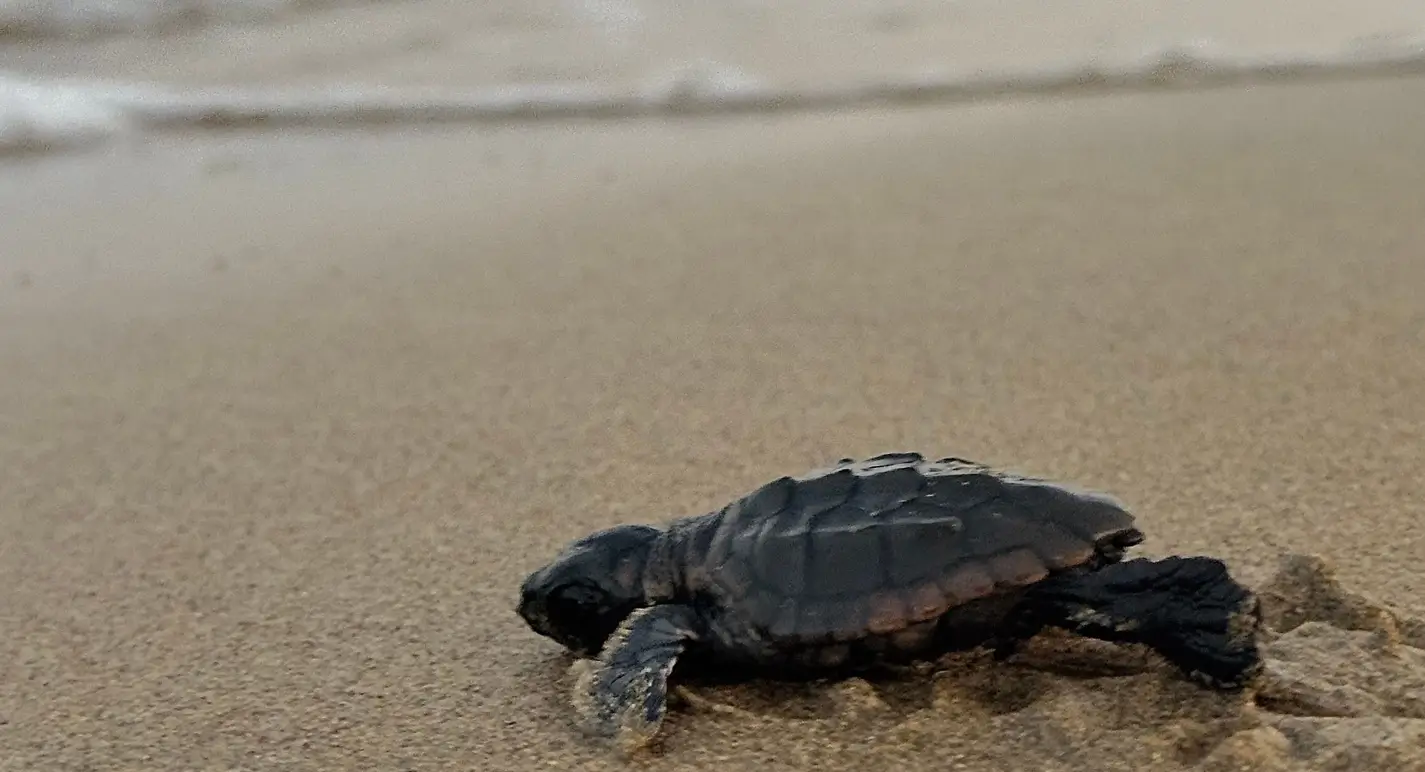
You’re on a Carolina beach at dusk. A volunteer is roping off a nest twenty feet away. Someone whispers “Is that a sea turtle?” with the reverence normally reserved for celebrity sightings. You pull out your phone. Three rabbit holes later, you’re wondering whether sea turtles have toxic urine. Good news: you found the right page. Let’s settle every sea turtle question burning a hole in your search history Carolina coast style.
First Things First: Are Sea Turtles Friendly or Secretly Plotting Against Us?
Sea turtles are not aggressive. They are, however, completely unbothered by your existence which feels worse somehow. In the water, they’ll glide past you like you’re mildly interesting furniture. On the beach during nesting season, a female loggerhead is focused on one thing only: laying her eggs and getting back to the ocean before sunrise. She did not come ashore to meet you.
That said, provoke one enough, or corner one, and yes, they can bite. A loggerhead’s jaw generates serious force. It handles horseshoe crabs for breakfast. Your finger does not present a challenge. So admire from a distance, keep your hands to yourself, and everyone goes home happy.
The Seven Species (And Which Ones Visit Carolina)
Seven sea turtle species exist worldwide. Here’s the full lineup:
Loggerhead: the most common visitor to both North and South Carolina shores, and South Carolina’s official state reptile. Named for its oversized head and powerful jaws.
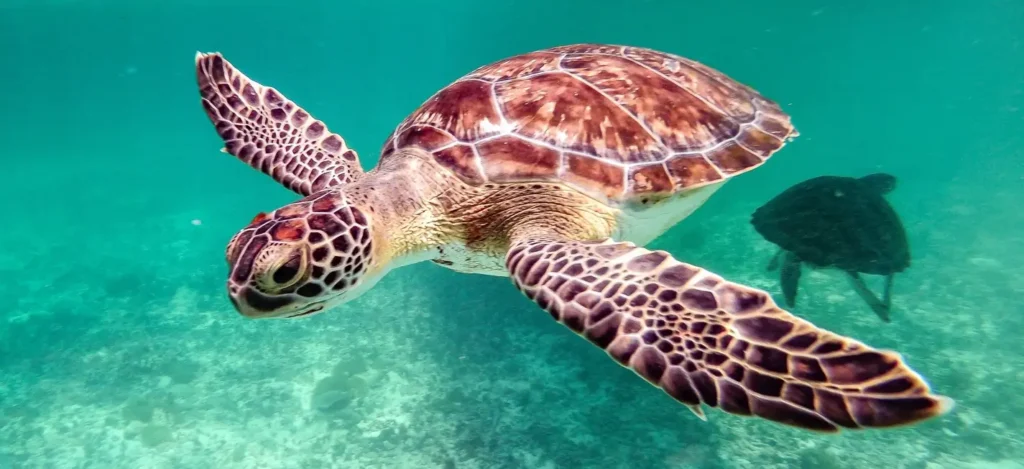
Green: not green on the outside. The name comes from its greenish-colored fat, which comes from an almost entirely plant-based diet of seagrasses and algae.
Leatherback: the heavyweight champion of the sea turtle world. These giants can reach 7 feet and are rumored to reach 2,000 pounds although 1,500 is a more realistic estimate. They lack a hard shell entirely, relying instead on leathery skin over cartilage.
Hawksbill: critically endangered and hauntingly beautiful, with a narrow pointed beak and patterned shell that nearly drove it to extinction through illegal trade.
Kemp’s Ridley: the smallest and most endangered sea turtle on the planet. It tops out around 30 inches and 100 pounds. The Carolina coast occasionally sees one.
Flatback: lives exclusively around Australia. You won’t find one in Carolina waters.
Olive Ridley: widespread globally but rarely spotted along the Atlantic seaboard.
Five of those seven species visit North Carolina. Four species nest in South Carolina: loggerheads, green, leatherback, and Kemp’s ridley. Loggerheads dominate both states by a wide margin.
10 Facts That Will Make You Obsessed With Sea Turtles
- Their sex depends on the temperature of the sand. Sea turtles have no sex chromosomes. Cooler nests produce more males; warmer nests produce more females. Climate scientists are genuinely worried about this, rising sand temperatures are skewing populations female-heavy.
- North Carolina produces more male turtles than states further south because its cooler sand temperatures favor male development. Remember the phrase: “Hot gals, cool dudes.”
- Female sea turtles return to the beach where they hatched. They travel thousands of miles across open ocean and find the exact stretch of sand they left decades earlier. GPS who?
- Each nest holds roughly 120 eggs, about the size of ping pong balls, buried one to two feet deep in the sand.
- Sea turtles have one heart, not two or four, just one, like most reptiles.
- Holding their breath for up to seven hours is routine for a resting sea turtle.
- Sea turtles have been around for over 100 million years. The asteroid that wiped out the dinosaurs didn’t touch them. Plastic bags are a different story.
- Lifespans reach 80 years or more, though the 1,000-year myth is just that. The oldest reliably documented sea turtles reach around 80 to 100 years.
- A loggerhead can migrate 8,000 miles between nesting and feeding grounds. They do this regularly. Without a map.
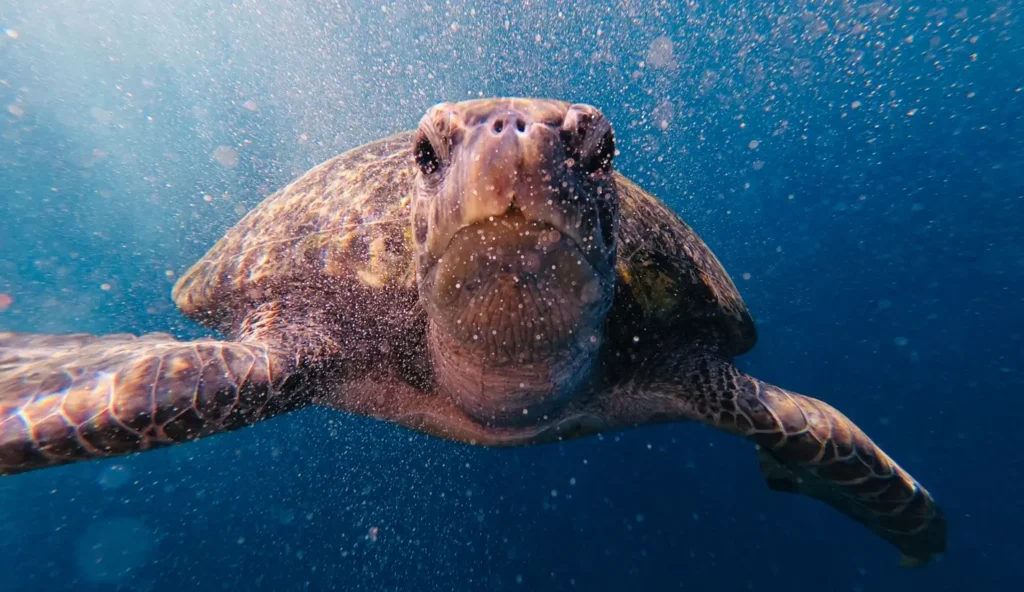
- Sea turtles cry, sort of. They excrete salt through glands near their eyes, which looks like crying but functions as a biological salt-management system. Emotional? Maybe. Practical? Definitely.
How Many Sea Turtles Are Left; And Why Should You Care?
The honest answer: not enough. Six of the seven species carry either “threatened” or “endangered” status under the U.S. Endangered Species Act. Kemp’s ridley holds the most urgent classification of all.
The threats are relentless. Commercial fishing bycatch kills thousands of sea turtles annually. Plastic pollution fills their stomachs with material they can’t digest. Coastal lighting disorients hatchlings navigating to the ocean by moonlight. Habitat loss erases nesting beaches entirely. Climate change keeps skewing sex ratios toward females, threatening the genetic diversity that populations need to survive.
The good news: conservation works. South Carolina recorded 4,805 nests in 2024, and SCDNR reports that overall nest numbers have increased meaningfully over the years. North Carolina runs the Sea Turtle Project through the NC Wildlife Resources Commission, with over 20 permitted projects monitoring nests statewide. The Karen Beasley Sea Turtle Rescue and Rehabilitation Center in Surf City, NC, the only sea turtle rehabilitation facility in the state, has treated and released over 2,000 turtles since opening in 1997.
Will sea turtles be extinct by 2050? Not if the people walking those Carolina beaches every morning to check nests have anything to say about it.
Planning a trip to Topsail Island this summer to help? Our Topsail Island guide has everything you need before you go.
The Rules: What You Absolutely Cannot Do (And Why)
Let’s get something out of the way fast. Every sea turtle species in U.S. waters is protected under the federal Endangered Species Act of 1973. That protection is not suggestions. It’s law.
Federal law prohibits touching, feeding, harassing, or disturbing a sea turtle. Full stop. So is shining a flashlight on one. Federal penalties include fines up to $15,000 per offense and up to one year in jail. Harming or killing one can carry fines up to $50,000 and prison time. Destroying a nest or eggs can bring fines up to $100,000. Commercial trafficking violations under the Lacey Act can result in felony convictions with fines up to $250,000 and five years in prison.
So is it a felony to touch a sea turtle? Not automatically for a first offense touching. But harm one, take its eggs, sell any part of it, or destroy a nest and you are firmly in felony territory. Don’t test it.
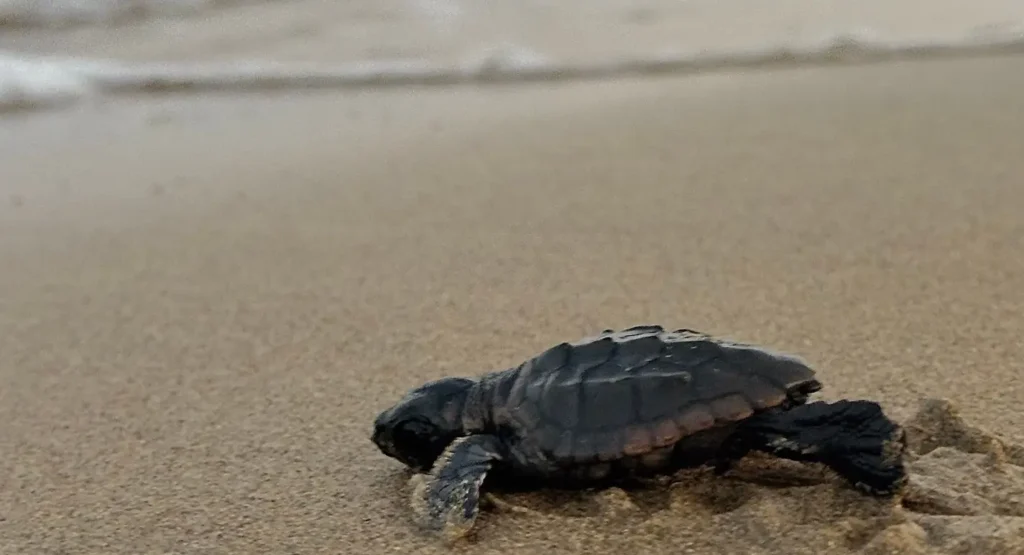
Why can’t you pick up a baby sea turtle? Several reasons. Hatchlings navigate to the ocean using the light horizon, bright lights and human interference disorient them fatally. Handling transfers bacteria and oils that can harm them. The scramble from nest to ocean is their first and most critical workout, building the muscle strength they need to survive. Interrupt it and you’ve damaged something irreplaceable. Also, it’s illegal.
Can you take pictures of sea turtles? Photography from a respectful distance is generally permitted. Getting close enough to disturb them crosses the legal line. A zoom lens is your friend here.
Barnacles: The Uninvited Passengers Nobody Asked For
Here’s a question nobody expects to care about until they’re standing next to a sea turtle: should you remove barnacles?
No. Do not remove barnacles from a sea turtle. Barnacles attach to the shell and anchor themselves with a cement-like compound. Removing them tears the shell tissue beneath. It hurts the turtle and creates open wounds vulnerable to infection. Licensed wildlife rehabilitators remove barnacles from injured turtles under controlled conditions and even then, only when medically necessary.
What eats barnacles in the wild? Small fish, whelks, and certain starfish handle that job naturally. Leave it to them.
Do barnacles fall off in freshwater? Yes, barnacles are marine organisms and die in freshwater. This is one reason wildlife rehabilitators use freshwater as part of controlled treatment for turtles with heavy barnacle loads.
Sharks, Predators, and the Food Chain Nobody Warned You About
Sea turtles have enemies. Sharks, including tiger sharks and bull sharks, absolutely eat sea turtles. So do orcas. On the beach, ghost crabs, raccoons, foxes, birds, and fire ants destroy nests. Baby turtles running to the ocean face birds, large fish, and crabs at every step.
Adult turtles survive those gauntlets. Their shells provide significant protection, and their size deters most predators. But humans remain the number one cause of sea turtle death through fishing bycatch, plastic ingestion, boat strikes, and coastal development.
As for what sharks fear: the answer is mainly orcas and, interestingly, dolphins in large groups. If a shark is circling you in the water, face it, stay calm, back slowly toward shore, and avoid sudden movements. Do not thrash. The shark is curious, not hungry statistically. (Exit the water anyway.)
What smell do sharks hate? Rotting shark carcasses contain a compound called putrescine that repels other sharks. This is true. It is also deeply impractical beach advice.
The Carolina Coast’s Sea Turtle Heroes
Nesting season runs from mid-May through September in North Carolina, and May through October in South Carolina. During those months, volunteer teams walk beaches every single morning before sunrise, searching for tracks. They rope off nests, count eggs, and monitor hatchings. They do this on a rotating schedule, seven days a week, without complaint.
The Karen Beasley Sea Turtle Rescue and Rehabilitation Center in Surf City, NC is the flagship operation. It treats around 100 turtles per year and has protected over 2,500 nests on Topsail Island. Tours run daily except Wednesdays and Sundays, noon to 4 PM; arrive early, lines build fast in summer.
In South Carolina, over 1,500 volunteers patrol beaches statewide through October. The SCDNR’s marine turtle conservation program coordinates everything from Myrtle Beach down to Hilton Head.
If you spot a stranded or injured sea turtle on the NC coast, call the NC Wildlife Resources Commission Sea Turtle Hotline: 252-241-7367. On Topsail Island, call the Karen Beasley Center directly: 910-329-0222, option 3.
Silly, Strange, and Slightly Unhinged Turtle Facts
You came for the science. Stay for the chaos.
Do turtles like peanut butter? Pet turtles sometimes accept it as an occasional treat. Sea turtles prefer jellyfish, crabs, seagrass, and sponges depending on the species. They are not waiting for you to open a jar.
What is a sea turtle’s favorite snack? Loggerheads love horseshoe crabs and conchs. Green sea turtles graze seagrass beds. Leatherbacks chase jellyfish across open ocean. Everyone has a lane.
Do turtles have memory? Yes, research confirms turtles have long-term spatial memory. Female sea turtles remember the exact beach where they hatched across decades of open ocean travel. Their memory is better than yours about where you parked.
What is a turtle’s full name? Order Testudines, for the pedants in the room. Sea turtles fall under the family Cheloniidae (hard-shelled species) and Dermochelyidae (leatherbacks). You’re welcome.
What color are turtles scared of? There is no verified scientific evidence that sea turtles fear any specific color. They are sensitive to light, artificial white and yellow light on beaches disorients them. Red lights cause less disruption, which is why beach volunteers use red-filtered flashlights at night.
Is turtle urine toxic to humans? No. Turtle urine is not toxic to humans. Wash your hands. Move on.
Can you kiss your pet turtle? The CDC strongly advises against it. Turtles carry Salmonella bacteria on their skin and shells. The “no turtles under 4 inches” rule that removed small turtles from pet stores came directly from Salmonella outbreaks traced to pet turtles. So no. Do not kiss your turtle.
What is the prettiest sea turtle? Hawksbills are the widely agreed answer. Their amber and brown patterned shells inspired centuries of jewelry-making and nearly caused their extinction as a result.
What is the rarest sea turtle? The Kemp’s ridley, the smallest species, found occasionally off the Carolina coast, and hanging on with the fierce determination of something that knows exactly how close to the edge it sits.
FAQ
How rare is it to see a sea turtle on a Carolina beach? During nesting season (May through September in NC, May through October in SC), sightings are more common than you’d expect, especially at dawn when females return to the ocean after nesting. Joining a permitted turtle walk dramatically increases your chances.
What should I do if I find a nest on the beach? Do not touch it. Mark the location mentally, back away, and call the NC Wildlife Sea Turtle Hotline (252-241-7367) or SCDNR’s turtle program. Volunteers will handle it properly.
Can sea turtles get sick if you touch them? Yes. Human contact transfers bacteria and skin oils that can cause infections. Additionally, stress from handling suppresses their immune function. Even well-intentioned touching causes real harm.
How smart are sea turtles? Smart enough to navigate thousands of miles of open ocean using magnetic fields, find the exact beach where they hatched, and survive 100 million years of planetary upheaval. Define “smart.”
What is the biggest killer of sea turtles on the Carolina coast? Bycatch from commercial fishing operations kills the highest number of sea turtles overall. Locally, coastal light pollution, beach driving, and plastic pollution are significant ongoing threats.
Can I volunteer to help protect sea turtles? Absolutely. The Karen Beasley Center in Surf City, NC and SCDNR’s coastal volunteer programs both welcome and train volunteers during nesting season. No experience required. Just show up willing to walk a beach at 5 AM.
Is it true female sea turtles return to the same beach to nest? Yes, this is called natal homing and it’s one of the most remarkable behaviors in the animal kingdom. Researchers have documented females returning to within meters of their own hatching site after decades at sea.
The Carolina coast has hosted sea turtles for 100 million years. The least we can do is share the beach well. They survived the dinosaurs. Help them survive us.
For more Carolina coastal travel inspiration, keep exploring explorecarolinabeaches.com
Planning a Carolina beach trip? Use our Beach Finder Quiz to get a personalized recommendation, or compare any two beaches side by side with the Carolina Beach Comparison Tool.
📱 Download our free Carolina Beaches app — Get it here