
You booked the oceanfront cottage. You packed the sunscreen. But did you check for cameras?
Nobody wants to think about this on vacation. Unfortunately, the alternative, not thinking about it, is worse. Hidden Cameras in Vacation Rentals are a real, documented, and growing problem. Reports surface every summer, including along the Carolina coast, where vacation rental inventory has exploded over the past decade.
The good news: finding hidden cameras isn’t as hard as you think. The better news: a few simple habits can protect your privacy every single trip. Let’s get into it.
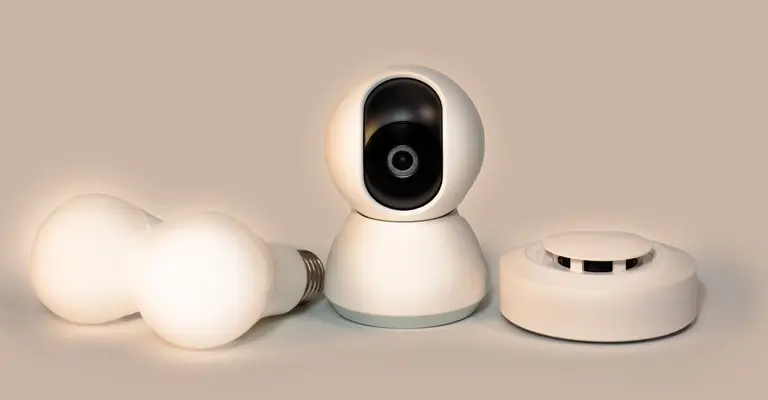
How Common Are Hidden Cameras in Vacation Rentals, Really?
Affiliate Disclosure: This page contains affiliate links. If you book through them, we may earn a small commission at no extra cost to you.
More common than the industry wants to admit. A 2019 survey by security firm IPX1031 found that roughly 11% of Airbnb guests reported discovering a hidden camera in their rental. That number likely undercounts the problem: most hidden cameras go undetected entirely.
Along the Outer Banks, Myrtle Beach, and Hilton Head‘s massive rental markets, tens of thousands of properties change guests weekly during peak season. Even a small percentage of bad actors translates into a lot of compromised vacations.
Airbnb, Vrbo, Travelocity, and other platforms all prohibit hidden cameras in private spaces. Yet enforcement depends almost entirely on guests catching them first.
Do Vacation Rentals Have to Disclose Cameras?
Here’s where it gets genuinely complicated and where most renters get blindsided.
The federal picture: No single federal law specifically governs camera disclosure in vacation rentals. Instead, a patchwork of wiretapping and voyeurism statutes apply depending on context. Filming someone in a private space i.e. a bedroom, bathroom, or changing area without consent is illegal under federal law and in every state. That part is clear.
The platform rules: Airbnb requires hosts to disclose any cameras on the property, including outdoor ones. Vrbo has similar policies. Critically, though, both platforms prohibit cameras in bedrooms and bathrooms entirely, disclosed or not.
North Carolina law: North Carolina’s secret peeping statute makes it a felony to use any device to photograph or video someone in a private place without consent. The law covers rooms where a person has a reasonable expectation of privacy. Penalties escalate if images are distributed.
South Carolina law: South Carolina’s voyeurism statute similarly criminalizes capturing images of a person in a private place without consent. A first offense is a misdemeanor; subsequent offenses or distribution of images move into felony territory.
What Most Visitors Don’t Know:
“Disclosed” doesn’t mean “acceptable everywhere.” A host in a Corolla, NC beach house can legally disclose a camera in a common living area, but the moment that camera points at a bed or covers a bathroom, it’s illegal regardless of any disclosure. Disclosure is not a blanket permission slip.
The legal bottom line: hidden cameras in bedrooms and bathrooms are illegal in both Carolinas, full stop. Cameras in common areas require disclosure. The problem is that laws only matter when someone gets caught.
What Do Hidden Cameras Actually Look Like?
Forget the spy movie aesthetic. Modern covert cameras are genuinely tiny and almost always disguised as ordinary objects. Knowing what to look for changes everything.
Common disguises include:
- Smoke detectors: perhaps the most common hiding spot. A pinhole lens sits flush with the detector’s surface. Always check for smoke detectors that seem slightly off-center, newly installed, or positioned oddly relative to the room layout.
- USB wall chargers: these are widely available online and nearly impossible to distinguish from a standard charger at a glance. The lens is a pinhole in the charging port block.
- Clock radios and alarm clocks: a staple of hotel rooms and vacation rentals. The lens typically hides in the clock face or a small dark dot on the front panel.
- Air purifiers and smart speakers: both have grilles and vents that conceal lenses effectively. Any device that “faces” the room deserves a second look.
- Picture frames and wall art: pinhole cameras integrate into the center of artwork or photo frames with disturbing ease.
- Pens, books, and decorative items: in bedrooms specifically, anything positioned with a clear sightline to the bed warrants suspicion.
The defining characteristic of any spy camera is a small, dark, circular element that doesn’t belong on the object. Pinhole lenses are typically 1–3mm in diameter. Under direct flashlight, they often produce a small, bright reflection.
How to Find Hidden Cameras Without Any Equipment
Step 1: Turn off all the lights. Total darkness reveals IR illuminators, the small infrared LEDs that camera night-vision requires. These glow faintly red or purple in complete darkness. Scan every corner of every room.
Step 2: Use your phone flashlight. Sweep it slowly across shelves, decor, and any wall-mounted devices. Camera lenses reflect light distinctively, look for a bright, sparkly glint that doesn’t match the surface around it.
Step 3: Check every device that faces the room. Unplug what you can. If a smoke detector seems unusual, use a step stool and look closely. Anything with a small dark circle aimed at a private area earns immediate suspicion.
Step 4: Look for out-of-place items. A clock facing the bed from an odd angle. A USB charger in a bedroom that wasn’t mentioned in the listing. A picture frame positioned lower than you’d typically hang art. Context matters, ask yourself why something is positioned where it is.
Local Insider Tip: In Outer Banks vacation rentals, many of which are older construction managed by large property companies, smoke detectors in bedrooms are a consistent concern. Legitimate detectors are typically installed on ceilings, centered in the room. Detectors mounted on walls at unusual heights or positioned oddly are worth a longer look.
Can a Cell Phone Detect a Hidden Camera?
Yes, with real limitations. Your smartphone offers two legitimate detection methods, and several apps that promise more than they deliver.
Method 1: The camera itself. Most smartphone cameras can detect infrared light that the human eye misses. Open your phone camera (front-facing camera often works better), dim the lights, and scan the room. IR illuminators on hidden cameras show up as purple-white glowing spots through the lens. This is a legitimate technique that actually works.
Method 2: Network scanning apps. Apps like Fing (iOS and Android) scan your local Wi-Fi network and display every connected device. If the rental’s Wi-Fi shows a device you can’t physically identify, particularly anything labeled with a generic manufacturer name or no name at all, that’s a flag worth investigating. More on Wi-Fi detection below.
What doesn’t work well: Magnetic field detector apps claim to find camera lenses through electromagnetic signatures. In practice, they generate too many false positives from ordinary wiring and appliances to be genuinely useful. RF detector apps face the same problem. Use them as a supplemental layer, not a primary method.
Dedicated RF detectors: physical devices you can buy for $30–$80 online, outperform any phone app for radio frequency detection. They’re not vacation packing staples for most people, but frequent travelers absolutely consider them.
Can Wi-Fi Detect Hidden Cameras?
This technique works better than most people realize, and it’s almost entirely overlooked.
Many modern hidden cameras transmit footage via Wi-Fi rather than storing it on a local SD card. That means they appear as devices on the local network. Connect to the rental’s Wi-Fi, then scan the network with a free app like Fing or Network Analyzer.
Look for devices you don’t recognize. Any camera that streams footage will show up as a connected device. The trick is knowing what to look for: generic or unrecognized device names, particularly those that use common Chinese electronics manufacturer identifiers (common in budget covert cameras). Legitimate home devices like smart TVs, thermostats, and streaming sticks typically identify themselves clearly.
One real limitation: cameras that operate on their own cellular data connection (not the rental’s Wi-Fi) won’t appear on your network scan. These are more expensive and less common, but they exist.
What Most Visitors Don’t Know: Some vacation rental hosts legitimately use network-connected baby monitors or security cameras in common areas and disclose them. A device appearing on your network scan isn’t automatically evidence of wrongdoing. Cross-reference anything unfamiliar with the listing’s disclosed amenities and ask the host directly if anything seems unclear.
The Highest-Risk Spots in Any Rental
Not all rooms carry equal risk. Privacy violations cluster in specific areas based on what bad actors want to capture.
Always inspect carefully:
- Bedrooms: particularly any device facing or near the bed
- Bathrooms: look at air fresheners, shampoo bottles, and any decor that seems oddly positioned. They can be disguised as shower nozzles, lightbulbs, and even screws in the wall.
- Changing areas near pools or outdoor showers (common in Carolina beaches’ rentals)
- Living room areas where people undress or change into swimwear
- Kitchens and dining areas
- Outdoor spaces (where privacy expectations are lower and disclosed cameras are legal)
The outdoor shower is a specific Carolina coast concern. Many beach rentals, particularly older properties on Hilton Head and the OBX, have outdoor shower areas that are semi-enclosed. These spaces carry a reasonable expectation of privacy under North Carolina and South Carolina law. Check them anyway.
What to Do If You Find One
Stay calm and methodical. Your response in the next few minutes matters.
Do not disconnect or destroy the device. That’s evidence tampering and could complicate a criminal case.
Document everything first. Photograph the device in place. Note its location, angle, and what it appears to cover. Timestamp your documentation.
Contact local law enforcement immediately. In North Carolina, contact local police or the NC State Bureau of Investigation. In South Carolina, local police and the SC Law Enforcement Division handle these cases. This is a crime scene, treat it accordingly.
Report to the platform. Airbnb and Vrbo both have dedicated trust and safety lines. Report before you check out; platforms can freeze host accounts and preserve evidence.
Document your communication with the host. Don’t tip off the host before law enforcement is involved. After reporting to police, notify the platform and let them handle host contact.
FAQ
How do you tell if your vacation rental has hidden cameras?
Start with a full room sweep in the dark, IR illuminators on night-vision cameras glow faintly red or purple. Follow up with a phone flashlight to look for lens reflections. Scan the Wi-Fi network for unrecognized devices using an app like Fing. Pay close attention to any device that faces a bed, bathroom, or changing area and doesn’t belong there obviously.
What do small hidden cameras look like?
They’re almost always disguised as ordinary objects: smoke detectors, USB chargers, alarm clocks, picture frames, air purifiers, shower nozzles, light bulbs, screws, buttons, and decorative items. The giveaway is a small, dark, circular element, a pinhole lens roughly 1–3mm in diameter, positioned where it has a clear sightline to a private area. Under flashlight, camera lenses often produce a distinctive bright reflection.
Can a cell phone detect a hidden camera?
Yes, in two practical ways. First, most smartphone cameras detect infrared light: open your camera in a dark room and look for purple-white glowing spots that indicate an IR illuminator. Second, network-scanning apps like Fing can identify camera devices connected to the local Wi-Fi.
Can Wi-Fi detect hidden cameras?
Often, yes. Many modern hidden cameras stream footage over Wi-Fi and appear as connected devices on the local network. A free app like Fing will display every device connected to the rental’s network, look for anything unrecognized, particularly devices with generic or unusual manufacturer names.
What should I do if I find a hidden camera in my Carolina coast rental?
Don’t touch or disconnect it. Photograph it in place, note what it’s pointed at, and contact local law enforcement immediately: this is a crime under both North Carolina and South Carolina law.
One More Thing Before You Check In
This piece covers a genuinely unsettling topic but context matters. The overwhelming majority of Carolina coast hosts are exactly what they appear to be: people renting a property and wanting guests to have a good time. The bad actors are a small minority.
Nevertheless, a five-minute sweep costs you nothing. Knowing the law costs you nothing. Understanding what to look for and what to do; that’s just being a smart traveler on a coast that deserves your full, undistracted attention.
The Carolina coast offers some of the most breathtaking shoreline on the Eastern seaboard, Walk into every rental with your eyes open, and you’ll spend the rest of the week keeping them fixed on the ocean where they belong.
For more Carolina coastal travel inspiration and guides, keep exploring explorecarolinabeaches.com
Planning a Carolina beach trip? Use our Beach Finder Quiz to get a personalized recommendation, or compare any two beaches side by side with the Carolina Beach Comparison Tool.
📱 Download our free Carolina Beaches app — Get it here