
You’re having the perfect beach day. The kids are in the water. Your frozen drink is sweating in your hand. Then comes the scream.
Not the fun scream. The other one.
Welcome to jellyfish season on the Carolina coast. It happens every summer, it surprises people every summer, and it doesn’t have to ruin your day if you know what you’re doing. Here’s the honest guide that the back of a sunscreen bottle will never give you.
The Carolina Jellyfish You’ll Actually Encounter
Not every jellyfish on the Carolina coast is trying to ruin your vacation. Most of them, honestly, couldn’t care less about you. But a few deserve your attention.
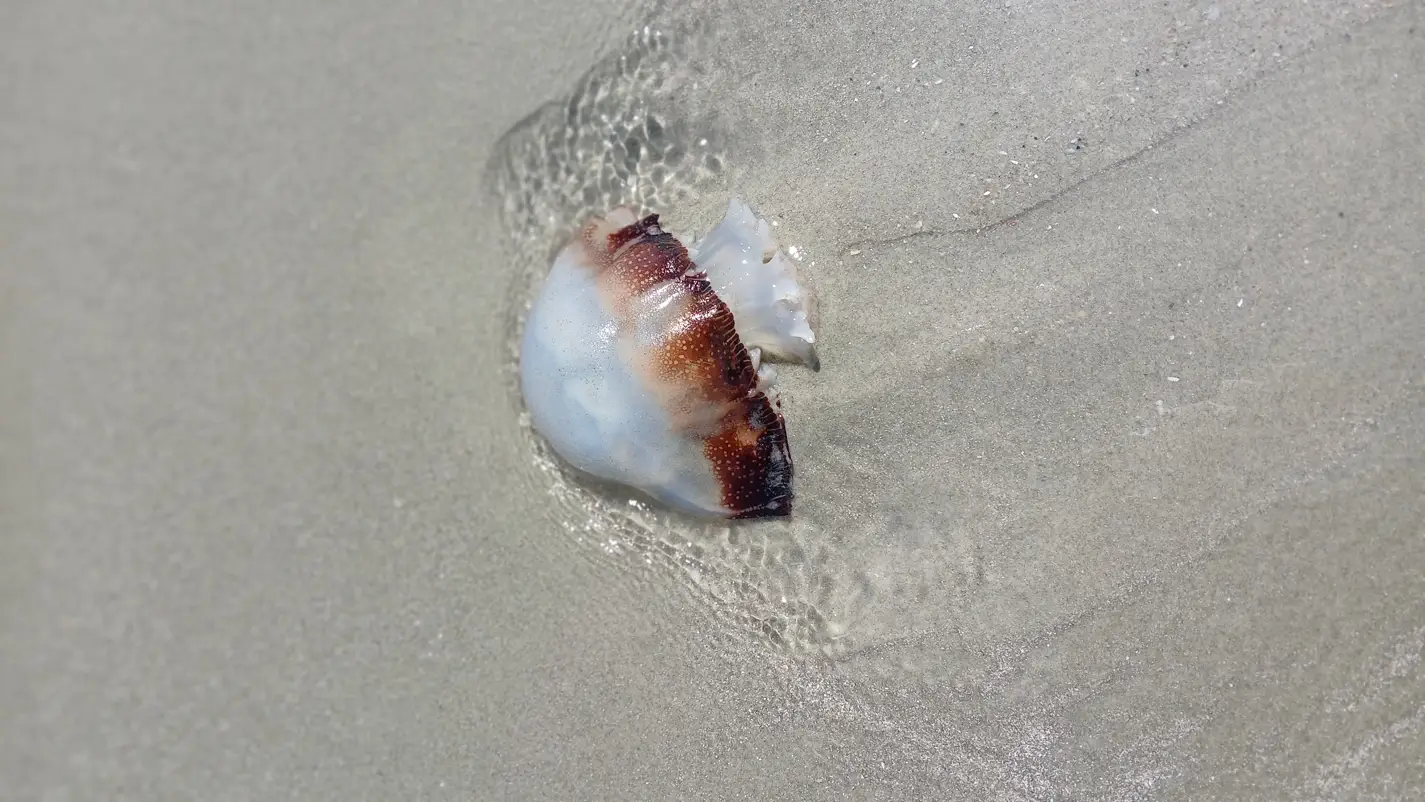
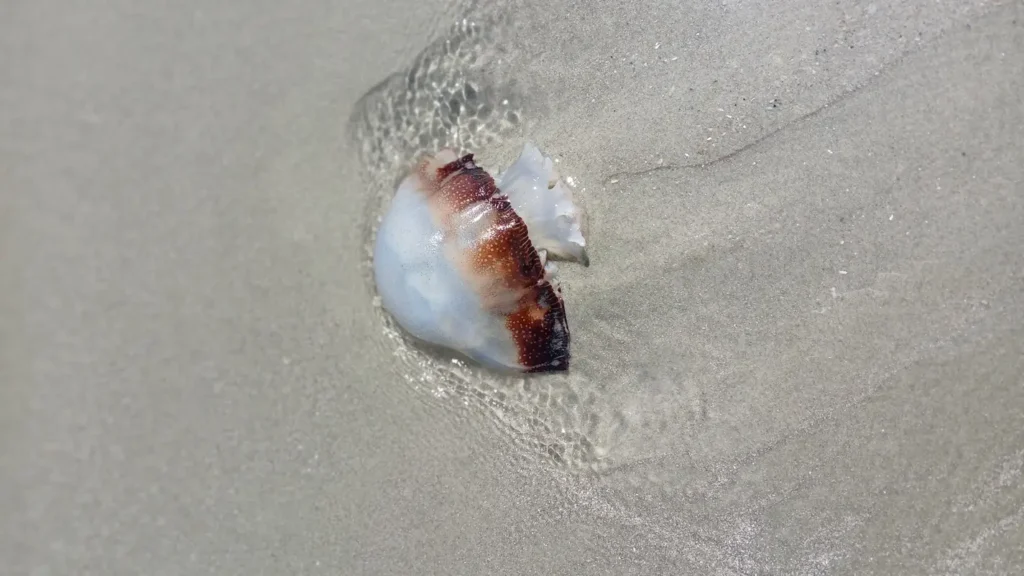
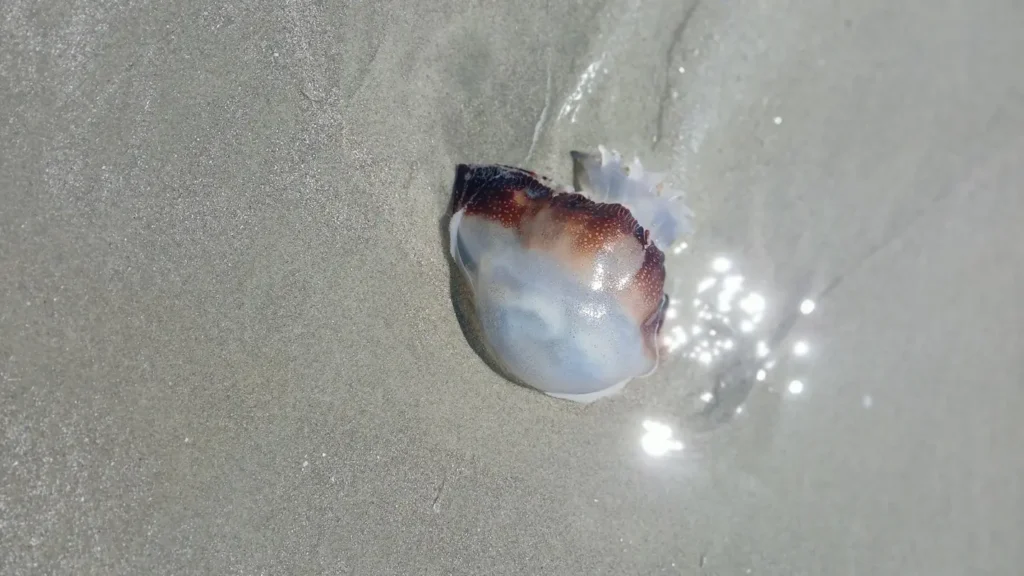
The Cannonball Jellyfish is the one you’ll see most often. Round, white, with a brown or purple band around its dome. It looks exactly like its name. On some days, dozens wash up on Brunswick County beaches. Good news: it’s one of the least venomous jellyfish in local waters. A slight itch at most. You can even find them for sale as food in parts of Asia, which is a fun fact to tell your kids when they’re panicking on the beach.
The Atlantic Sea Nettle is the one that actually matters. Transparent bell, white or red dots, pale yellow or pink tint, long trailing tentacles. This is the most common jellyfish reported for stinging beachgoers along the Carolinas. Spotting one in the water is your cue to get out. Their sting causes a painful, burning rash and those tentacles extend well beyond what you can see.
The Moon Jellyfish looks like a ghostly dinner plate drifting through the water. Its sting is usually mild, more itchy than painful. The dried-out disc you find on the beach with no tentacles attached? Harmless. Step on it all you want.
The Lion’s Mane doesn’t show up often this far south, but it’s worth knowing. It’s massive, with long flowing tentacles that can trail many feet behind the bell. Its sting is serious and lingers. If you see what looks like an enormous reddish-orange blob in the water, give it a very wide berth.
The Portuguese Man o’ War is not technically a jellyfish, it’s a colony organism, but it shows up on Carolina beaches and it will absolutely ruin your day. Bright blue or purple float on the surface, long tentacles that can stretch 30 feet. Its sting is severe and can cause welts, muscle cramping, and in rare cases more serious reactions. Never touch the blue balloon even if it looks deflated on the beach. It can still sting long after washing ashore.
When Is Jellyfish Season on the Carolina Coast?
Jellyfish don’t follow a precise calendar. Generally, though, peak encounters run from June through September, exactly when most families are visiting.
Warm water temperatures bring them inshore. Certain wind directions and currents push them toward the beach. Some years see huge blooms. Others are relatively quiet. Researchers are still working out exactly why. What’s consistent is that summer plus warm water plus an onshore wind equals higher jellyfish activity. Check beach condition reports and local lifeguard flags before you head in.
The Atlantic Sea Nettle tends to peak in summer. Cannonballs are most abundant in summer and fall. Moon jellies appear most often in summer. Lion’s Mane are actually a cooler-water species so they’re more likely in late fall and winter, which is not when most families are swimming here anyway.
You Got Stung. Here’s What to Do.
Stay calm. In the vast majority of Carolina jellyfish stings, you are not in danger. You are uncomfortable. There’s a difference.
Step 1: Get out of the water.
Don’t thrash around, movement can fire more nematocysts if tentacles are still in contact. Walk out calmly.
Step 2: Don’t rub it.
Rubbing spreads venom and fires more stinging cells. Keep hands away from the area.
Step 3: Remove any visible tentacles.
Use a credit card, a stick, tweezers; anything but bare fingers. Scraping can release more venom. Pick or lift, don’t scrape.
Step 4: Rinse with seawater.
Not fresh water. Fresh water can actually trigger unfired stinging cells and make pain worse. Seawater is available in infinite quantities right next to you, use it.
Step 5: Apply heat.
Hot water immersion, as hot as is comfortably tolerable, is one of the most effective pain relief methods available on a beach. A hot shower, hot wet towel, or hot water poured over the area helps break down the protein-based venom. Lifeguards often use this approach.
Step 6: Over-the-counter relief.
A hydrocortisone cream helps with itching and inflammation. Oral Benadryl (diphenhydramine) can reduce allergic response and is a reasonable addition. Lidocaine or benzocaine sprays help with pain. Ibuprofen or acetaminophen handle general discomfort.
What Doesn’t Work (Stop Doing These)
Urine. No. There is no scientific evidence this works. Beyond that, applying urine to a wound on a public beach is a situation nobody needs to be in.
Fresh water. Counterintuitive, but rinsing with fresh water can make things worse by triggering remaining nematocysts. Stick to seawater.
Rubbing alcohol. Evidence doesn’t support it, and it can irritate already-inflamed skin.
Scraping off tentacles. Scraping fires more venom from stinging cells. Remove tentacles by picking, not scraping.
Vinegar. This one is complicated. Vinegar works well for box jellyfish stings, but for Atlantic sea nettles and Portuguese Man o’ War stings, it may actually make things worse by triggering unfired nematocysts. Since you rarely know exactly what stung you, seawater is the safer default on the Carolina coast.
How Long Does a Jellyfish Sting Last?
Most stings from Carolina species resolve within a few hours to a couple of days. Here’s a general timeline:
First 30 minutes: Burning, stinging pain. Red welts or streaking marks appear where the tentacles made contact.
Hours 1–6: Pain decreases. Redness and swelling remain. Itching begins as the initial sting fades.
Days 1–3: Rash may still be visible. Itching is common. Keep the area clean and moisturized.
Days 4–7: Most stings are fully resolved by now. Some skin discoloration or faint marks may linger.
1–2 weeks later: If you’re still itching, you may be having a delayed hypersensitivity reaction, essentially a secondary immune response. This is not uncommon. An oral antihistamine and hydrocortisone cream handle most cases.
When Should You Actually Go to the ER?
Most Carolina jellyfish stings do not require emergency care. However, go immediately if the person stung experiences:
- Difficulty breathing or swallowing
- Chest pain or heart palpitations
- Swelling of the face, lips, or throat
- Dizziness, confusion, or loss of consciousness
- Nausea and vomiting that doesn’t stop
- A sting covering a very large area of the body
- A sting to the face or eyes
Children, elderly individuals, and people with known allergies warrant extra caution. A sting that seemed minor can escalate if an allergic reaction develops. When in doubt, seek medical attention.
What Do Lifeguards Put on Jellyfish Stings?
Lifeguards on Carolina beaches are trained in sting first aid. Most carry seawater rinse supplies and use hot water immersion as the primary pain relief approach. Some stations have lidocaine spray. They will help you remove visible tentacles safely and assess whether the reaction looks serious enough to warrant further care.
Lifeguards are your first resource. Go to them immediately after a sting rather than trying to manage it alone on your towel.
Can You Survive a Jellyfish Sting?
Yes! And this question deserves a direct answer, because panicked kids and parents ask it on beaches every summer. The jellyfish species on Carolina beaches do not deliver fatal stings to healthy adults. The species responsible for human fatalities, box jellyfish and Irukandji, live in Indo-Pacific waters, primarily around northern Australia. They are not in Wrightsville Beach, and they are not at Holden Beach, and they are not at Folly Beach.
People with severe allergies, heart conditions, or who receive very large envenomations may experience serious reactions requiring emergency care, but this is rare on the Carolina coast.
5 Things to Pack in Your Beach Bag This Summer
Smart families come prepared. Add these to your bag before you hit the sand:
- Hot water in a thermos – the single most effective beach-ready pain relief for a sting
- Hydrocortisone cream – handles itching and inflammation
- Oral Benadryl – for allergic response, especially if anyone in your group has sensitivities
- Tweezers – tentacle removal without using fingers
- Lidocaine or benzocaine spray – fast topical pain relief
Stingose and Sting-Aid are commercial products designed specifically for marine stings and are worth having if you can find them at a local pharmacy.
A Note About Dead Jellyfish on the Beach
Step right over them but don’t touch them. Dead jellyfish on the sand can still fire nematocysts. A dried-out cannonball without tentacles is genuinely harmless. A lion’s mane or Man o’ War washed up on the beach, however, retains its ability to sting even after it looks completely dead. The tentacles are the danger, not the bell. Teach kids this distinction and save yourself a very unpleasant afternoon.
The Bottom Line
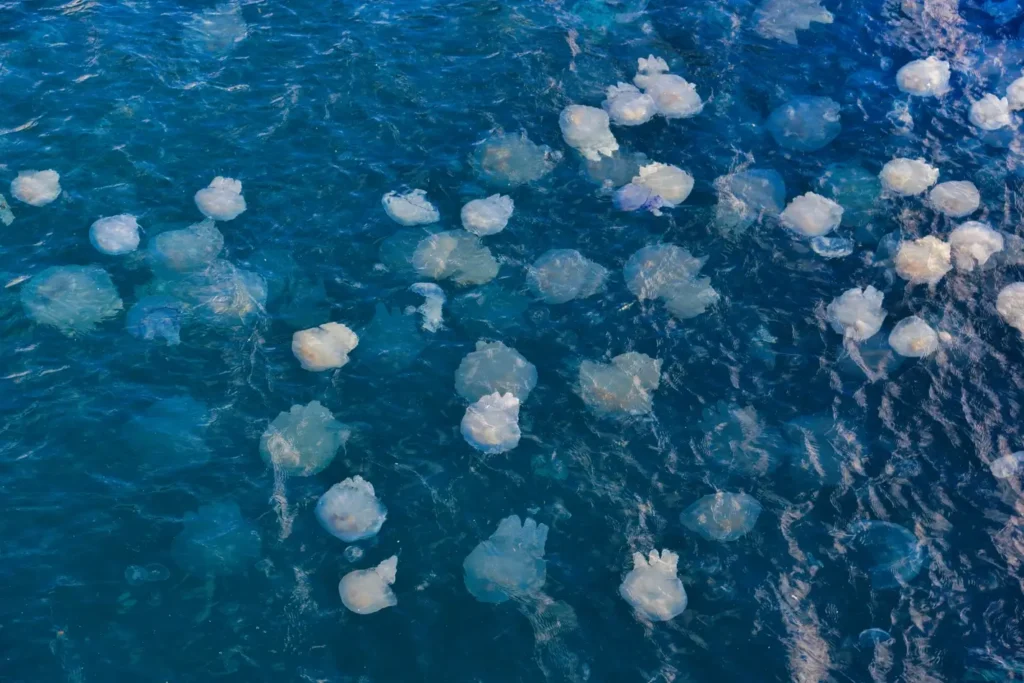
Jellyfish are part of the Carolina coast. They’ve been here for 500 million years, and they’ll be here long after we’ve packed up our beach chairs and gone home. They are not aggressive. They don’t chase you. A sting is almost always a matter of accidental contact: wrong place, wrong current.
Know the species. Know what to do. Come prepared. Then get back in the water, because a sea nettle sighting is a story but not a reason to cancel your beach day.
The Carolina coast is too good for that.
FAQ SECTION
Q: Does vinegar help a jellyfish sting on Carolina beaches?
A: It depends on the species, and since you rarely know which one stung you, seawater is the safer choice. Vinegar works well for box jellyfish stings but can make Atlantic sea nettle and Portuguese Man o’ War stings worse by triggering remaining unfired stinging cells. On the Carolina coast, rinse with seawater first.
Q: What not to put on a jellyfish sting?
A: Avoid fresh water, urine, rubbing alcohol, and scraping the skin. Fresh water can trigger unfired nematocysts and worsen pain. Urine has no scientific support. Scraping spreads venom. Stick to seawater rinse, heat, and over-the-counter antihistamines and topical treatments.
Q: How long does a jellyfish sting last?
A: Most stings from Carolina species cause pain for a few hours and visible rash for one to three days. Full resolution typically happens within a week. Some people experience a delayed itching reaction one to two weeks later; this is a secondary immune response, not a new sting. An antihistamine handles it.
Q: Should I go to the ER for a jellyfish sting?
A: Not for a typical Carolina coast sting. Go immediately if the person has trouble breathing, chest pain, facial swelling, dizziness, severe vomiting, or if a very large area of the body was stung. Also seek care quickly if the victim is a young child, elderly, or has known allergies.
Q: What does a jellyfish sting look like?
A: Immediately after the sting, expect red streaking or whip-like marks where the tentacles contacted skin, with swelling and raised welts. Over the following days the redness fades and itching increases. A week later, faint discoloration or marks may linger but should be resolving.
Q: How can you tell if a jellyfish stung you?
A: You’ll know. Immediate burning or stinging pain, red linear marks or raised welts on the skin, and intense itching are the hallmarks. If you felt a sharp burning sensation in the water and came out with red marks on your skin, a jellyfish sting is the most likely cause.
Q: Will Benadryl help a jellyfish sting?
A: Yes, as part of the treatment. Oral Benadryl (diphenhydramine) reduces the allergic and inflammatory response to jellyfish venom. It won’t eliminate the sting but it helps with swelling, itching, and any mild allergic reaction. It also helps with the delayed itching reaction some people get one to two weeks later.
Q: Is it okay to leave a jellyfish sting untreated?
A: For a mild sting, it will likely resolve on its own, but treating it is always better. Removing tentacles, rinsing with seawater, and applying heat significantly reduces pain duration. Leaving it untreated risks prolonged discomfort, secondary infection if the skin is broken, and missing signs of a more serious reaction.
For more Carolina vacation area guides and Carolina coastal travel inspiration, keep exploring explorecarolinabeaches.com
Additional Resources (Sources & Further Reading)
Primary Official Sources
South Carolina Department of Natural Resources (SCDNR) Jellyfish Guide
https://www.dnr.sc.gov/marine/pub/seascience/jellyfish.html
(Best source for Cannonball, Sea Nettle, Lion’s Mane, and local abundance info)
Bald Head Island Conservancy (North Carolina) True Jellies
https://bhic.org/true-jellies/
(Excellent local details on species common to Brunswick Islands area)
NC Sea Grant Various jellyfish reports and monitoring
https://ncseagrant.ncsu.edu/
(Good context on blooms, sea nettles, and seasonal patterns)
Treatment & First Aid Guidelines
ILCOR (International Liaison Committee on Resuscitation) Treatment of Jellyfish Stings Consensus (2024/2025)
https://costr.ilcor.org/document/treatment-of-jellyfish-stings-fa-7211-tf-sr
(Supports seawater rinse + hot water immersion as preferred treatments)
American Heart Association / ILCOR First Aid Guidelines 2025
(Hot water for pain relief, seawater rinse, avoid fresh water)
Mayo Clinic Jellyfish Stings
https://www.mayoclinic.org/diseases-conditions/jellyfish-stings/diagnosis-treatment/drc-20353290
Additional Supporting Sources
NOAA / National Ocean Service Portuguese Man o’ War
https://oceanservice.noaa.gov/facts/portuguese-man-o-war.html
(Tentacle length and biology)
Planning a Carolina beach trip? Use our Beach Finder Quiz to get a personalized recommendation, or compare any two beaches side by side with the Carolina Beach Comparison Tool.
📱 Download our free Carolina Beaches app — Get it here