
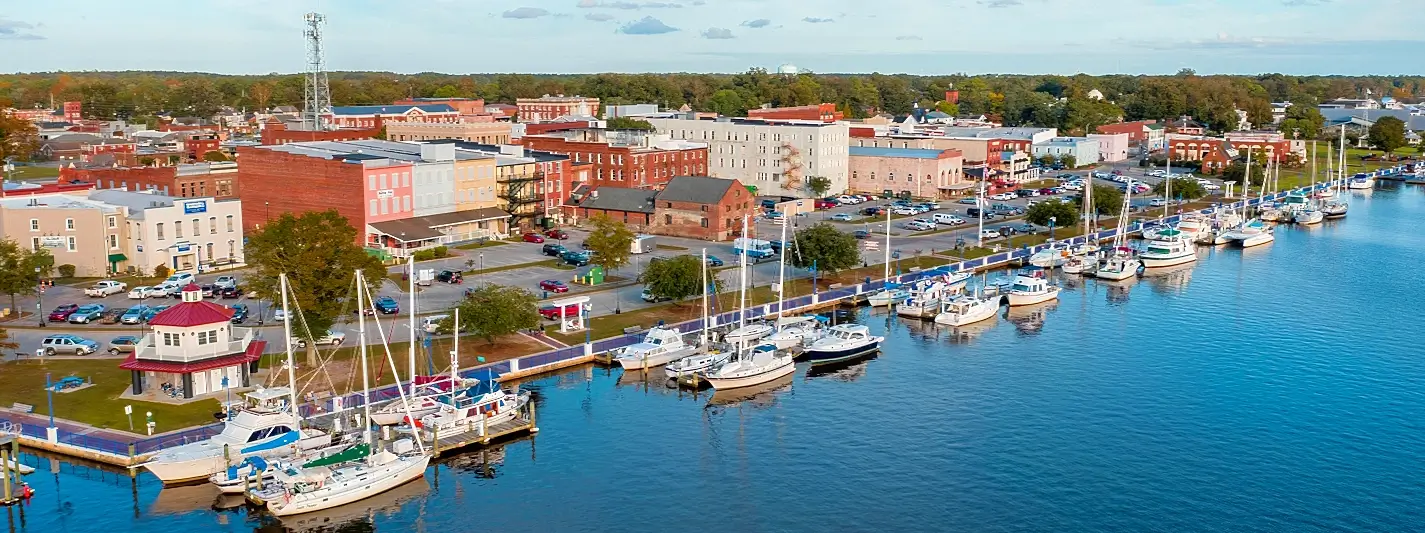
Everyone knows the Outer Banks, but far fewer travelers are familiar with the Inner Banks, and that’s precisely the appeal.
The Inner Banks refers to the sound side of coastal North Carolina, encompassing historic towns along Pamlico Sound, Albemarle Sound, and their expansive feeder rivers. While tourism promoters coined the name in the 1990s, locals simply call it home.
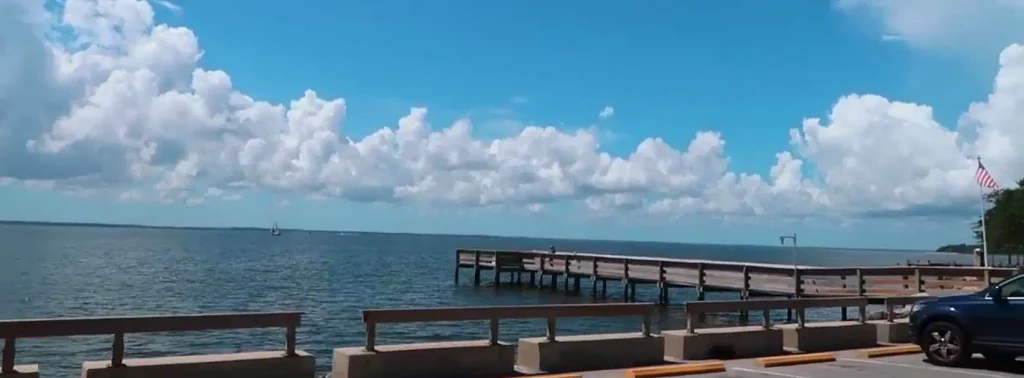
Here, you won’t find ocean surf. Instead, you’ll discover glassy rivers at sunrise, sailboats gliding across vast waters, and colonial streets predating the nation itself. The pace slows considerably, offering a Carolina coast experience for those who appreciate their waterfront with a rich side of history.
Affiliate Disclosure: This page contains affiliate links. If you book through them, we may earn a small commission at no extra cost to you.
Washington: Little Washington, Big Waterfront
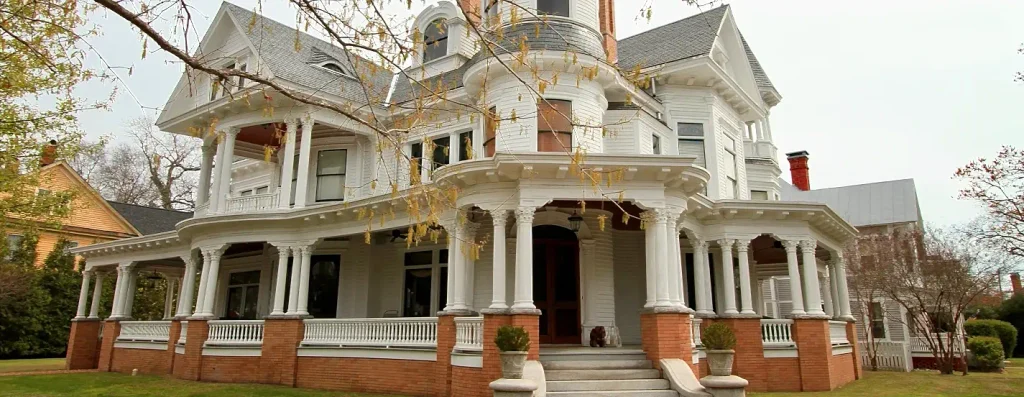
Washington, the vibrant heart of the Inner Banks, was founded in 1776 and holds the distinction of being the first American city named after George Washington, earning it the nickname “Little Washington.”
Begin your visit with a stroll along the promenade, observing workboats and pleasure craft sharing the channel. Next, explore the North Carolina Estuarium, where over 200 exhibits unravel the mysteries of the Pamlico estuary, the second largest in the continental United States. Free pontoon tours are offered from April through October, so advance reservations are recommended.
Downtown invites exploration, with its historic district boasting more than 500 contributing buildings. Discover charming brick storefronts now home to cafes, antique shops, and art galleries.
Local’s Take: Experience “Music in the Streets” downtown on select summer evenings. Live music paired with a gentle river breeze creates an unforgettable atmosphere.
Where to Stay: The Red Roof Inn, located at 1031 Carolina Avenue, is conveniently situated just off US-17 and US-264, mere minutes from the historic waterfront district. When booking, compare rates on Travelocity, as Inner Banks prices can fluctuate during festival weekends.
Steps from the Pamlico River in downtown Washington, the Little Inn on Main is a boutique inn in the heart of the Historic Harbor District, with ten uniquely designed rooms, a two-bedroom River Cottage, and street-ready golf carts for exploring town. Restaurants, breweries, galleries, and waterfront views are all within walking distance, making it a perfect base for your Inner Banks trip.
Bath: Blackbeard’s Lair
Nestled twelve miles down the Pamlico River, Bath stands as North Carolina’s oldest town, incorporated in 1705. Throughout its history, it has attracted a diverse cast of characters, from pirates and governors to rebels.
In 1718, Edward Teach, infamous as Blackbeard, established Bath as his base after accepting a royal pardon. However, his return to piracy was swift, leading to his demise that November at the hands of British forces near Ocracoke. To this day, his legend permeates the town, much like the lingering marsh mist.
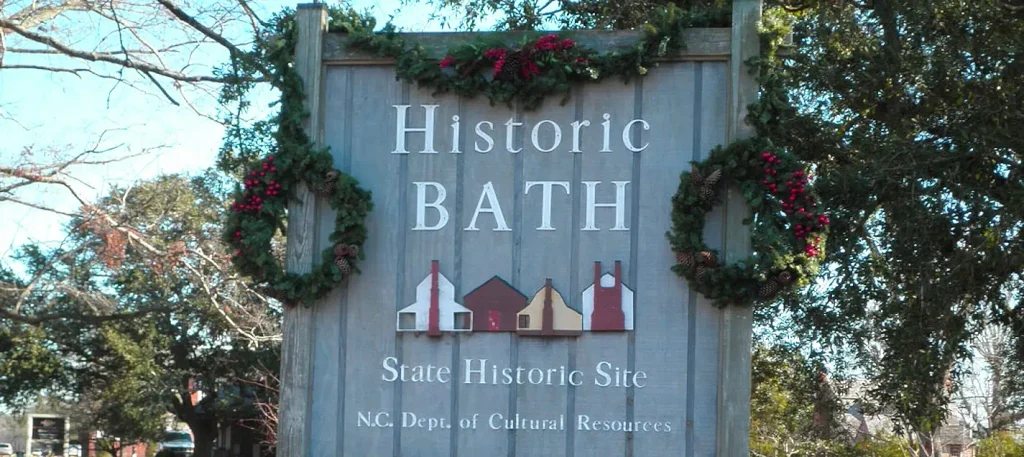
Explore the Historic Bath state site, centered around the Palmer-Marsh House, dating back to approximately 1744. Continue to St. Thomas Episcopal Church, built in 1734, which remains North Carolina’s oldest standing church building. Conclude your visit where Bath Creek converges with the Pamlico River, offering the same vista Blackbeard once beheld.
Local’s Take: Experience a complimentary 30-minute “mini-cruise” on the Bayview-Aurora ferry, crossing the Pamlico River.
Insider Tip: Across the river in Aurora, the Aurora Fossil Museum offers free admission and captivates children with its display of megalodon teeth unearthed from the local phosphate mine.
New Bern: The Grand Dame
New Bern, North Carolina’s second-oldest town, was founded in 1710 by Swiss and German settlers who named it after Bern, Switzerland. It served as the colonial capital and retains its stately charm to this day.
Tryon Palace is the centerpiece of New Bern‘s history. The reconstructed governor’s mansion and expansive gardens dominate the downtown area, with costumed interpreters bringing the 1700s to life. The gardens alone are worth the visit.
Then comes the sweet part. In 1898, pharmacist Caleb Bradham invented Pepsi-Cola, initially named “Brad’s Drink,” at his drugstore on Middle and Pollock Streets. Today, the Birthplace of Pepsi operates as a museum and old-fashioned soda fountain at 256 Middle Street. Order a Pepsi at the counter and sip where a global brand began.
Downtown New Bern is nestled at the confluence of the Neuse and Trent Rivers. Union Point Park offers a prime vantage point for enjoying the waterfront; bring a picnic and stay for sunset.
Local’s take: Novelist Nicholas Sparks, a New Bern resident, often features the town in his books. Fans will recognize Union Point Park from A Bend in the Road.
Oriental: North Carolina’s Sailing Capital
With fewer than 900 residents but over 3,000 sailboats, Oriental lives up to its self-proclaimed title as the Sailing Capital of North Carolina.
The town is strategically located where the Neuse River broadens as it approaches Pamlico Sound. This makes it a popular stop for cruisers traveling the East Coast, particularly during their spring and fall migrations. Its free town docks, offering 48 hours of complimentary mooring, are a rare find among ports.
Oriental’s unique name originates from a shipwreck. In the late 1800s, the postmaster’s wife discovered the nameplate of the S.S. Oriental, a steamship that wrecked off the Outer Banks in 1862. She favored this name over Smith’s Creek, and dragons subsequently became a town motif, appearing as sculptures, weathervanes, and painted eggs throughout the area.
New Year’s Eve features a distinctive local tradition: residents parade through town in Chinese dragon costumes, culminating in the descent of a lit faux croaker from a pole, a spectacle that rivals Times Square.
Local’s Take: Stroll the docks and engage with the cruisers. Their firsthand knowledge of anchorages from Oriental to Florida offers invaluable insights that surpass any guidebook.
What Most Visitors Don’t Know: A short drive away lies the Croatan National Forest. Paddling its blackwater creeks provides an experience of prehistoric stillness.
The Albemarle Side: Edenton, Elizabeth City, Hertford
Journey north to Albemarle Sound, beginning with Edenton. In 1774, fifty-one women famously signed a resolve protesting British taxes, an event remembered as the Edenton Tea Party. Downtown, the 1767 Chowan County Courthouse still stands, while the Roanoke River Lighthouse overlooks the waterfront.
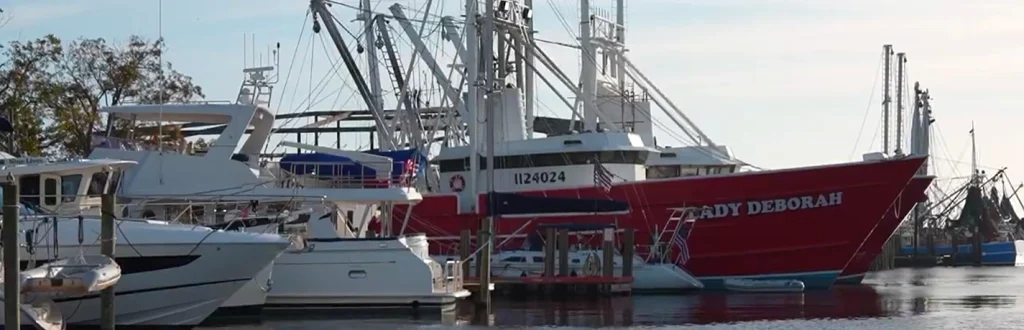
Elizabeth City, situated on the Pasquotank River, proudly bears the title “Harbor of Hospitality,” a nickname bestowed by passing boaters and truly earned. The Museum of the Albemarle chronicles 10,000 years of regional history. Waterfront marinas warmly welcome transient boaters, and the town’s Victorian homes rival those on the Outer Banks, but without the crowds.
Nearby, Hertford maintains a quieter charm. Visit the Newbold-White House, built in 1730, which holds the distinction of being North Carolina’s oldest brick house. After your tour, allow the gentle flow of the Perquimans River to dictate your pace.
Local’s take: Edenton’s historic homes open for tours on select weekends. Plan your visit to coincide with one; experiencing a 1700s parlor firsthand is far more engaging than simply reading about it.
The Quiet Corners: Belhaven to Swan Quarter
Venture beyond the well-known towns and discover a different pace of life.
Belhaven, nestled on the Pungo River, boasts a vibrant working waterfront filled with marinas, crab pots, and fishing boats, making it an excellent base for paddlers.
In tiny Pamlico County, Bayboro and Vandemere share the Bay River. One serves as the county seat, while the other barely registers a traffic light. Both offer an abundance of water, sky, and tranquility.
Columbia, situated on the Scuppernong River, is a gateway to the Pocosin Lakes National Wildlife Refuge. This refuge is home to one of the East Coast’s densest black bear populations, celebrated annually each June during the North Carolina Black Bear Festival.
Swan Quarter serves as a vital launch pad. From here, the NCDOT ferry departs for Ocracoke, traversing Pamlico Sound in approximately two and a half hours. Reservations are essential, so be sure to book in advance.
Local’s take: During winter, Lake Mattamuskeet, near Swan Quarter, becomes a breathtaking spectacle as tens of thousands of tundra swans and snow geese descend upon its waters. This display rivals any along the coast.
Planning Your Inner Banks Trip
For the widest selection of lodging and dining, base yourself in Washington or New Bern. From there, you can easily take day trips to Bath, Oriental, and the charming towns along the Albemarle Sound.
The most convenient airport is Coastal Carolina Regional Airport (EWN) in New Bern. Alternatively, US-17 serves as the primary north-south artery, connecting the entire region.
Spring and fall offer ideal conditions for sailing, while summer is perfect for enjoying festivals and the warm waters of the sound. Winter provides a peaceful experience with abundant waterfowl and fewer crowds.
For more Carolina vacation area guides and Carolina coastal travel inspiration, dive deeper into explorecarolinabeaches.com and our Festival Guides.
Frequently Asked Questions
What are the Inner Banks?
The Inner Banks refers to the sound-side towns along coastal North Carolina. They are situated along the Pamlico and Albemarle Sounds, as well as the Neuse, Pamlico, Trent, and Pasquotank Rivers. Unlike the ocean-facing Outer Banks, the Inner Banks are characterized by historic waterfront towns rather than beaches.
How do the Inner Banks differ from the Outer Banks?
The Outer Banks face the Atlantic Ocean, offering surf, dunes, and larger crowds. In contrast, the Inner Banks face the calmer sounds, providing a setting rich in colonial history within smaller towns. The Outer Banks are ideal for a beach vacation, while the Inner Banks offer a waterfront escape.
What is the best home base for an Inner Banks trip?
Oriental, Washington, and New Bern are excellent choices due to their central locations, offering the widest selection of hotels, restaurants, and day-trip opportunities. For travelers primarily interested in the Albemarle Sound towns, Elizabeth City is a suitable option.
When is the best time to visit?
Spring and fall provide mild weather and fewer crowds. Summer is vibrant with festivals and warm water perfect for paddling. Winter attracts spectacular waterfowl to the refuges. The best time to visit depends on your personal interests.
Can you swim in the Inner Banks?
Yes, swimming is possible in the sounds and rivers. The water is brackish and calm, without ocean waves. If you desire Atlantic surf, you can take a day trip to Atlantic Beach from the Oriental area.
How do I get to Ocracoke from the Inner Banks?
Take the Swan Quarter ferry, which crosses Pamlico Sound in approximately two and a half hours. Reservations are required and should be booked in advance through NCDOT.

Planning a Carolina beach trip? Use our Beach Finder Quiz to get a personalized recommendation, or compare any two beaches side by side with the Carolina Beach Comparison Tool.
📱 Download our free Carolina Beaches app — Get it here