
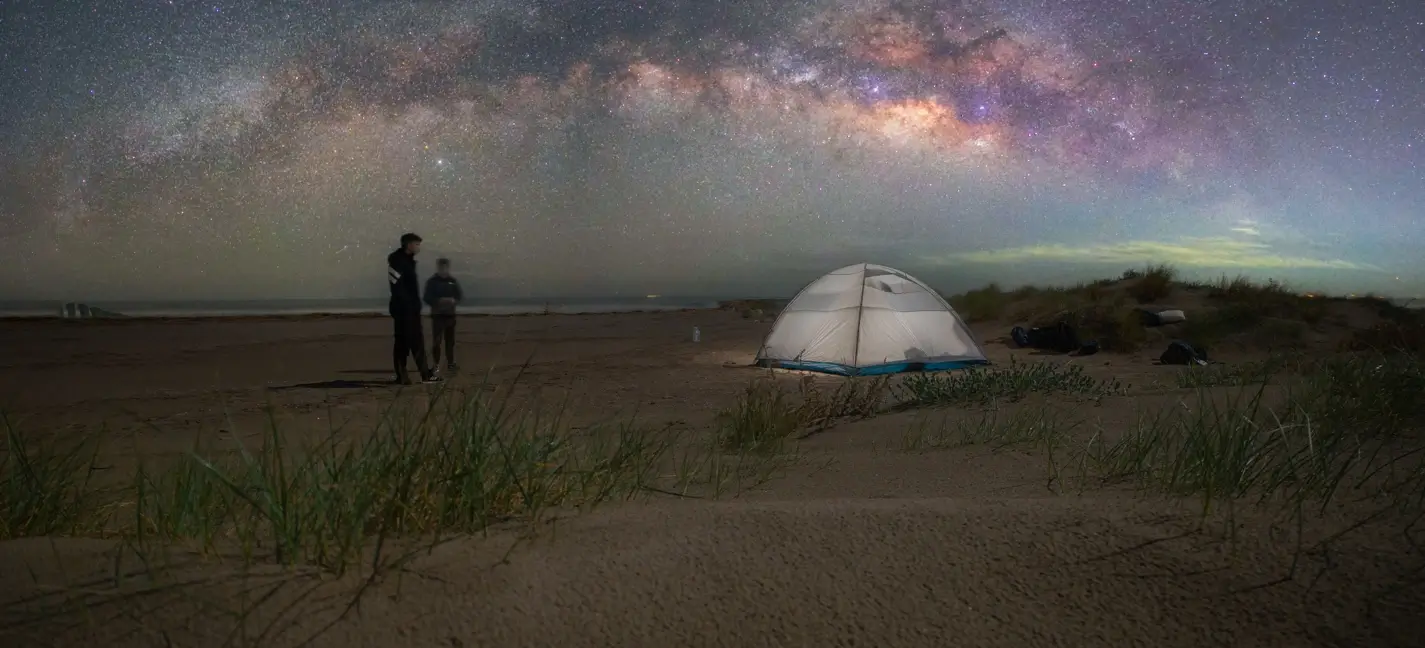
The fantasy sells itself: you fall asleep to the sound of waves, wake up to a sunrise painted in pink and gold, and skip the hotel bill entirely. Sounds perfect. Reality, however, involves a flashlight in your face and a ranger asking for ID.
Camping and going to sleep on the beach in North and South Carolina is a legal gray zone and the answer changes dramatically depending on where you are on that 500-mile stretch of coast. Some spots will welcome you with open sand. Others will hit you with a fine before midnight.
Here’s the real breakdown, from the Outer Banks to the Lowcountry.
The Short Answer: It Depends on the Town
Neither North Carolina nor South Carolina has a single statewide law banning overnight beach sleeping. Instead, each municipality writes its own rules, and along the Carolina coasts, towns take those rules seriously.
Most developed beach towns prohibit sleeping on the sand after dark. Sunset Beach, NC, for example, bans sleeping and camping on the beach after dark full stop. Myrtle Beach, SC, enforces a hard prohibition from 9 p.m. to 8 a.m. North Myrtle Beach bans it from 9 p.m. to sunrise. Horry County, which covers much of the Grand Strand, has its own county-wide ordinance on top of individual city rules.
The pattern is consistent: the more developed the town, the more certain they are to have an ordinance against it. Getting caught typically means being asked to leave first. Refuse, and you’re looking at a fine of up to $500 or worse.
What most visitors don’t know is that the legal situation shifts entirely once you leave town limits and step into federal or state park land, where some of the most memorable beach nights on the East Coast are waiting.
Where You Actually Can Sleep on the Beach
Cape Lookout National Seashore (NC): The Holy Grail
If you want to sleep on the sand legally and legitimately, Cape Lookout National Seashore is your answer. Both North Core Banks and South Core Banks offer primitive beach camping directly on the ocean shore. No designated campsites, no hookups, no crowds. You pitch wherever you want, seaward of the dunes.
Access is by ferry only, which keeps the numbers down. Groups of fewer than 25 people don’t need a permit. Camping is limited to 14 consecutive days. Campfires are allowed on the ocean beach below the high tide line, in damp sand, away from vegetation.
This is backcountry-style camping on one of the most undeveloped barrier islands on the Eastern Seaboard. The nearest emergency services are in Davis or Morehead City, so come prepared.
Freeman Park, Carolina Beach (NC): Beach Camping with a Twist
Freeman Park is one of the better-known legal beach camping spots in NC, but it comes with specific timing. Overnight camping in a 4WD vehicle is permitted from Labor Day through the Thursday before Memorial Day but not during the summer peak. Reservations are required at freemanparkcamping.pmreserve.com, and you’ll need a valid Freeman Park access pass.
Note: this is vehicle camping on the beach, not tent camping in the traditional sense. Quiet hours run 11 p.m. to 7 a.m., and the 14-consecutive-day limit applies here too.
The off-season timing is actually a gift. The park is far less crowded, the weather is cool and crisp, and you’ll have stretches of sand largely to yourself, which is a very different experience from fighting for space in July.
Do Carolina Beaches Close at Night?
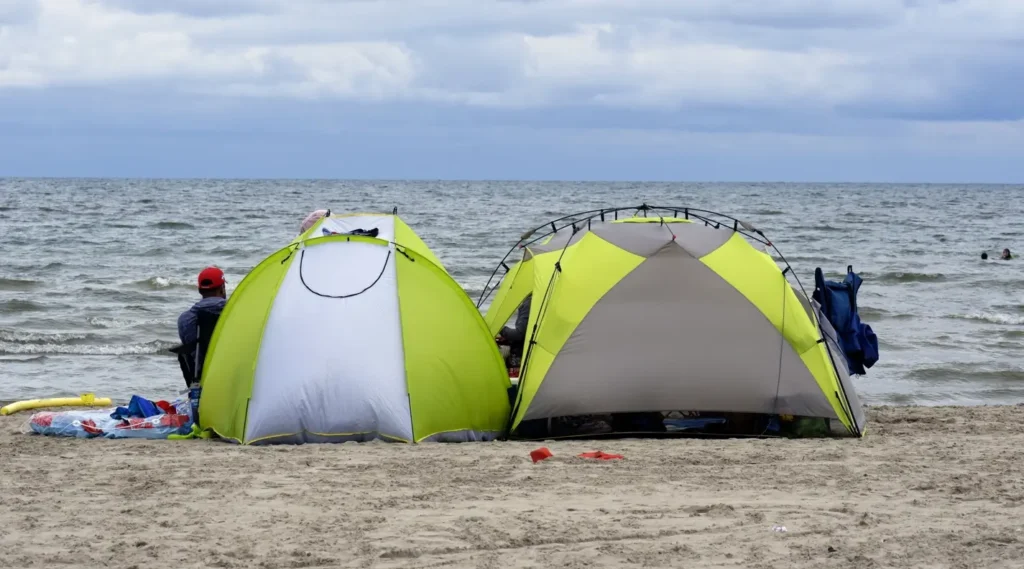
Technically, most public beaches don’t “close” asyou can walk the shoreline at midnight without issue. What closes is your right to set up camp or sleep on that shoreline in most jurisdictions.
The distinction matters. A late-night walk on the Wrightsville Beach strand? Fine. Unrolling a sleeping bag at the boardwalk? That’s a different conversation with law enforcement.
Some towns also enforce beach furniture rules tied to sunset. During sea turtle nesting season, roughly May through October along most of the coast, many NC and SC towns require you to remove chairs, umbrellas, and personal gear from the beach by 9 p.m. This isn’t about you personally; it’s about protecting loggerhead sea turtles trying to nest in the dark. Those rules carry federal backing under the Endangered Species Act, so they’re not suggestions.
Can I Camp on the Beach in a Tent?
In most developed Carolina beach towns: no. However, a few legitimate options exist beyond Cape Lookout.
Cape Hatteras National Seashore (NC) has established campgrounds in Rodanthe, Frisco, Ocracoke, and elsewhere, many within earshot of the ocean. Camping directly on the beach east of the dunes is not permitted in the Seashore, but the campgrounds themselves put you close enough that the distinction barely registers.
Ocracoke Island (NC) deserves special mention. The NPS campground there is directly behind the dunes, with beach access steps away. It books up fast, sometimes months in advance for summer. Plan accordingly.
Hunting Island State Park (SC) offers one of the most dramatic camping experiences on the Southeast coast. The park sits on a barrier island near Beaufort, SC, and campsites sit within walking distance of a wild, eroding oceanfront. It’s not sleeping on the sand itself, but you’ll fall asleep to wave sounds and wake up to pelicans. Book early, it’s consistently one of South Carolina’s most popular state parks.
In South Carolina, public beaches in areas like Myrtle Beach and the Grand Strand largely prohibit tent camping on the beach outright. The state parks are your legal route.
Is It Safe to Sleep on the Beach?
Even where it’s legal, sleeping on the beach comes with real risks that no one in a tourism brochure will mention.
Wildlife is the big one. Sea turtle nesting season runs from approximately May through October on both coasts. A 300-pound loggerhead coming ashore at 2 a.m. to nest is not concerned with your sleeping bag. Disturbing nesting turtles or their eggs is a federal offense under the Endangered Species Act. Beyond turtles, beach mice, ghost crabs, and other wildlife are active at night and are attracted to food.
Weather shifts fast on the barrier islands. A beautiful clear evening can turn into a fast-moving coastal storm by 3 a.m. On remote beaches like North Core Banks, you’re a ferry ride away from shelter.
Tidal flooding catches people off guard. On low-lying barrier beaches, particularly after storms, tide lines can reach areas that look perfectly safe at sunset. Know your tidal schedule.
Personal safety is a practical reality in more developed areas. Beachside towns that prohibit overnight sleeping do so partly for this reason. Isolated legal camping spots, meanwhile, carry the usual backcountry risks.
The smart move: camp where it’s legal, tell someone your plan, check the tidal charts, and keep food secured.
What About the Outer Banks?
The OBX is a special case and a common source of confusion. The beaches are beautiful, the vibe is relaxed, and it feels like the kind of place where no one would care if you slept on the sand. They do care.
Camping directly on OBX beaches, east of the dunes, is not permitted in any of the towns from Corolla to Nags Head. The area has plenty of excellent campgrounds, both NPS-managed and private, that put you close to the action without the legal headache.
The exception is the Cape Lookout end of things, accessible by ferry from Beaufort or Harkers Island. That’s where the rules change entirely, and the experience is worth the extra logistics.
Local’s Take: The Off-Season Is Everything
Here’s what the casual visitor almost never figures out: the best legal beach camping on the Carolina coast happens between October and April. Cape Lookout is uncrowded. Freeman Park is open for overnight stays. The sea turtle restrictions lift. The shoulder-season weather, cool nights, mild days, dramatic skies, is arguably better for camping than the humid heat of July.
Savvy coastal campers who know the rules use that window to have the kind of beach experiences that feel genuinely private. The ones who try to wing it in August on a Myrtle Beach strand are the ones who end up on the wrong side of a flashlight.
FAQ
Is there anywhere in NC where beach camping is totally legal?
Yes. Cape Lookout National Seashore (both North and South Core Banks) allows primitive beach camping directly on the oceanfront, accessible by ferry. No permit is required for groups under 25. Freeman Park in Carolina Beach also allows overnight vehicle camping in the off-season with a reservation.
Will sea turtle nesting season affect my beach visit at night?
Yes, if you’re visiting between May and October. Many NC and SC beach towns require all personal gear, chairs, umbrellas, equipment, to be removed from the beach by 9 p.m. during nesting season. Bright lights on the beach can disorient hatchlings and nesting females. These rules carry the weight of federal endangered species protections.
Can I pitch a tent on a South Carolina beach?
On most public SC beaches, no. Overnight tent camping directly on the sand is prohibited. Your best legal options are state park campgrounds within walking distance of the beach, such as Hunting Island State Park near Beaufort. Some private campgrounds near the coast also offer beach-adjacent sites.
What happens if I get caught sleeping on the beach where it’s not allowed?
Enforcement typically starts with education, you’ll be asked to leave. Refusal escalates to a citation, with fines commonly up to $500. In some jurisdictions, repeated refusal can result in arrest. Most officers treat it as a quality-of-life issue first, not a criminal matter.
The Carolina coast runs 500 miles and holds enough wild, legal, unforgettable beach nights to fill a lifetime, you just have to know where to look.
For more Carolina vacation area guides and Carolina coastal travel inspiration, keep exploring explorecarolinabeaches.com
Planning a Carolina beach trip? Use our Beach Finder Quiz to get a personalized recommendation, or compare any two beaches side by side with the Carolina Beach Comparison Tool.
📱 Download our free Carolina Beaches app — Get it here