
I have been going to Carolina beaches for over forty years. I have watched spectacular sunrises over the Atlantic and eaten too much soft-serve and dug my toes into sand from the Outer Banks all the way down to Hilton Head. I love these beaches with my whole heart.
I have also had my car broken into at a beach parking lot, watched belongings disappear from a blanket the moment I turned my back, and once got pulled sideways by a current that reminded me, very quickly, who actually runs this ocean. It is not me.
After four decades of beach trips, the wonderful ones and the ones that went sideways, I want to share what I wish I’d known sooner. Consider this the guide I would hand to every first-time (and returning) Carolina beach visitor before they ever touch the sand.
The Water: The Danger No One Takes Seriously Enough
Let’s start here, because this is the big one.
Rip currents are the number one weather-related killer on the Carolina coast. Between 2000 and 2024, they claimed roughly 192 lives across North and South Carolina and that’s about eight deaths per year, on average. These aren’t freak accidents. They are a consistent, predictable danger that catches people off guard because they don’t look the way you’d expect.
A rip current doesn’t drag you under. It pulls you out fast, relentlessly, and in a narrow channel away from shore. You can be standing in waist-deep water one second and fifty yards out the next. Even strong swimmers have drowned fighting against them, because the instinct is to swim straight back to shore, which is exactly the wrong move.
What to do if you’re caught in one: Stay calm. Float. Do not exhaust yourself swimming against the current. Swim parallel to the shore across the current, not against it, until you’re out of its pull, then angle back to the beach. If you can’t escape it, float, conserve your energy, and wave for help.
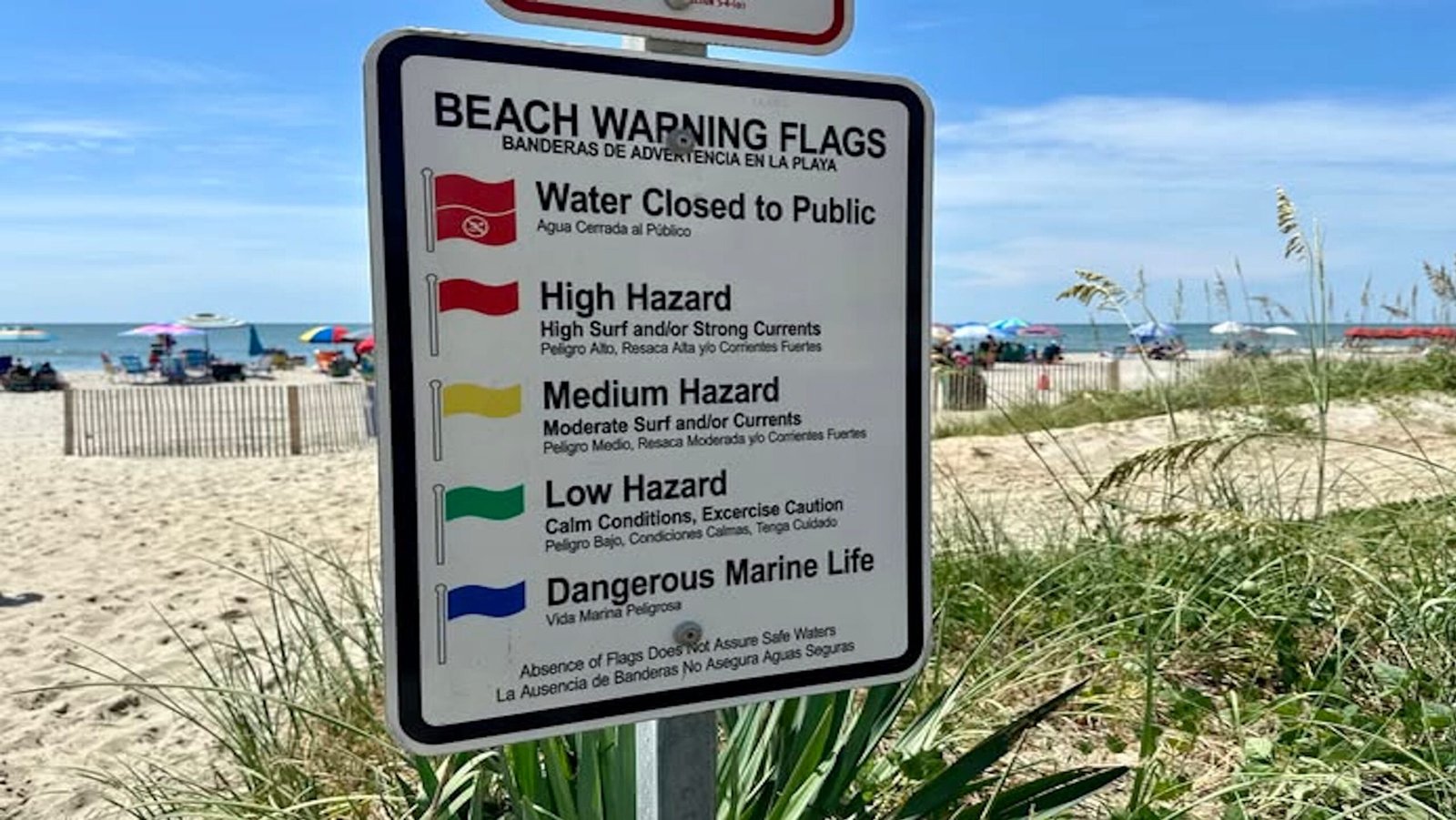
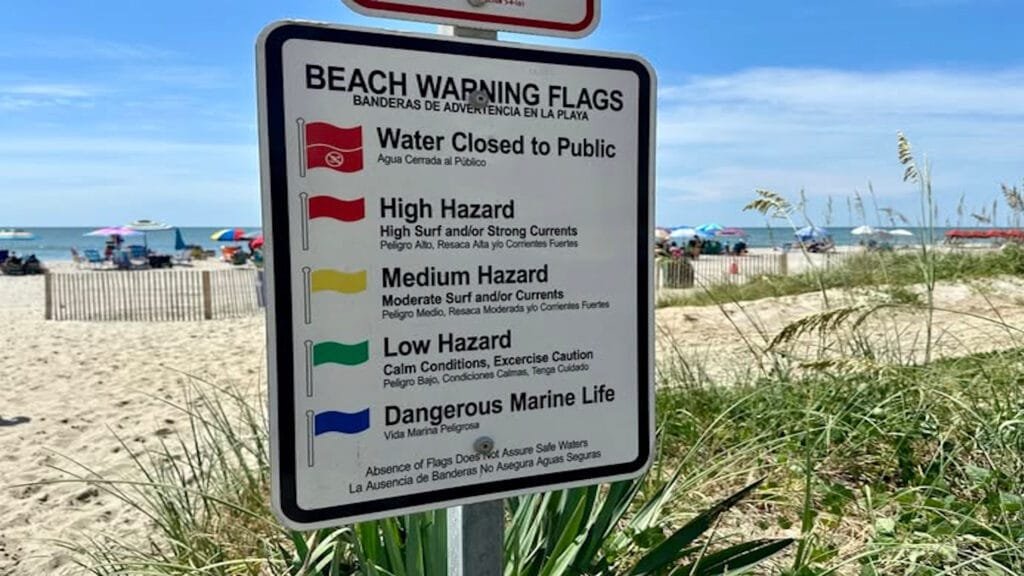
A few things make rip currents extra tricky here in the Carolinas. Distant tropical storms, sometimes thousands of miles offshore, can generate dangerous rip currents on a perfectly sunny, calm-looking day. The weather on the beach tells you nothing about what’s happening in the water. Always, always check the National Weather Service surf zone forecast before you swim, and pay attention to the beach flag system:
- Green: Low hazard, calm conditions
- Yellow: Moderate surf, use caution
- Red: High hazard, rough surf, rip currents likely — stay out
And please: swim near a lifeguard whenever one is available. About 80 percent of lifeguard rescues at surf beaches involve rip currents. They are trained for this. Let them help.
Most beach safety advice focuses on sunscreen and jellyfish, but rip currents are the real threat on this coast; they kill more people here than tornadoes, floods, and wind combined. We dug into the National Weather Service data to find out which Carolina beach actually carries the highest risk, and it’s not the one most visitors would guess. Read the full investigation before your next trip.
Shorebreak: The Sneaky Hazard Nobody Mentions
While everyone talks about rip currents, shorebreak gets far less attention but it should get more. Shorebreak happens when waves break steeply and hard right at the shore rather than gradually rolling in. On beaches with a sharper slope (hello, much of the Outer Banks), waves can come down with surprising force and drive you straight into the sand.
Neck and back injuries from shorebreak are real. The rule is simple: never turn your back on the ocean. Waves don’t announce themselves.
Tide timing plays a bigger role in beach safety than most people realize: rip currents often intensify around outgoing tides, and water can rise faster than expected depending on where you are on the coast. Before you head out, check our live tide and weather page to see what’s happening at your specific stretch of the Carolina coast today.
Marine Life: Jellyfish, Stingrays, and the Occasional Shark
Jellyfish are the creature you’re most likely to actually encounter. They’re especially common in warmer summer months. If you spot them in the water, get out. If you get stung, rinse the area with salt water or vinegar but not fresh water, which can actually release more venom. Use something flat (like a credit card) to scrape off any remaining tentacles. Do not rub the area. If there’s swelling, difficulty breathing, or you feel faint, get medical attention immediately.
The Portuguese man o’ war sometimes shows up on Carolina beaches. It looks like a purple-blue balloon and is distinctly not a jellyfish so treat its sting with saltwater and then hot water (not vinegar), and seek medical care if symptoms are serious.
Stingrays like to rest in shallow, sandy water near the shore. The shuffle-your-feet rule exists for a reason: if you slide your feet along the sand rather than stepping down, you’ll nudge a stingray away rather than step on it.
Sharks! Yes, they’re in these waters, and yes, occasional incidents do happen in the Carolinas. But the risk is genuinely low. To reduce it further: avoid swimming at dawn, dusk, or after dark when sharks feed most actively; stay away from fishing piers and bait-heavy areas; swim in groups; and leave the shiny jewelry on shore (it can look like fish scales to a shark). Don’t swim if you’re bleeding.
Your Stuff: Car Break-Ins and Beach Theft Are Real
Now for the part that hits closest to home for me and probably for a lot of you.
Beach parking lots are a prime target for theft, and this is true across NC and SC. Smash-and-grab break-ins happen at lots up and down the coast, from the Grand Strand to the Outer Banks. In fact, North Carolina beach zip codes have ranked among the most theft-prone in the country in recent years. And here’s the statistic that always sticks with me: in Myrtle Beach, an estimated 85 percent of thefts from vehicles involved cars that were unlocked. That’s not sophisticated crime. That’s opportunity.
Rules I now live by at the beach:
- Leave nothing visible in the car. Not your phone, not a shopping bag, not a pair of sunglasses. Anything that looks worth grabbing can result in a broken window.
- Lock your car every single time, even “just for a minute.”
- If you have to leave valuables in the car, put them in the trunk before you park and not after you arrive, when someone might be watching.
- Park in well-lit, well-trafficked areas. Isolated lots are higher risk.
- Comprehensive auto insurance generally covers broken windows from a break-in, but it typically does not cover stolen personal items like phones, laptops, or wallets because that falls under renters’ or homeowners’ insurance. Know your coverage before you go.
On the beach itself: Don’t leave bags and electronics unattended when you go in the water. Take turns with your group keeping an eye on your stuff. A dry bag or a lockable beach safe (yes, they exist and they stake into the sand) can be worth every penny. Pick a spot near other people; thieves prefer isolated targets.
Sun, Heat, and the Stuff We Always Forget
Carolinas summers are hot. The sun at the beach is strong, and the breeze off the water makes it easy to underestimate how much you’re cooking.
- Use SPF 30 or higher and reapply every time you get out of the water, every time. Not once. Every time.
- Stay hydrated. Bring more water than you think you need. Alcohol and caffeine dehydrate you faster in the heat.
- A beach umbrella isn’t just a comfort on a hot July afternoon; it can prevent heat exhaustion.
- If you or someone in your group feels dizzy, nauseous, stops sweating, or has skin that feels hot and dry, get to shade and cool water immediately. Heat stroke is a medical emergency.
Lightning: Get Off the Beach
This one is simple but people ignore it every summer. Thunderstorms build fast on the Carolina coast. The moment you hear thunder, even distant, even if you can’t see clouds, get off the beach and get into an enclosed building or vehicle. Do not wait to see lightning. Do not stay “just for a few more minutes.”
A Few Final Things
After forty years, here’s what I know for certain: these beaches are extraordinary, and the vast majority of visits are exactly what you hope for: sun and salt and joy and the kind of tired that comes from a genuinely good day. But the ocean doesn’t grade on effort or enthusiasm. It doesn’t know you drove three hours to get here.
Respect the flags. Know your rip current escape route before you need it. Lock your car like it’s a reflex. Watch your things. Slather on the sunscreen. And when the thunder rolls, get off the sand.
The Carolinas will be here tomorrow. So will you.
For more Carolina vacation area guides and Carolina coastal travel inspiration, keep exploring explorecarolinabeaches.com
Safety and surveillance aren’t the same thing, even when towns treat them that way. Departments up and down the coast have installed license-plate cameras in the name of safety, often with little public input. Before you assume more cameras mean a safer trip, read our investigation into Flock cameras on the Carolina coast and decide for yourself.
FAQ
What is the biggest beach danger in the Carolinas?
Rip currents are the leading ocean hazard on Carolina beaches. These powerful channels of water can pull swimmers away from shore quickly, even on days that appear calm.
What should I do if I get caught in a rip current?
Stay calm and avoid swimming directly back to shore against the current. Instead, swim parallel to the shoreline until you escape the current, then head back toward the beach.
Are lifeguarded beaches safer?
Yes. Swimming near lifeguards significantly improves safety because trained personnel can identify hazards, monitor conditions, and respond quickly during emergencies.
What do beach warning flags mean?
Beach flags communicate water conditions. Red flags generally indicate dangerous surf or strong currents, while other flag colors signal varying levels of caution. Always follow posted warnings and local guidance.
How can I protect myself from sun and heat?
Apply sunscreen regularly, wear protective clothing, seek shade during the hottest part of the day, and drink plenty of water. Heat exhaustion and dehydration can develop faster than many visitors realize.
Are sharks a major concern on Carolina beaches?
Shark encounters are extremely rare. To reduce risk, avoid swimming near fishing activity, stay out of the water at dawn and dusk, and swim in groups when possible.
What are the most overlooked beach safety mistakes?
Swimming alone, ignoring warning flags, leaving large holes in the sand, turning your back on waves, and overestimating your swimming ability are among the most common mistakes. Experienced locals often say the best safety tool is respecting the ocean’s power.
Planning a Carolina beach trip? Use our Beach Finder Quiz to get a personalized recommendation, or compare any two beaches side by side with the Carolina Beach Comparison Tool.
📱 Download our free Carolina Beaches app — Get it here