Beach music didn’t die. It just moved indoors, aged gracefully, and became a little harder to find. If you grew up shagging on a wooden dance floor at Ocean Drive in Myrtle Beach, you already know this sound never actually left.
For everyone else, here’s the real story behind Carolina beach music, where it came from, and why it still matters along this coast.
What Is Carolina Beach Music, Exactly?
Carolina beach music is a distinct regional genre rooted in the coastal Carolinas. It grew from 1950s and ’60s rock, R&B, and doo-wop, built around a smooth, mid-tempo groove. Most tracks run somewhere between 100 and 130 beats per minute, all in 4/4 time.
That specific tempo matters because it exists to serve the Carolina shag, a partner dance built on a six-count rhythm. Dancers glide rather than bounce, and the music has to match that laid-back energy exactly.
Unlike most American music genres, beach music never chased national radio play. It stayed regional almost by design, tied closely to the Grand Strand and its beach clubs.
Insider detail:
The genre earned its name because it was, quite literally, the music playing at Carolina beach towns during summer. Locals didn’t set out to create a genre. They just kept dancing to what worked.
Where Did Beach Music Originate?
The most repeated origin story points to Carolina Beach, North Carolina, in 1948. Jim Hanna, who ran the Tijuana Inn, started playing African American jump blues and R&B records on his jukebox. His friend Chicken Hicks reportedly supplied the records after regular trips to nearby Black communities.
Other historians credit Ocean Drive, now part of North Myrtle Beach, as the true birthplace of the shag dance itself. Both towns played a role, and honestly, the two origin stories aren’t mutually exclusive. Beach music and shag dancing developed together across several coastal towns throughout the late 1940s and 1950s.
Segregation shaped this history directly. White teenagers first encountered R&B by sneaking into Black clubs and juke joints, since mainstream white radio stations largely ignored these artists. That cross-cultural exchange became the genre’s foundation.
What most visitors don’t know:
North Myrtle Beach’s Ocean Drive section still hosts two massive shag gatherings every year, Spring Safari and Fall Migration. Thousands of dancers descend on the same stretch of coast where this whole scene began.
Who Are the Famous Beach Music Singers?
Several names became genuinely synonymous with the genre. General Johnson, fronting Chairmen of the Board, gave the scene one of its defining anthems with “Carolina Girls.” The Tams delivered endless summer energy through “Be Young, Be Foolish, Be Happy.”
The Embers earned the nickname “the heart and soul of beach music,” building a decades-long career almost entirely within this regional scene. Maurice Williams, born right in Lancaster, South Carolina, wrote and recorded “Stay” with the Zodiacs, a doo-wop classic still played at every shag event today.
Other groups shaped the sound too. The Catalinas built a reputation on smooth harmonies, while newer acts like Band of Oz and The Fantastic Shakers kept the tradition alive for later generations.
Locals’ take:
Ask any longtime shagger about General Johnson, and you’ll get a story, not just a name. He didn’t just sing beach music. He helped define what the genre sounded like for decades after its founding era.
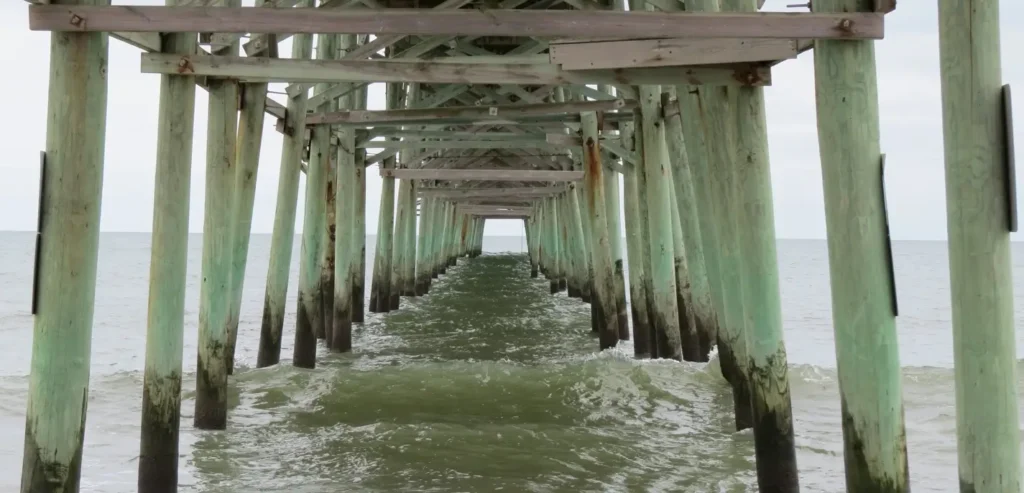
Who Sang “Under the Boardwalk”?
The Drifters recorded “Under the Boardwalk” in 1964, and it remains one of beach music’s most enduring standards. The song reached number four on the Billboard Hot 100 and topped the R&B chart that same year.
Its lyrics fit the genre perfectly, painting a picture of seaside romance and summer escape. That theme runs through nearly every beach music classic, tying directly back to the coastal culture that birthed the genre.
The song found new life decades later. When “Dirty Dancing” featured it on the 1987 soundtrack, an entirely new audience discovered the tune, even if most had no idea about its Carolina roots.
Insider detail:
“Under the Boardwalk” plays at practically every shag event along the coast today, from Fat Harold’s in North Myrtle Beach to smaller beach clubs scattered along the Grand Strand. It’s essentially a required song, not an optional one.
What Instruments Define the Beach Music Sound?
Classic beach music leans heavily on horn sections, and that’s no accident. Saxophone, trumpet, and trombone lines gave the genre its bright, danceable energy, drawing directly from big band and R&B traditions.
Underneath those horns, you’ll typically find electric guitar, bass, and a steady drum kit driving that blues-shuffle rhythm. Keyboards or organ often round out the sound, adding warmth without overpowering the groove.
What separates beach music instrumentally from straight R&B or soul is restraint. Nothing moves too fast, and nothing overwhelms the dancers. Every instrument serves the shag’s smooth, gliding footwork first.
What most visitors don’t know:
Live beach bands built entire careers on their horn sections alone. Groups like The Embers toured for decades specifically because their brass arrangements translated so well to a live dance floor experience.
So What Actually Happened to Beach Music?
Here’s the honest answer. Beach music never disappeared, but it changed shape more than once. By the late 1960s, national tastes shifted toward harder rock and disco, and the genre’s mainstream visibility faded fast.
Then came a genuine rebirth in the late 1970s and 1980s. Shag clubs organized formally, contests multiplied, and organizations like the Society of Stranders gave the scene real structure. Ironically, this same institutionalization changed the genre’s character. DJs increasingly replaced live bands at events, and beach music shifted from a performance culture into more of a curated, nostalgic dance format.
Awards shows followed, starting with the first Beach Music Awards in 1981 in Myrtle Beach, later evolving into today’s Carolina Beach Music Awards. Radio stations built dedicated beach music charts, and SiriusXM eventually launched a Carolina Shag channel in 2018, proof the genre still commands a loyal, if niche, national audience.
Today, beach music survives as a genuinely intergenerational tradition rather than a chart-topping genre. Younger shaggers often blend in modern country and pop hits that fit the tempo, while purists stick to the R&B classics that started it all.
Local’s take:
Every Sunday evening, live music still plays under the bridge at Holden Beach, drawing locals who’ve been dancing this same groove for fifty years. That’s beach music’s real survival story, not the charts, but the ritual.
Frequently Asked Questions
Where did beach music originate?
Most historians trace it to Carolina Beach, North Carolina, in the late 1940s, with Ocean Drive in North Myrtle Beach playing an equally central role in developing the shag dance alongside it.
What defines Carolina beach music as a genre?
It’s built around R&B, soul, and doo-wop songs at a mid-tempo blues-shuffle rhythm, specifically designed to accompany the Carolina shag dance.
Who sang “Under the Boardwalk”?
The Drifters recorded it in 1964, and it remains a defining beach music and shag dance standard today.
Is beach music still popular today?
Yes, though it’s become a niche, intergenerational tradition rather than a mainstream genre, sustained through shag clubs, festivals, and dedicated radio programming.
What’s the difference between beach music and the Carolina shag?
Beach music refers to the songs themselves, while the Carolina shag is the partner dance performed to that music. The two developed together and remain deeply linked.
The songs might be decades old, but along this coast, beach music never really stopped playing.
For more travel guides, beach recommendations, and coastal travel inspiration, keep exploring explorecarolinabeaches.com
Planning a Carolina beach trip? Use our Beach Finder Quiz to get a personalized recommendation, or compare any two beaches side by side with the Carolina Beach Comparison Tool.