
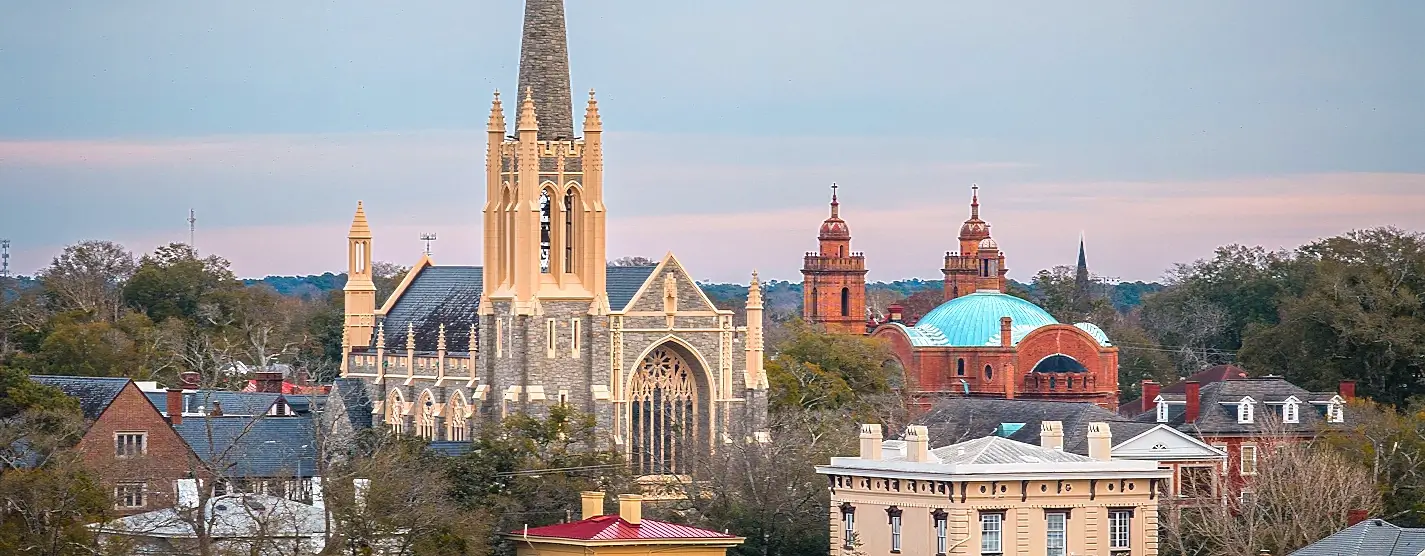
Most coastal guides take you straight to the beach. We’re going the scenic route.
Everything about Wilmington has been shaped by its location at the confluence of the Atlantic and the Cape Fear River. Here, merchants made their fortunes and fishermen made a living. Later, it was transformed into a functional backlot by film crews, and college students gave it an ongoing restless vibe. When you combine all of that with a historic port town, the result is something much more intriguing than a typical beach visit. You get a coastal city with a true cultural pulse.
You’re missing half the story if you’re just here for the beach. Let’s make that right.
Affiliate Disclosure: This page contains affiliate links. If you book through them, we may earn a small commission at no extra cost to you.
What Is the Culture Like in Wilmington, NC?
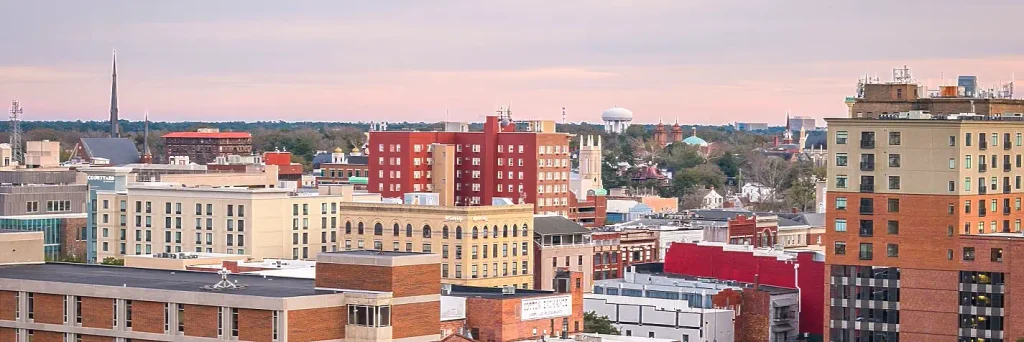
Wilmington is powered by a combination of new creative energy and old money manners. Downtown, tree-shaded streets are lined with antebellum mansions, but a few blocks away, muralists are repainting old warehouse walls. The location is defined by that contrast.
Here, people take history seriously, and for good reason. With its abundance of 19th-century residences and ironwork balconies, the downtown historic district is one of the biggest in the nation. In the meantime, things remain spontaneous due to a flourishing film industry. A coffee shop you pass may turn out to be an afternoon movie set.
Local’s take:
When you ask a longtime resident about “Wilmywood,” you’ll see a smile on their face. From teen dramas to Marvel blockbusters, decades of television and film production made this a respectable movie industry town. Stories about seeing actors at the Oleander Drive grocery store continue to circulate among the locals.
Why Is Wilmington, NC Famous?
Three things built Wilmington’s reputation, and none of them involve sunscreen.
The port comes first. The density of preserved architecture downtown can be explained by Wilmington’s role as the largest city in North Carolina and a crucial Confederate blockade-running hub during the Civil War. Hollywood East comes in second. The city got its moniker from what the locals still refer to as Screen Gems Studios, which is now known as Cinespace Wilmington due to an ownership change in 2023. The studio was involved in the production of hundreds of films and television shows. The USS North Carolina, a decorated World War II battleship that is permanently docked across the river and visible from almost every angle from downtown, comes in third.
You can see why Wilmington draws more visitors than just sun worshipers when you consider the barrier-island beach system that is only a short distance away.

Top 10 Things to Do in Wilmington, NC
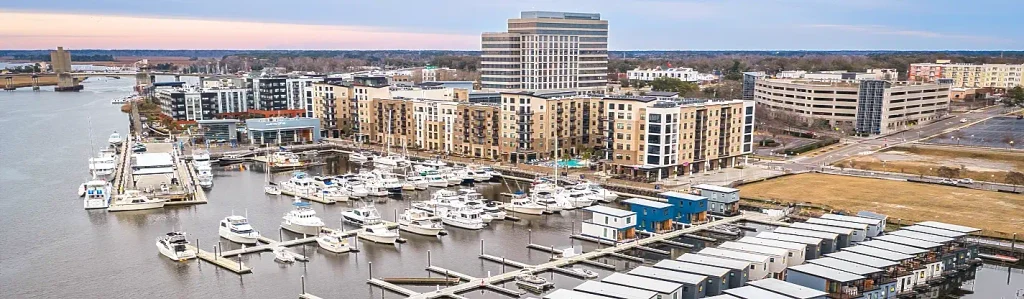
- Take a stroll along the riverwalk. This more than mile-long boardwalk that connects stores, eateries, and river cruises anchors downtown along the Cape Fear River.
- Take a tour of the battleship USS North Carolina. Imagine life at sea during the war by climbing through the decks.
- Take a look around the Historic District. Explore Bellamy Mansion and numerous intact antebellum residences.
- See a performance at Thalian Hall. It was established in 1858 and is still among the nation’s oldest theaters still in continuous operation.
- Go to Airlie Gardens. This is a peaceful haven with live oaks, azaleas, and a centuries-old tree called Airlie Oak.
- Take a look around the Cameron Art Museum. This contemporary gallery, located just outside downtown, is filled with contemporary and regional pieces.
- Go on a ghost walk. Wilmington’s haunted past is deeply ingrained, and guided tours of the city’s alleys give visitors a real chill.
- Take a cruise on the Cape Fear River. A completely different view of the battleship and skyline is provided by riverboat tours.
- Take a look around the Brooklyn Arts District. Wilmington’s working-artist community can be seen in the studios and galleries on North 4th Street.
- Take a day trip to Kure Beach, Carolina, or Wrightsville. They are all within a short drive of one another, and each has a distinct personality.
What most visitors don’t know:
A truly great Friday farmers’ market is held at Poplar Grove Plantation, which is located just north of the city. For a more authentic taste of local life, avoid the tourist area and head there instead.
Is Wilmington Just a College Town?
Not precisely, but the atmosphere is definitely shaped by the University of North Carolina Wilmington. Neighborhoods close to the campus benefit from UNCW’s energy, live music, and younger population. Calling Wilmington “just” a college town, however, oversells one aspect of the larger picture.
Additionally, a sizable portion of the population is made up of retirees; because of the climate, access to healthcare, and slower pace close to the coast, many older people move here. With retirees on one side and students on the other, this combination produces an odd social mix. No one finds it odd that craft breweries are located next to bridge clubs.
Local’s take:
Between those two extremes is where the true Wilmington resides. The gaps are filled by young professionals, artists, and longtime Cape Fear families, who, in all honesty, are what keep downtown vibrant all year long.
Does Wilmington Have a Strong Music Scene?
Yes, and it’s louder than most tourists anticipate. Perhaps the most Southern concert venue imaginable, Greenfield Lake Amphitheater hosts touring acts against a backdrop of Spanish moss and cypress trees. Most weekends, original local acts perform at downtown venues like Bourgie Nites and Reggie’s 42nd Street Tavern.
Wilmington’s music culture leans DIY outside of the venues. The scene is kept grounded rather than commercial by independent musicians, many of whom are associated with UNCW’s arts programs. However, venue lineups change frequently, so before planning a night around a single performance, check the listings.
What About the Arts and Creative Community?
It is robust and getting stronger. A section of abandoned warehouses was transformed into functional studios, galleries, and event venues by the Brooklyn Arts District. Instead of merely viewing completed pieces behind glass, monthly art walks bring crowds downtown to interact directly with artists.
The Wilson Center at Cape Fear Community College provides Wilmington with a performing arts venue that surpasses its modest size by hosting Broadway shows and concerts on tour. In the meantime, the film industry maintains a constant stream of crew members, editors, and production designers in the area, many of whom work on personal creative endeavors in between shoots.
All of this is reinforced by community events. One of the state’s oldest festivals, the North Carolina Azalea Festival has been held since 1948 and combines concerts, parades, and garden tours into a single springtime extravaganza.
Planning Your Cultural Detour
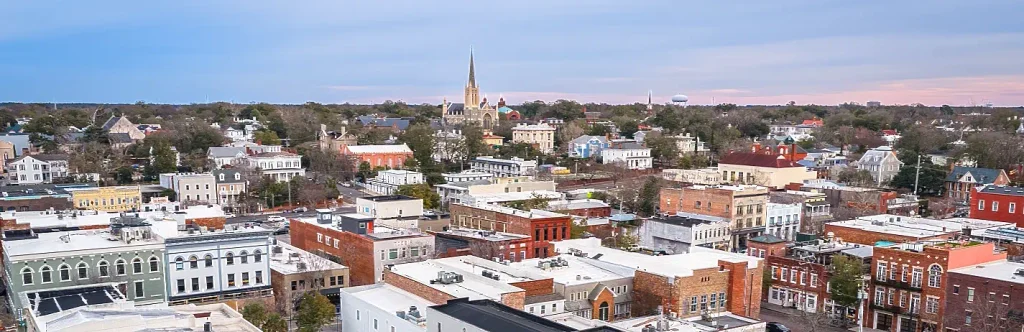
A slower visit is rewarded in Wilmington. Before visiting the neighboring beach towns, spend at least two full days downtown. You can create a longer itinerary without going over budget by comparing flight and hotel options using a website like Travelocity. If you’re looking for a straightforward place to stay, a Red Roof Inn close to the Wilmington airport provides a useful, affordable starting point for touring the historic district and the coast.
Don’t use Wilmington as a drive-through stop on your way to the sand, no matter how you plan it. It should have its own schedule.
Wilmington demonstrates that the Carolina coast is home to more than just gorgeous water. This area is worth exploring beyond the beach because of the convergence of history, film, art, and community.
Frequently Asked Questions
If I don’t care about the beach, is Wilmington, North Carolina worth visiting?
Of course. Regardless of beach access, the arts scene, film industry legacy, and historic district stand alone.
What is the distance between Wrightsville Beach and Wilmington?
It’s about fifteen minutes by car, so you can easily divide your time between relaxing on the beach and experiencing downtown culture.
Is Wilmington a retirement community or a college town?
To be honest, both. While a sizable retiree population adds a calmer, more established layer to the community, UNCW brings youthful energy.
What is the most famous thing about Wilmington, North Carolina?
Its preserved historic downtown, its port history during the Civil War, and its moniker “Hollywood East” from decades of film and television production.
Is Wilmington limited to tourist bars, or does it have a true live music scene?
It is genuine. Both local original music and touring acts frequently perform at venues like Greenfield Lake Amphitheater and other downtown clubs.
Is it possible to walk through Wilmington’s downtown? The Riverwalk, restaurants, and the majority of historic district attractions are all easily accessible on foot.
For more Carolina vacation area guides and Carolina coastal travel inspiration, keep exploring explorecarolinabeaches.com
Planning a Carolina beach trip? Use our Beach Finder Quiz to get a personalized recommendation, or compare any two beaches side by side with the Carolina Beach Comparison Tool.