
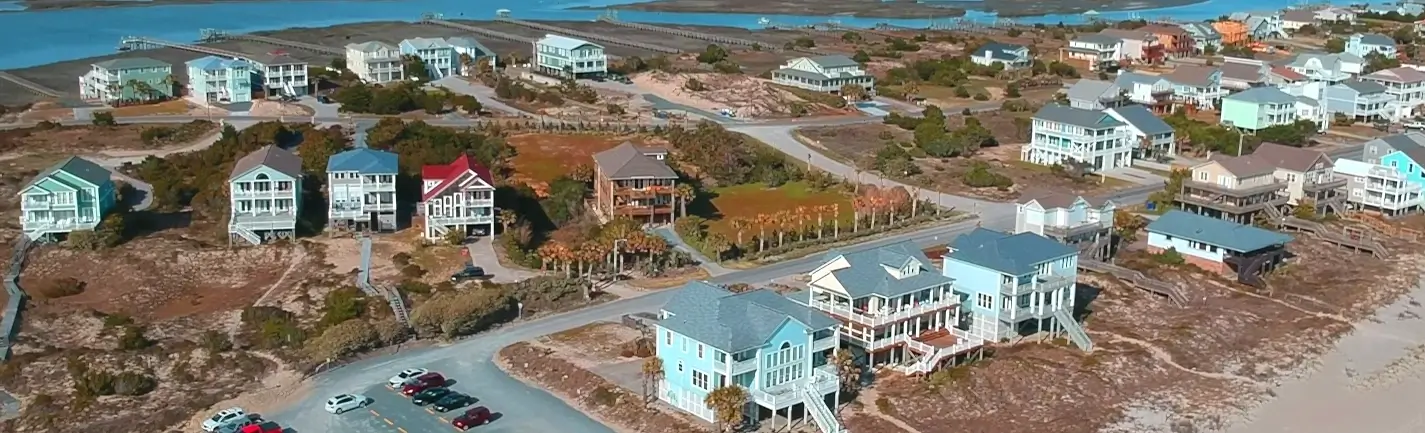
People love to say that the Carolina coast is “exploding.” That word is particularly popular among realtors. But numbers tell a more interesting story than hype ever could, and the real one is stranger, lumpier, and, frankly, more useful if you’re trying to figure out where to put your beach chair permanently.
Between 2010 and 2025, ten counties ranging from the northern Outer Banks to Hilton Head added approximately 579,000 residents. That’s a 38% increase in 15 years. Impressive, for sure. But averages flatten everything, and this region will not be flattened.
Some counties nearly doubled their rate of growth. Others moved at a much slower pace. Understanding which is which reveals far more about where you want to live, invest, or vacation than any single regional statistic will.
Affiliate Disclosure: This page contains affiliate links. If you book through them, we may earn a small commission at no extra cost to you.
The Grand Strand Is Running Its Own Race
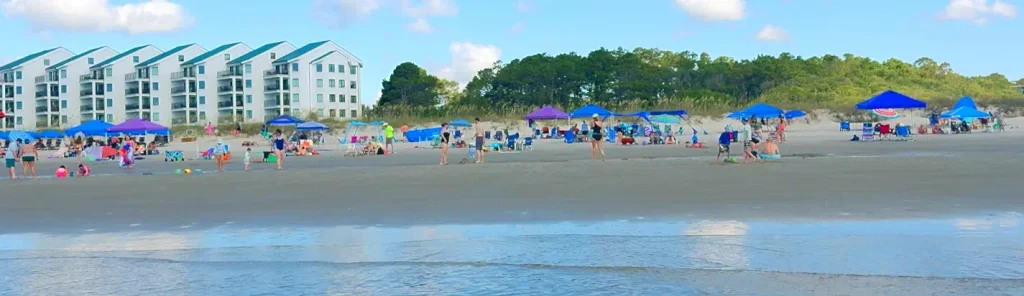
Horry County deserves its own paragraph, if not an entire chapter. Horry County, which includes Myrtle Beach and the entire Grand Strand, has grown by more than 158,000 residents since 2010. That represents a 59% increase, easily the fastest of any county in this analysis.
Locals will tell you that the growth did not begin with the pandemic, although many newcomers believe it did. Conway, the county seat just inland from the tourist strip, has been quietly absorbing new subdivisions for more than ten years. Meanwhile, the beachfront becomes denser, taller, and busier with each season.
What most visitors don’t know:
The real population story in Horry does not take place on the boardwalk. It’s happening ten to fifteen minutes inland, where rooftops have surpassed the golf courses that once defined this stretch of coastline. Carolina Forest, formerly a patch of pine woods off Highway 501, now serves as its own small city.
Cape Fear Country Is Growing Intermittently
Brunswick, New Hanover, and Pender counties make up what most people refer to as the Wilmington region, yet each has a distinct demographic. Together, they added over 130,000 residents, or a 36% increase. But that average masks a genuinely lopsided split.
Brunswick County is the actual outlier, rising 62.6% since 2010. Places like Leland and Southport have gone from peaceful river towns to respectable suburbs. New Hanover, on the other hand, grew at a slower rate of 21.4%, owing to the fact that Wilmington itself is already built out and has less capacity to grow.
Pender ranks in the middle at 38%, benefiting from overflow from both neighbors. A local perspective worth remembering: if you want small-town charm with room to grow, Pender is quietly becoming the ideal balance between Wilmington’s density and Brunswick’s sprawl. Hampstead, in particular, continues to appear in relocation discussions that were previously solely focused on Wilmington.
The Lowcountry’s Growth Runs Through Its Suburbs, Not Its Cities
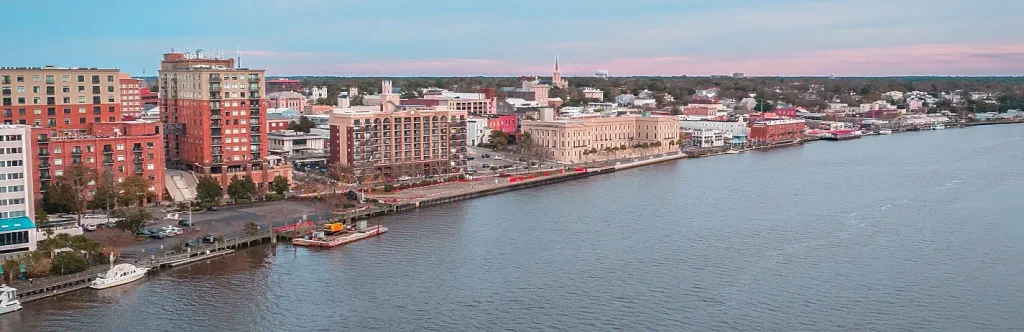
Charleston appears on every magazine cover, and for good reason: it is stunning. However, Charleston County’s growth rate since 2010 has been a fairly moderate 24.6%, slower than three of its four Lowcountry neighbors. The real acceleration occurs just outside the peninsula’s shadow.
Berkeley County experienced a 54.4% increase, owing to expansion near Moncks Corner and Goose Creek. Jasper County, located near the Georgia border, experienced a staggering 55.5% growth rate and will be the fastest-growing county in the United States by 2026. Dorchester increased steadily at 30.6%, while Beaufort, centered by Hilton Head and Bluffton, added 26%.
Here’s the insider angle that most first-time visitors completely miss: Charleston’s downtown peninsula no longer serves as the hub of the region’s growth story. It resides in Summerville, Ridgeland, and along Highway 17, which connects Beaufort to Hardeeville. The historic district is beautiful and virtually unaltered. Everything around it continues to spread outward instead.
The Outer Banks’ Northern Edge Is Quietly Filling In
Currituck County receives far less attention than Horry or Charleston, which is part of its appeal. Nonetheless, it has grown by 40.8% since 2010, outpacing the rest of the Lowcountry.
Corolla and the northern beaches fuel much of the tourist industry, while the true population growth occurs closer to the mainland, around Moyock and the Virginia border. Commuters moving to the Hampton Roads job market are increasingly choosing Currituck for lower land costs and shorter commutes than expected.
A local’s take:
If you’ve just been to Currituck for the wild horses and four-wheel-drive beaches, you’re missing out on half of the county. Inland Currituck feels more like rural Virginia than a seaside resort, which explains why its growth rates surprise people.

What This Growth Actually Means If You’re Visiting or Relocating
Population increase is more than simply a headline. It influences traffic patterns, restaurant wait times, and, yes, hotel availability during high season. If you’re scouting any of these counties before relocating, be flexible and book early. Travelocity, for example, allows you to compare stays in numerous places in a single search, which is useful when deciding between Conway and Carolina Forest or Summerville and downtown Charleston.
For low-cost reconnaissance missions, a Red Roof Inn in the I-95 or Highway 17 corridors can be an excellent base camp. These interstate highways connect practically every corridor indicated above, and stopping near an exit allows you to day-trip across three or four towns without continuously repacking your car.
Another thing to keep in mind when committing to a position: advancement is not guaranteed. A county that is currently growing at 60% may see a significant slowdown once land becomes scarce or infrastructure is developed. Horry’s fast pace, for example, will almost probably slow as build-out constraints take effect during the following decade.
The Bottom Line
Averages lie, or at least oversimplify. The Carolina coast is not one growth narrative, but rather five or six that overlap, each advancing at its own pace for its own reasons. Horry sprints. Charleston strolls, while its suburbs dash. Currituck sneaks up on everybody.
Whatever pace you like, one thing remains constant across every corridor: nobody is stopping this movement anytime soon.

Frequently Asked Questions
Which Carolina coast county is the fastest-growing?
Horry County, South Carolina, which includes Myrtle Beach and the Grand Strand, experienced the fastest overall growth between 2010 and 2025, at 58.8%. Jasper County recorded a remarkable 55.5% growth rate and is the fastest-growing county in the United States.
Is Charleston still a decent place to live despite its slower growth rate than its neighbors?
Absolutely. Charleston’s slower 24.6% increase reflects the peninsula’s limited land supply rather than decreased demand. The majority of the region’s actual expansion takes place in nearby suburbs such as Summerville and Berkeley County.
How much has the Carolina coast expanded since 2010?
Ten coastal and near-coastal counties from the northern Outer Banks to Hilton Head added approximately 579,000 people between 2010 and 2025, a 38% increase.
Are these Census Bureau figures or estimates?
Both. The 2010 and 2020 values are based on actual decennial Census counts. The 2025 figures are based on the Census Bureau’s Vintage 2025 population estimates, the most recent and internally consistent dataset.
Is this population increase affecting tourist season crowding?
Yes, but unevenly. Fast-growing areas such as Horry and Brunswick counties witness an increase in both year-round residents and vacation traffic, all fighting for the same eateries, beach parking, and hotel rooms.
Where should I stay if I’m exploring many Carolina coast towns?
Choose a base near a major route, such as I-95 or Highway 17. A budget alternative like Red Roof Inn keeps expenses low, while reserving through a comparison site like Travelocity allows you to rapidly switch between places as your plans solidify.
For more Carolina vacation area guides and Carolina coastal travel inspiration, keep exploring explorecarolinabeaches.com
Planning a Carolina beach trip? Use our Beach Finder Quiz to get a personalized recommendation, or compare any two beaches side by side with the Carolina Beach Comparison Tool.
📱 Download our free Carolina Beaches app — Get it here