Nobody talks quite like a Carolina coast local, and honestly, that’s a compliment to us. Every region has its own vocabulary, built over centuries of fishing boats, porch conversations, and hurricanes that taught people to talk fast and mean it.
Most slang guides online just cover the Outer Banks and call it a day. Not here. Let’s decode the whole coast, from Ocracoke’s ancient brogue down to Charleston’s honeyed drawl.
Ocracoke Brogue: The Sound That Time Forgot
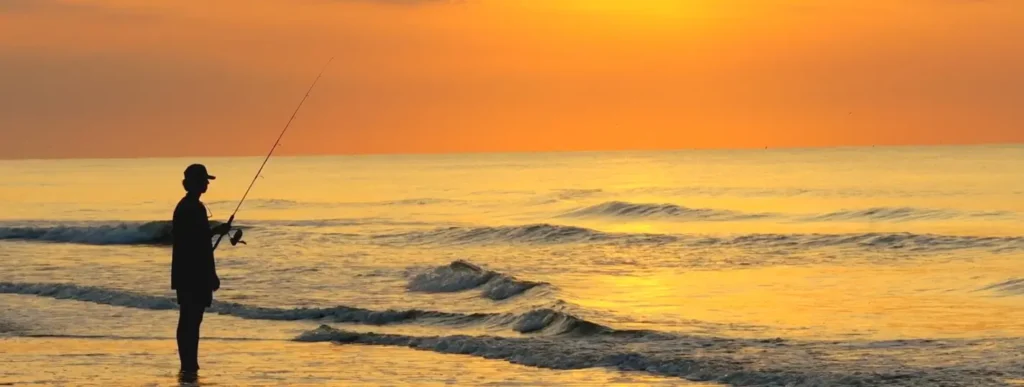
Start with the wildest linguistic corner of the entire coast. Ocracoke Island speaks something that outsiders call “Hoi Toider,” known locally as simply Ocracoke brogue. It traces back to 17th-century English and Irish settlers, and it never fully faded.
A “dingbatter” is anyone not from the island, tourists included. An “O’cocker” is a native, born and raised. If a local calls you “quamish,” you’re looking a little seasick, and if someone’s giving you grief, they’re “mommucking” you.
Kids on the island once played a nighttime hide-and-seek game called “meehonkey,” calling out to each other like geese in the dark. The word survives even though fewer islanders speak the full brogue every generation.
Local’s take:
Genuine O’cockers rarely perform the accent for visitors unless asked directly. Locals treat the brogue as heritage, not a party trick, so listen respectfully rather than requesting an impression.
Insider detail:
Families like the Howards and O’Neals trace their island roots back 250 years or more, and some even claim to connect their lineage to Blackbeard’s original crew.
Common Carolina Coast Sayings You’ll Actually Hear
Step off Ocracoke, and the language gets a little more familiar, though no less colorful. A “buggy” is a shopping cart almost anywhere in the Carolinas, and asking for a “buggy” instead of a “cart” instantly signals you belong here.
“Ain’t studying you” means someone isn’t paying attention to your nonsense, politely or otherwise. “Fixin’ to” means about to, as in “I’m fixin’ to head to the pier.” And “the beach” almost always refers to the entire coastal region, not a specific stretch of sand.
Coastal Carolinians also love a good weather metaphor. “It’s coming up a cloud” warns of a storm rolling in, while “hot as blue blazes” needs no translation come August.
What most visitors don’t know:
Locals distinguish clearly between “down east” and “up the beach,” and neither refers to compass directions the way you’d expect. Ask a local for clarification before you trust a map alone.
What Does “Dirty Myrtle” Mean?
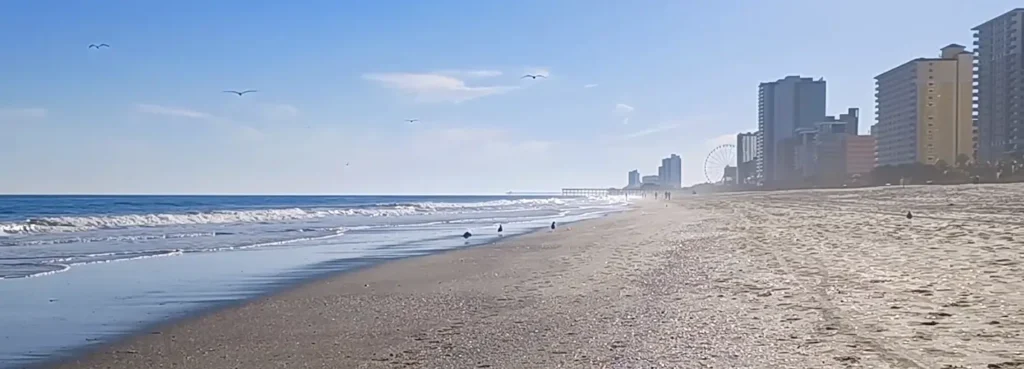
Every region needs a nickname with a little edge, and Myrtle Beach earned theirs honestly. “Dirty Myrtle” started decades ago, tied to the area’s rowdier past of biker rallies, spring break crowds, and nightlife that occasionally spilled onto the sand.
Nobody agrees on one exact origin story. Some blame an old beer brand, others point to occasional water quality advisories, and plenty just chalk it up to the area’s wilder 1980s and 90s reputation. Whatever the source, the name stuck.
Locals have mixed feelings about it. Many prefer “The Grand Strand,” a term dating back to the 1940s that celebrates the area’s size and beauty instead. Either way, don’t be surprised to hear both nicknames used in the very same conversation.
Local’s take:
Calling it Dirty Myrtle around a proud local can go either way. Some laugh along, others will correct you fast with a “we’re the Grand Strand, thank you very much.”
Funny Southern Sayings the Coast Made Its Own
Coastal Carolinians didn’t just inherit Southern sayings, they perfected them. “Bless your heart” can mean genuine sympathy or a razor-sharp insult, and only tone gives away which one you’re getting.
“Madder than a wet hen” describes fury nobody wants to witness firsthand. “I’m gonna carry you to the store” doesn’t involve lifting anyone; it just means giving someone a ride. And “over yonder” points vaguely at literally anything not directly in front of you.
Then there’s the coastal favorite: “it’s not the heat, it’s the humidity,” muttered by every local every single July without fail. It’s less a saying and more a public service announcement.
Insider detail:
Down in the Lowcountry near Charleston and Beaufort, you’ll also hear Gullah Geechee phrases woven into daily conversation, a rich linguistic tradition rooted in West African languages preserved by descendants of enslaved coastal communities.
Why Do Southerners Speak Such Proper English?
Here’s a fun secret most Northern visitors never learn: Southern English actually preserves more historically formal English than plenty of “standard” American speech does. That drawl isn’t sloppiness. It’s linguistic archaeology.
Coastal isolation kept older pronunciation patterns alive here for centuries. Ocracoke’s brogue is the extreme example, but Southern speech broadly holds onto older verb forms, more formal address like “ma’am” and “sir,” and courtesy patterns that faded elsewhere generations ago.
Linguists studying coastal Southern dialects have long noted these older retained features, sometimes even Shakespearean in structure. Northern English shifted faster because port cities changed hands and populations more often, while Southern coastal communities stayed put.
Local’s take:
Next time someone jokes about a Southern accent sounding uneducated, remind them politely that proper English, manners, and formality never went out of style down here.
FAQ: Carolina Coast Slang and Sayings
What is Ocracoke Brogue? It’s a distinct English dialect spoken on Ocracoke Island, tracing back to 17th-century British and Irish settlers, featuring unique words like “dingbatter” and “mommuck.”
What does “Dirty Myrtle” mean? It’s an informal nickname for Myrtle Beach, tied to its rowdier historical reputation, though many locals prefer “The Grand Strand” instead.
What are some common Carolina coast sayings? Expect phrases like “fixin’ to,” “ain’t studying you,” “buggy” for shopping cart, and “coming up a cloud” for an approaching storm.
Do all Outer Banks residents speak with the Ocracoke brogue? No, the brogue is specific mainly to Ocracoke Island, with fewer younger residents speaking it fully each generation.
Is Gullah Geechee the same as Southern slang? No, it’s a distinct language and culture rooted in West African linguistic traditions, most prominent around Charleston, Beaufort, and the Sea Islands.
This coast doesn’t just sound different. It sounds like it’s been perfecting the art of conversation since before the rest of the country figured out how to talk at all. Come hear it for yourself, dingbatter.
For more travel guides, beach recommendations, and coastal travel inspiration, keep exploring explorecarolinabeaches.com
Planning a Carolina beach trip? Use our Beach Finder Quiz to get a personalized recommendation, or compare any two beaches side by side with the Carolina Beach Comparison Tool.
📱 Download our free Carolina Beaches app — Get it here