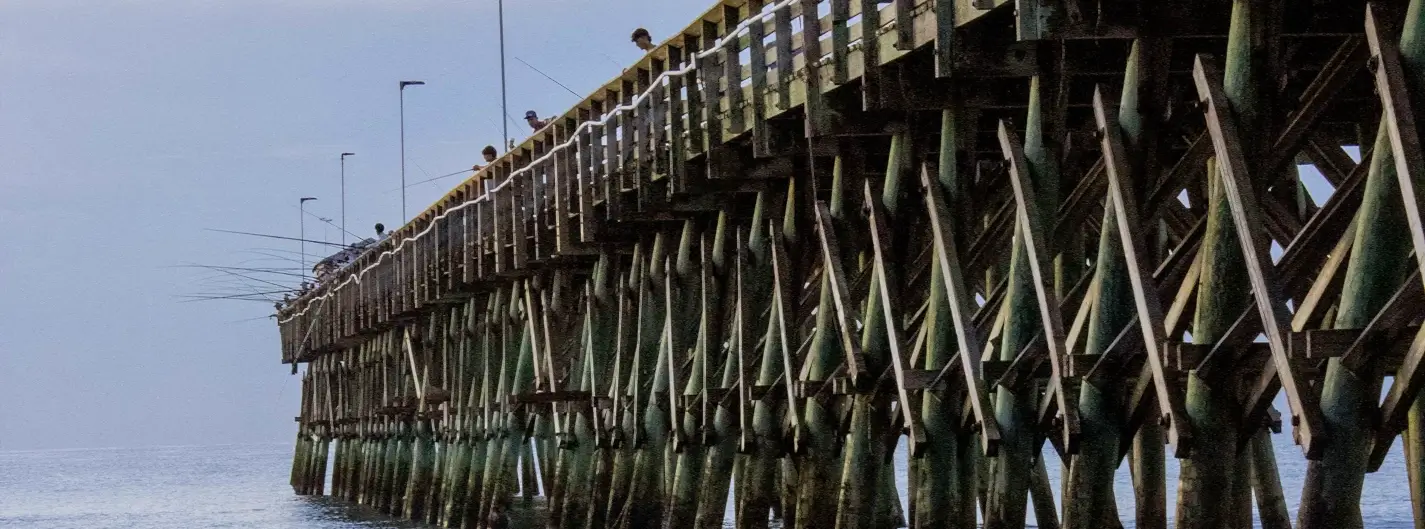
Spring is the Carolina coast’s best-kept fishing secret. While summer brings crowds and fall offers prime fishing, spring quietly delivers the widest variety of fish with the fewest people competing for them. From March through May, as the water warms, baitfish appear, and large migratory fish follow. If you have ever wanted to experience the Carolina coast with a rod in your hand, this is your season.
March: The Warm-Up Month
March offers a tranquil fishing experience for anglers who appreciate a quiet beach and the effectiveness of a live shrimp under a popping cork. Throughout winter, spotted seatrout, or “speckled trout” as they’re commonly known by locals, congregate in the creeks and marshes. Sheepshead, meanwhile, can be found around bridge pilings and dock posts.
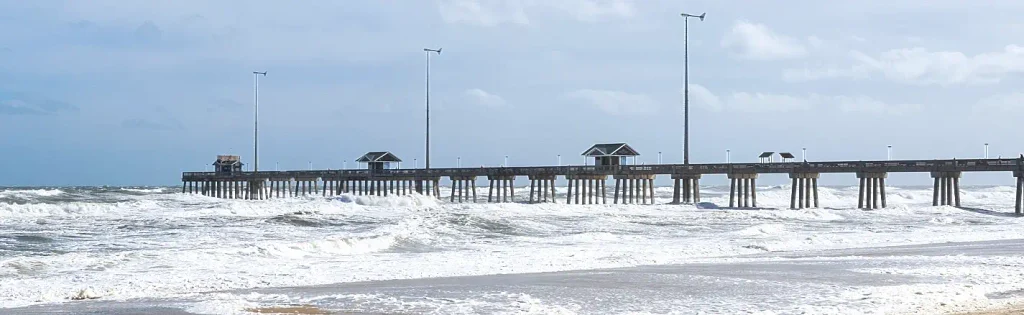
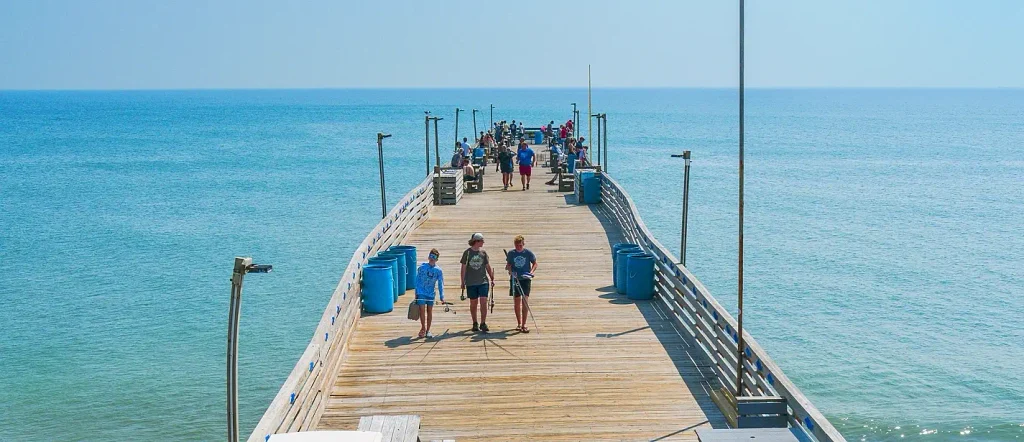
As the month progresses, the piers begin to stir. Bogue Inlet Pier on Emerald Isle, a 1,000-foot structure extending into the Atlantic, typically opens in March and has been operated by the Stanley family for decades. A day pass includes your fishing license, as the pier holds a blanket license, allowing you to legally fish with a rented rod.
Local’s Take: Patience is key in March. Fish slowly and close to structure. While trout are present, they won’t aggressively pursue a fast retrieve in the cooler water. A live shrimp under a popping cork, gently worked along a marsh edge, consistently outperforms any artificial lure.
April: The Cobia Countdown
April marks a significant shift in Lowcountry fishing, primarily due to the arrival of cobia. These powerful fish begin appearing in mid-April, pushing into Port Royal Sound and the Broad River around Hilton Head Island. They remain in the area through most of June, with May being the peak month for their presence. For inshore anglers, sight-casting to a cruising cobia on a calm morning offers an experience akin to big-game hunting. The classic method for catching them involves live menhaden fished under a popping cork.
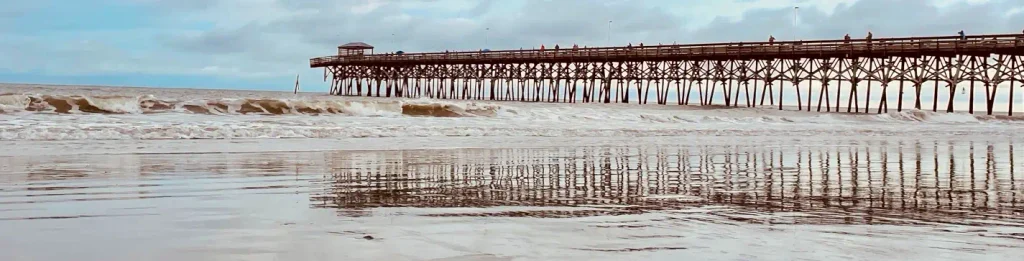
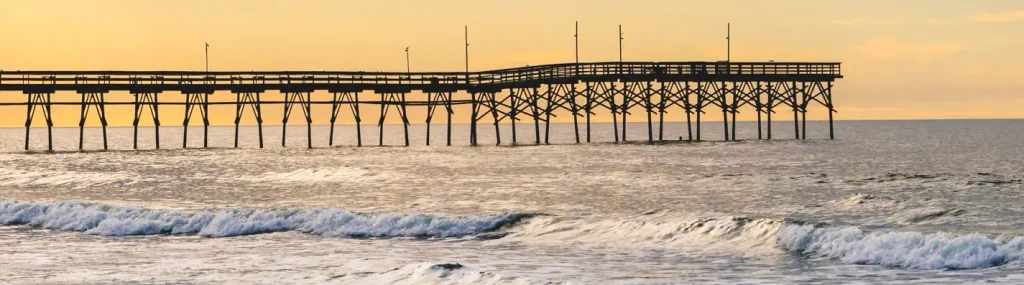
Beyond cobia, April also ushers in the first runs of Spanish mackerel and bluefish along the beaches. Cherry Grove Pier, stretching 985 feet, becomes a hotspot in spring, with Spanish mackerel runs being a particular highlight. Anglers should also keep an eye out for bluefish blitzes at dawn; if gulls are actively diving into the surface, casting into the commotion is often productive.
May: Peak Season, With One Big Catch
May is, without question, the best fishing month on the Carolina coast. Cobia fishing peaks around Hilton Head and Beaufort, while inshore, red drum and trout feed aggressively in the warming creeks. However, May also brings one crucial regulation that often surprises visitors, so pay close attention to this next part.
South Carolina closes cobia harvest in its southern state waters from May 1 through May 31. This closure applies to the Southern Cobia Management Zone, an area that encompasses Port Royal Sound and the Broad River, precisely where these fish are most abundant. While you can still fish for cobia in May, and many anglers do, any fish caught must be immediately released. What most visitors don’t realize is that this very closure is a key reason why the fishing remains so excellent. It provides the fish with a vital month to spawn, while anglers can still enjoy the thrill of the catch. Plan your hopes for keeping cobia around June, and embrace May for the sheer sport of it.
Where to Fish: Five Spring Hot Spots
Cape Point (Hatteras Island): The undisputed crown jewel of Carolina surf fishing. Spring mornings bring red drum, bluefish, and Spanish mackerel within casting range.
Bogue Inlet Pier (Emerald Isle): This 1,000-foot pier, opening in March, offers an easy fishing experience. For about $17.50 a day, you can catch speckled trout, sheepshead, pompano, cobia, and king mackerel from spring through fall.
Cherry Grove Pier (North Myrtle Beach): A Grand Strand classic, this 985-foot pier allows you to fish without a boat, license, or elaborate plan. The on-site bait shop is stocked with live mullet, shrimp, and squid.
Port Royal Sound and the Broad River (Hilton Head): This area is the East Coast’s premier cobia destination in spring. Given shifting sandbars and strong tides, hiring a local guide who knows these waters daily is highly recommended.
Murrells Inlet: The self-proclaimed “Seafood Capital of South Carolina” is a hidden gem for spring fishing. Its extensive creeks and grass flats are home to flounder, red drum, and speckled trout throughout the season.
The Rules, State by State
Anglers fishing in both North Carolina and South Carolina must be aware of two distinct and recently updated sets of regulations.
In North Carolina:
- Red Drum: 18 to 27 inches, one fish per day.
- Spotted Seatrout: 14 to 20 inches, with one fish over 26 inches allowed; three fish per day.
- Sheepshead: 10 inches fork length minimum, 10-fish daily limit.
- Flounder: This species has specific and limited seasons. In 2026, the season was September 1-14, with a 15-inch minimum and one fish per day. The 2027 dates have not yet been announced, so anglers should plan for catch and release this spring.
- Reporting Requirement: Since December 1, 2025, North Carolina requires anglers to report all kept flounder, red drum, trout, striped bass, or weakfish.
South Carolina’s regulations also saw recent changes, particularly for red drum, effective July 1, 2026:
- Red Drum: 18 to 25 inches, one fish per day, with a maximum of two fish per boat.
- Spotted Seatrout: 14 inches minimum, 10 fish per day.
- Flounder: Open year-round, 16 inches minimum, five fish per day, and no more than 10 per boat.
- Cobia: 36 inches fork length minimum, one fish per day. The boat limit is three in southern state waters and six elsewhere. Note the May closure in the southern zone.
- Hook Requirement: South Carolina mandates non-offset circle hooks (4/0 or larger) when using natural bait to target cobia, red drum, trout, tarpon, or striped bass.
Always check the official state websites, deq.nc.gov and dnr.sc.gov, before every fishing trip.
Licenses, Boats, and Stays
Fishing Licenses: Both North Carolina and South Carolina require a saltwater fishing license, and obtaining one is straightforward. Nonresidents can purchase a 10-day license in North Carolina for $15, or an annual license for $40. South Carolina offers a one-day license for $10, a seven-day license for $35, or an annual license for $75 for nonresidents.
Anglers fishing from licensed piers, such as Bogue Inlet and Cherry Grove, are covered by the pier’s blanket license. Similarly, charter boat passengers are covered by the boat’s license. However, individuals fishing from the shore, surf, or on private boats must purchase their own licenses.
Boat Access: A boat is not necessary to enjoy excellent fishing. Piers provide access to deep water, bait shops, and rod rentals and often include licensing in one convenient location. The jetty at Huntington Beach State Park is a well-known spot for catching red drum, sea trout, and bluefish. For those who desire a boat experience without ownership, booking a half-day inshore charter is an excellent option, with spring rates typically lower than summer rates.
Accommodations: Fishing excursions often begin in the early morning, so staying close to the water is advisable. Spring rental prices are significantly lower than peak summer rates. Budget-conscious anglers might consider Red Roof Inn locations along the Grand Strand and near the Crystal Coast. These establishments offer clean rooms close to the beach, allowing more of your trip budget to be allocated to bait, tackle, and charter fees. Use travel sites like Travelocity to search for spring accommodations near your desired fishing spot and compare options thoroughly before booking.
FAQ
When is the best time to fish on the Carolina coast in spring?
Late April through May offers prime fishing. May is peak season for cobia, while Spanish mackerel and bluefish are abundant along the beaches, and offshore mahi fishing heats up. March is a quieter month but still excellent for trout and sheepshead.
What is the red drum limit in North Carolina and South Carolina?
In North Carolina, the limit is one red drum per person per day, with a slot size of 18 to 27 inches. As of July 1, 2026, South Carolina allows one red drum per person per day, with a maximum of two per boat, within an 18 to 25-inch slot.
Can I keep cobia in South Carolina in May?
No, not in the southern state waters, which include Port Royal Sound and the Broad River. South Carolina closes cobia harvest in this area from May 1 through May 31. Catch and release is still permitted, and the season remains open north of this zone and in federal waters.
Can I keep flounder in North Carolina in spring 2027?
This is unlikely. The 2026 season was only from September 1 to 14, and 2027 dates have not yet been announced. South Carolina has different regulations, with flounder fishing open year-round, a daily limit of five fish, and a 16-inch minimum size.
What should I pack for a spring fishing trip?
Pack layers of clothing, sunscreen, polarized sunglasses, and patience. Mornings are often cool, but afternoons warm up quickly. Don’t forget a tape measure; it’s essential for determining which fish meet legal size requirements.
Spring on the Carolina coast is a cherished time for locals. The fish are active, the crowds are minimal, and the water is warming daily. Choose a week in April or May, review the current regulations, book your accommodation, and enjoy your trip. Save or bookmark explorecarolinabeaches.com for your 2027 trip planning, and we’ll look forward to seeing you on the pier at sunrise.
For more Carolina vacation area guides and Carolina coastal travel inspiration, dive deeper into explorecarolinabeaches.com and our Festival Guides.
Planning a Carolina beach trip? Use our Beach Finder Quiz to get a personalized recommendation, or compare any two beaches side by side with the Carolina Beach Comparison Tool.
📱 Download our free Carolina Beaches app — Get it here