
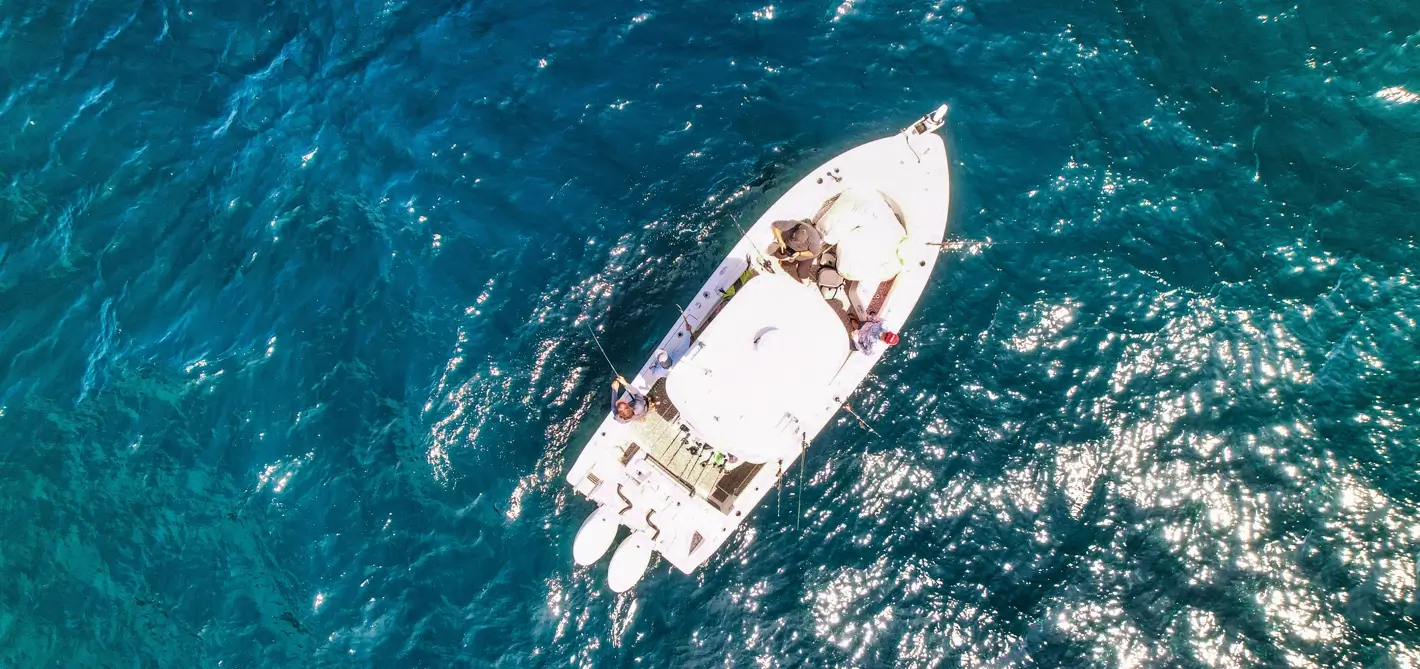
Junior anglers. World-class billfish. And a North Carolina waterfront that has been doing this longer than most tournaments have existed.
Every summer, Morehead City transforms. The downtown waterfront fills up. Boats you don’t normally see tied to the docks start appearing. Serious, tournament-rigged sportfishing vessels with outriggers and fighting chairs and names that suggest someone spent a very good day offshore. And then, in early July, it happens again, but smaller, louder, and somehow even better.
The Big Rock Kids Billfish Tournament is exactly what it sounds like: a three-day, all-release billfish competition designed to put junior anglers on the rods. It’s competitive. It’s high-stakes by any kids’ event standard. And it’s set against the backdrop of one of the most productive blue-water fisheries on the entire East Coast. Pair your trip with a deeper look at the area in our Crystal Coast destination guide. You’ll understand why this corner of North Carolina keeps pulling people back.
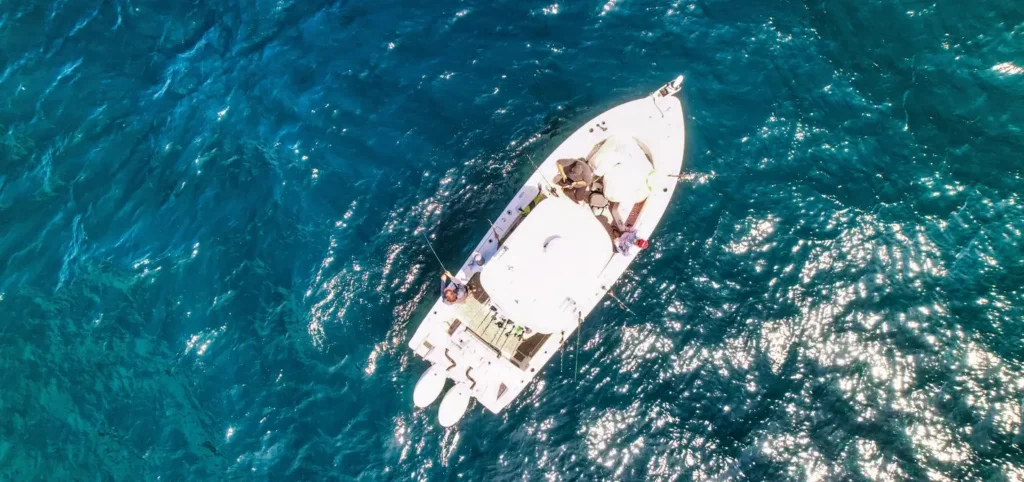
What Exactly Is the Big Rock Kids Billfish Tournament?
The Big Rock Kids Billfish Tournament is an annual offshore competition held out of Morehead City, North Carolina, each July. It runs three fishing days. All fish must be released, no exceptions. And it exists specifically to pass the rod to the next generation.
Junior anglers, defined as those 16 and under, are the stars of the show. Boats earn an extra 25 points for every billfish released by a junior angler as the primary rod-holder. That bonus scoring structure is no accident. It incentivizes experienced boats and captains to hand over the fight to a kid, not just put one in a chair for a photo.
The 2026 event is the 6th Annual Big Rock Kids Billfish Tournament, and it runs July 8–11. Fishing days are Thursday through Saturday, 9 a.m. to 3 p.m. daily. It’s out of the Ottis Landing Deck and weigh station at 707 Shepard Street in Morehead City.
Beyond the fishing, the tournament offers an entire week of family-friendly programming. Public events include a Pig Pickin’ Dinner at the Civic Center, a Kids Fun Night with fighting chair simulations and games, and a Tie Dye event sponsored by Albemarle Boats, most of it open to the general public for a modest door charge.
2026 Event Schedule at a Glance
Tue, July 8 Pig Pickin’ Dinner · Civic Center · Doors 6:00–9:00 PM · Adults $25 / Kids $15.
Wed, July 9 Day 1 Fishing · 9:00 AM – 3:00 PM · Kids Fun Night · Civic Center 6:00–9:00 PM.
Thu, July 10 Day 2 Fishing · 9:00 AM – 3:00 PM · Free Tie Dye Event · All ages welcome.
Sat, July 11 Day 3 Fishing · 9:00 AM – 3:00 PM · Final weigh-in and tournament close.
Insider Tip
Don’t overlook Kids Fun Night at the Civic Center. The fighting chair simulation, presented by Release Marine, lets kids experience what it feels like to fight a billfish. It’s loud, competitive, and oddly addictive. Tickets at the door are $25 for adults, $15 for kids. It’s one of the best non-fishing experiences of the whole tournament week.
Why Is It Called the Big Rock, and Where Did All This Start?
The name comes from the water. Specifically, it comes from a prominent underwater rock formation. It’s a series of ledges, ridges, and hard-bottom structures located roughly 35 miles southeast of Morehead City in the Atlantic Ocean. Captains call it the Big Rock. And for good reason: the structure concentrates baitfish, triggers upwellings, and sits right at the edge of where the Gulf Stream pushes warm blue water close enough to reach in a day’s run offshore.
The story behind the tournament is the kind that sounds too good to be true. Back in 1957, Morehead City locals genuinely weren’t sure blue marlin existed in their offshore waters. Commercial fishermen had worked those waters for generations without spotting one. Sailors aboard freighters through the Port of Morehead City kept reporting sightings, but the locals mostly wrote it off as dock talk.
A few determined anglers decided to settle it. By September of 1957, Raleigh angler Jimmy Croy, fishing aboard the Mary Z with Captain K.W. “Bill” Olsen, reeled in a 143-pound blue marlin and radioed back to shore. A crowd gathered at the dock. The prize: silver dollars counted out at First Citizens Bank and delivered by a child’s red wagon from the nearby Rose’s department store, reportedly ran between $250 and $500. Nobody kept great records. Nobody thought they needed to.
What followed was one of the most successful fishing tournament evolutions in American sporting history. The event was formally renamed “Big Rock” in 1972, honoring that offshore bottom structure. Today, it’s the largest nonprofit fishing tournament in the world. In 2026 it earned the title of Marlin Magazine’s 2025 Tournament of the Year.
The Kids Tournament
The Kids Tournament is a direct extension of that founding spirit. The Big Rock board voted unanimously in 2020 to launch a junior-focused event, understanding that the next generation of offshore anglers wouldn’t appear out of nowhere. They’d need to be handed the rod. Literally.
Local’s Take
What most visitors don’t know: the Big Rock is also the name of an actual GPS coordinate that serious captains protect like a trade secret. The formation isn’t marked on recreational charts. You learn it from time on the water or from someone who trusts you. That tension between local knowledge and open competition is baked into this tournament’s DNA.
What Exactly Is a Billfish and Why Does Everyone Go So Crazy for Them?
Fair question. The term “billfish” refers to a group of predatory ocean fish defined by one shared, unmistakable feature: an elongated upper jaw that extends into a long, pointed spear. Scientists call it a rostrum. Anglers just call it a bill. Either way, it’s what sets these fish apart from everything else in the ocean.
The billfish family includes blue marlin, white marlin, sailfish, spearfish, and swordfish. All twelve recognized species carry that extended upper jaw. And all of them use it the same general way: slashing through schools of baitfish to stun prey, then circling back to feed. It’s one of the most effective hunting adaptations in marine biology, and it’s been evolving for more than 55 million years.
Off the North Carolina coast, anglers primarily encounter three species during the summer billfish season. Later in July, the Band the Billfish Tournament, one of North Carolina’s most exciting offshore fishing events, brings anglers and spectators together in Morehead City.
The Species of Billfish
Blue Marlin
The crown jewel of the Big Rock. Blue marlin can exceed 1,000 pounds and fight with a ferocity that has broken equipment and exhausted anglers for hours. They feed on bullet mackerel, tuna, and dolphinfish (mahi-mahi). Worth 400 points per release in the tournament.
White Marlin
Smaller and more acrobatic than blues, white marlin are a frequent offshore catch in NC waters. They typically travel in small schools, prefer prey in the 4–12 inch range, and put on a spectacular aerial show on the line. Worth 125 points per release.
Sailfish
The most commonly caught billfish off the NC coast according to SCDNR data, averaging around 35 pounds. Their oversized dorsal fin, the “sail”, makes them instantly recognizable. They’re fast, aggressive, and electrifying to watch fight near the surface. Also worth 125 points per release.
Spearfish
The rarest of the tournament species. Longbill spearfish occasionally appear in the tournament mix and are often mistaken for small white marlin. Finding one is considered genuinely unusual and a point of pride for any offshore angler.
Why do anglers chase them so obsessively? Because billfish are, by any measure, the most technically demanding and physically punishing fish in recreational saltwater fishing. A blue marlin doesn’t just pull, it runs, sounds, jumps, and reverses direction in ways that test every piece of tackle and every ounce of angler endurance. The fact that most tournaments score primarily on releases, not weight, reflects a deeply held value in the billfish fishing community. These fish are too rare and too extraordinary to keep.
Insider Tip
The waters off Morehead City benefit from a unique geographic advantage: the Gulf Stream swings unusually close to the North Carolina coast here, bringing warm, blue water and migrating billfish within a day’s run of the inlet. That’s why Morehead City punches far above its weight on the national tournament circuit. Captains from Virginia to Florida bring their boats here specifically for this window.
What Happens to the Fish at the Big Rock Kids Tournament?
Every single one goes back in the water. The Big Rock Kids Billfish Tournament is a 100% total release event. No fish are weighed, kept, or harmed beyond the fight itself. The entire competition scores on release points alone.
This is a deliberate conservation choice, not just a rule on paper. The billfish fishery off the North Carolina coast supports an enormous economic ecosystem, charters, tackle shops, marinas, hotels, restaurants, and the long-term health of that fishery depends entirely on sustainable fishing practices. Releasing billfish rather than killing them keeps the population viable and the tournament circuit thriving year over year.
The release process in the main Big Rock tournament for blue marlin requires video or photo documentation. The mate must touch the leader, on camera, as proof of a legitimate release. The Kids Tournament applies the same standard and the same integrity. Meanwhile, the broader Big Rock organization participates in satellite tagging initiatives through the International Game Fish Association (IGFA), tracking the migratory patterns of blue marlin far beyond the tournament itself. In one documented case, a tagged fish from a previous Big Rock event traveled 5,196 nautical miles, potentially the longest blue marlin track ever recorded by the IGFA.
Additionally, the main Big Rock tournament has established weight minimums to reduce the number of blue marlin brought to the scales altogether. Fish that won’t place don’t get killed. It’s common sense conservation backed by hard economic logic: nobody wants to end a fish’s life for a result that won’t pay out.
Beyond the fish themselves, the tournament’s charitable arm, the Big Rock Foundation, has donated nearly $14 million to community organizations since 1986. In 2025 alone, the Foundation contributed a record $2 million, including funds to Carteret County public schools, local healthcare, conservation research, and the Boys & Girls Club of the Coastal Plains, which is the direct beneficiary of the Kids Tournament’s proceeds.
Where Do You Actually Find Billfish Off the Carolina Coast?
The short answer: follow the blue water. Billfish are pelagic species: open-ocean hunters that follow prey and temperature breaks, not coastlines. Off North Carolina, the productive zone begins where the warm Gulf Stream pushes close to the continental shelf edge, roughly 30–60 miles offshore from Morehead City and Cape Hatteras.
Key Offshore Locations
The Big Rock itself, that series of ledges and peaks about 35 miles southeast of Morehead City, is the most famous. The hard bottom concentrates baitfish, which in turn draws billfish looking for an easy meal. Tournament captains have fished this structure for nearly 70 years and still find ways to keep its specific GPS waypoints close to the vest.
Further north, the waters off Cape Hatteras carry a different advantage: the Diamond Shoals, where the Labrador Current and the Gulf Stream collide, create a uniquely productive mixing zone. The thermal boundaries and bait concentrations that result are exceptional for pelagic species, including white marlin and sailfish, particularly in late summer.
Closer to the South Carolina border, the waters off the Brunswick Islands and Wrightsville Beach offer inshore billfish action, primarily for sailfish, when the Gulf Stream presses unusually close to shore. Sailfish peak in abundance along the NC and SC coasts in July and August, per the South Carolina Department of Natural Resources, exactly the window the Kids Tournament targets.
For all these locations, what matters most is water temperature, color breaks, and bait concentrations, not a fixed map coordinate. Tournament captains watch sea surface temperature charts obsessively in the days before they fish. They’re looking for the edge of the warm, clear blue Gulf Stream water against cooler, greener coastal water. That edge, called a temperature break or a “rip”, is where billfish hunt.
Local’s Take:
Morehead City charter captains will tell you that some of the best billfish action happens not at the famous spots but at the unmarked rips that form and dissolve over a few days. Reading water is its own skill entirely, and it’s why local knowledge commands a premium. If you’re chartering a boat for the Kids Tournament, prioritize a captain who grew up fishing this inlet. The GPS numbers matter less than the experience reading what the ocean tells you that morning.
Frequently Asked Questions
Can anyone attend the Big Rock Kids Billfish Tournament as a spectator?
Yes and it’s genuinely worth the trip. The fishing itself happens offshore and isn’t publicly visible, but the surrounding events are open to the general public. The Pig Pickin’ Dinner, Kids Fun Night, and Tie Dye event are all ticketed at the door. Weigh-in activity at the Ottis Landing Deck in Morehead City is the main spectator draw, and Big Rock TV livestreams the action on Facebook and YouTube daily if you can’t make it in person.
How old does a child need to be to fish in the Big Rock Kids Tournament?
Junior anglers are defined as 16 years old and under. There is no stated minimum age, the focus is on having young anglers as the primary rod-holder during the fight. The 25-point junior bonus is awarded when the junior angler is designated as the primary angler on the release form, with a date of birth submitted. Adults can assist, and rods can even be passed between children. If you don’t have a boat or team, the tournament maintains an availability page at thebigrock.com/kids. Here families can connect with registered boats looking for junior anglers.
Why is it called “Big Rock”, is there actually a rock?
Yes, but not the kind you can stand on. The “Big Rock” is an underwater geological formation, a series of ledges, ridges, and hard-bottom structures located approximately 35 miles southeast of Morehead City in the Atlantic. It concentrates baitfish and sits near the Gulf Stream, making it one of the most productive offshore fishing areas on the East Coast. The tournament adopted the name formally in 1972, more than a decade after the first event in 1957. Before that, the competition didn’t even have an official name. It was just the reason people came to Morehead City in June.
Are the fish harmed or kept in the Big Rock Kids Tournament?
No. The Big Rock Kids Billfish Tournament is a 100% release event. Every billfish caught must be released. No fish are weighed, kept, or retained under any circumstance. The entire competition is scored on release points only: 400 points for a blue marlin release, 125 points each for white marlin and sailfish, with an additional 25 points per release if the primary angler is a junior. This model reflects the conservation values that have guided the broader Big Rock tournament since it began implementing weight minimums and catch-and-release scoring categories decades ago.
What charities benefit from the Big Rock Kids Billfish Tournament?
The primary beneficiary of the Kids Tournament is the Boys & Girls Club of the Coastal Plains, which serves youth across Eastern North Carolina. Proceeds flow through the Big Rock Foundation, the nonprofit arm of the Big Rock Tournament organization. The Foundation has donated nearly $14 million to charitable organizations since 1986, including Carteret County public schools, Carteret Health Care, conservation research initiatives, and disaster relief. In 2025, the Foundation donated a record $2 million, its largest single-year contribution in its history.
How does the Big Rock Kids Tournament fit into the larger Big Rock Triple Crown?
The Big Rock Kids Billfish Tournament is the third and final leg of the Big Rock Triple Crown. It’s a season-long points competition that also includes the Keli Wagner Lady Angler Tournament (held in June) and the main Big Rock Blue Marlin Tournament (also June). Teams that compete across all three events accumulate cumulative points for the Triple Crown standings, with cash prizes and custom championship rings awarded to the top finishers. Junior angler bonus points earned during the Kids Tournament also count toward the Triple Crown totals. This gives experienced teams a real incentive to let kids drive.
Planning your July trip around this one? The Big Rock Kids Tournament is just one stop on the calendar; see the full Carolina Coast Festival & Events Guide for everything else worth timing your visit around, month by month.
The red wagon is gone. The silver dollars are long spent. But every July in Morehead City, a kid grabs a rod, the reel screams, and the Carolina coast proves that some things are worth passing down.
For detailed guides to each Brunswick Islands beach, keep exploring explorecarolinabeaches.com
Planning a Carolina beach trip? Use our Beach Finder Quiz to get a personalized recommendation, or compare any two beaches side by side with the Carolina Beach Comparison Tool.
📱 Download our free Carolina Beaches app — Get it here