
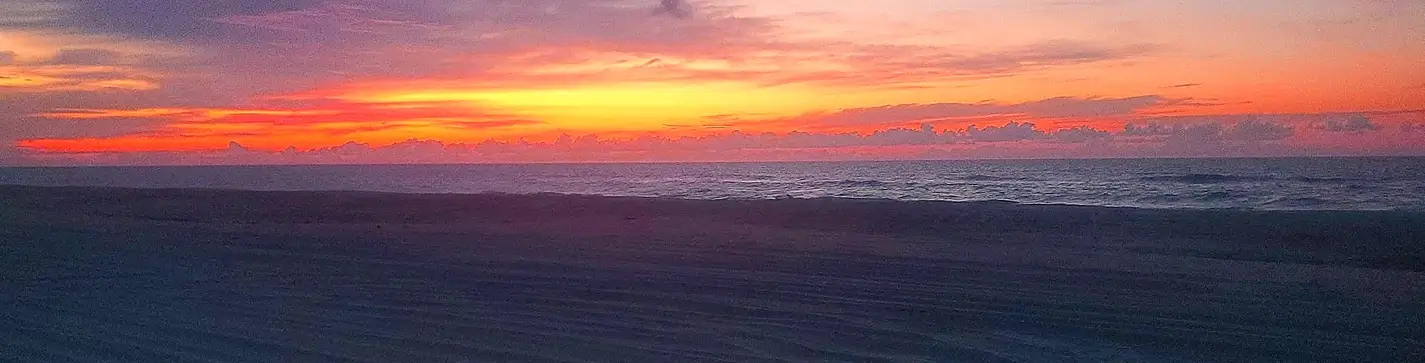
Some islands welcome you with a bridge and a billboard. Core Banks offers neither. This 56-mile chain of barrier islands off the Crystal Coast makes you earn the visit, and that is precisely the point. With no roads crossing the water and no hotels lining the sand, you get the Carolina coast as it looked before development. In 2027, that kind of quiet is worth planning an entire trip around.
Cape Lookout National Seashore protects three islands: North Core Banks, South Core Banks, and Shackleford Banks. Together, they stretch from Ocracoke Inlet to Beaufort Inlet. The seashore charges no entrance fee, but visitors must arrive by boat, carry in everything they need, and take it all home again.
The Island With No Roads
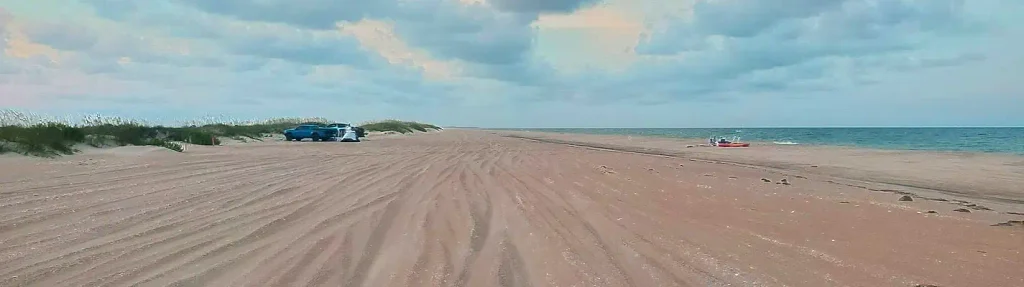
Without a bridge or paved roads, Core Banks is only accessible by boat, a fact that profoundly shapes the visitor experience. The need for a ferry ticket quickly thins out crowds, leaving you with stretches of pristine sand.
South Core Banks is home to the iconic lighthouse and its historic light station village. To the north, 22 miles of primitive beach stretch toward Portsmouth Village, our focus in next week’s ghost-town guide. To the west lies Shackleford Banks, famous for its wild horses that are constant scene-stealers. Each island possesses its own distinct personality.
Getting There: The Ferry Is Half the Trip
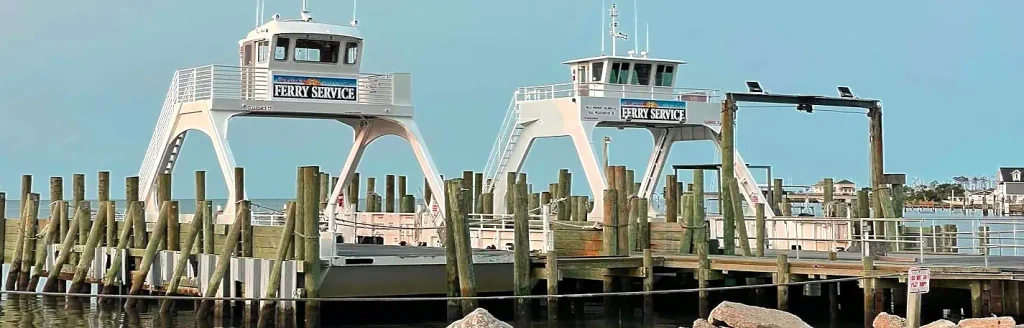
Most first-time visitors depart from Harkers Island, a bustling fishing village. The Island Express Ferry Service, the authorized park concessioner, operates from the Harkers Island Visitor Center directly to the lighthouse. The crossing takes approximately 25 minutes. A round-trip ticket for adults costs $24, boats run daily year-round, and parking is free.
We recommend booking the earliest boat possible. The morning light casts a golden glow over the sound, and dolphins frequently ride the bow wake. If you wish to visit two islands in one day, a $30 combo trip includes Shackleford Banks, where wild horses graze the dunes. From Beaufort, Island Express also offers a five-hour Cape Lookout trip for $60, available Tuesday through Saturday from March through September.
A Note for 2027 Planners: In 2026, the lighthouse ferry dock was closed for repairs, requiring passengers to land directly on the beach. This involved a five to ten-minute walk across soft sand, sometimes through shallow water. Please check the park’s alerts page for current conditions before your trip.
The Cape Lookout Lighthouse: A Beacon of History (and Current Renovations)
Visible for miles, the Cape Lookout Lighthouse stands 163 feet tall, its distinctive black and white diamond pattern gracing the sky since 1873. The tower was first illuminated on November 1, 1859. Typically, visitors can ascend the 207 steps to the top.
However, it’s important to note that the tower is currently closed for climbing. A $15.2 million stabilization project began in September 2025 and is expected to take at least two years. Therefore, climbing will almost certainly not be possible in early 2027. Please check the park website for updates on a potential reopening date as the work progresses.
The Keeper’s Quarters now houses a small museum, open from mid-March through October. Here, rangers share the stories of the keepers and surfmen who served at this isolated post. Visitors can also explore the grounds and photograph the tower from the boardwalk. Currently, the lighthouse bears the appearance of a grand old house undergoing a significant renovation.
The Point: A Haven for Shelling and Surf Fishing
While the lighthouse is the iconic image, the Point is what draws locals back repeatedly. At the southern tip of South Core Banks, a hook of sand forms where the ocean meets the sound. Here, currents deposit shells in abundance, like a natural conveyor belt. Whelks, Scotch bonnets, and sand dollars wash ashore in quantities that delight even casual beachcombers. Dedicated shellers explore the Point at low tide, when the freshest discoveries are just above the waterline.
A beach shuttle operates from the light station to the Point from mid-May through mid-September. Outside of these months, the walk across soft sand takes approximately 45 minutes each way.
Surf fishing here is considered among the best on the East Coast, with drum, bluefish, and flounder frequenting the sloughs and cuts. Fall is the prime season for fishing.
Driving the Beach: ORV Permits and Vehicle Ferries
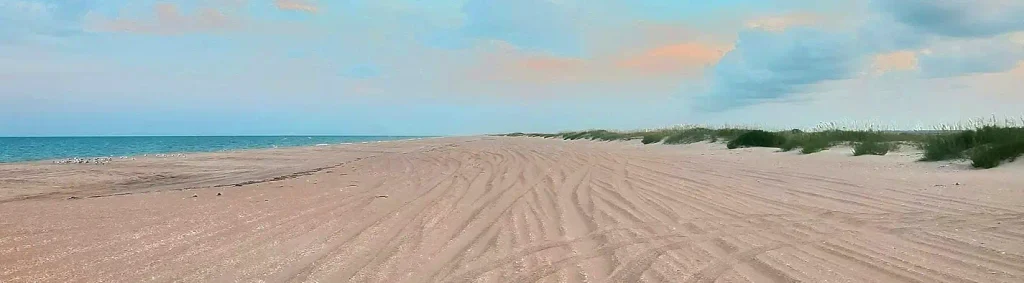
Since passenger ferries do not accommodate vehicles, drivers must book a separate vehicle ferry. Options include a 45-minute crossing from Davis to Great Island or an hour-long crossing from Atlantic to Long Point. Both routes operate from mid-March through the end of November. Reservations are required and fill quickly, especially in spring and fall. Round-trip fares for vehicles up to 19 feet start at approximately $155.
Additionally, every vehicle requires a Cape Lookout off-road vehicle (ORV) permit, which must be purchased in advance through Recreation.gov. For the 2027 season, a preseason price of $35 is available from January 1 to March 14; thereafter, the cost is $75. Note that vehicles are not permitted on the islands from January 1 through mid-March.
Four-wheel drive is highly recommended, as two-wheel-drive vehicles often struggle in soft sand. Drivers should air down their tires, carry a shovel and a tow strap, and maintain a speed of 25 miles per hour, reducing to 15 miles per hour within 100 feet of any person on the beach.
Sleeping on the Sand: Camping and Cabins
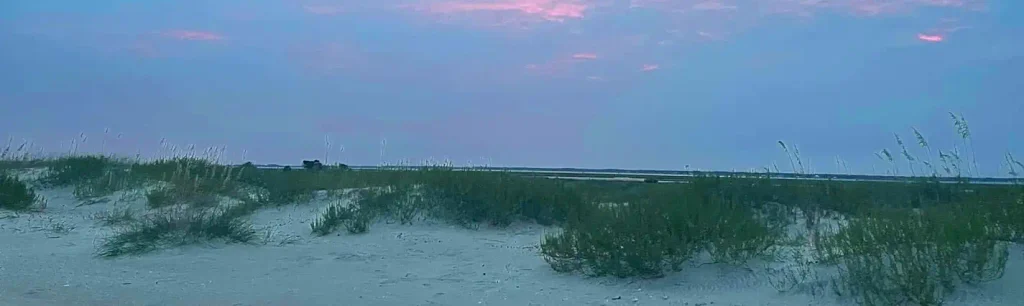
Camping on Core Banks offers a truly primitive experience. There are no designated campgrounds, hookups, or camp stores. Visitors can pitch their tents anywhere above the high-tide line, free of charge. Simple, strict rules apply: stay off the dunes, remain at least 100 yards from the lighthouse and all cabins, bring all your water, pack out all your trash, and build campfires only below the high-tide line. Pets must be leashed, and stays are limited to 14 days.
For a slightly less rustic option, the Great Island cabins are available. These twenty-one cabins, located near the South Core ferry landing, can accommodate four to twelve people in bunk-bed style, featuring propane stoves and hot water. Guests must bring their own linens, bedding, and cookware. Bookings are made through Recreation.gov and often need to be secured months in advance. Please be aware that the Long Point cabins on North Core Banks are permanently closed due to damage from Hurricane Dorian, and their replacement camp was not open as of late 2026.
What Most Visitors Don’t Know
Most visitors treat Cape Lookout as a brief lighthouse stop, missing the true essence of the island entirely. The authentic Core Banks experience begins after the ferry crowds depart. Stay for the last boat, or even better, spend the night. You’ll witness both sunrise over the ocean and sunset over the sound on the same day, an experience few ever see.
Another secret: the shoulder seasons often surpass summer. Late April and May offer warm waters without the crowds, while October brings the year’s best fishing and clearest skies. Summer, in contrast, brings heat, biting flies, and afternoon thunderstorms.
Finally, always observe the wild horses from a distance. The Shackleford herd is famous, and a few horses also roam the Core Banks. While they appear gentle, they can bite and kick, and feeding them is illegal.
Frequently Asked Questions
How do I get to Core Banks?
There are no bridges or roads; access is exclusively by boat. Passenger ferries operate from Harkers Island and Beaufort to the lighthouse, while vehicle ferries for drivers depart from Davis and Atlantic.
How much does the ferry cost?
The Harkers Island passenger ferry costs $24 round trip for adults, with a crossing time of approximately 25 minutes. Vehicle ferries start around $155 round trip for vehicles up to 19 feet. Fares can change seasonally, so please check directly with the operator before booking.
Can I climb the Cape Lookout Lighthouse?
Currently, the tower is closed for climbing due to a stabilization project that began in September 2025. This project is expected to last at least two years. However, the Keeper’s Quarters Museum and the light station grounds remain open from mid-March through October.
Do I need a permit to drive on the beach?
Yes, every vehicle requires an ORV beach driving permit from Recreation.gov. The 2027 preseason price is $35 through March 14, increasing to $75 for the remainder of the season. A vehicle ferry reservation is also necessary, as passenger ferries do not transport cars.
Can I camp on Core Banks?
Yes, primitive beach camping is free. There are no designated sites, so you must bring all your own water and pack out all your trash. Camping is limited to 14 consecutive days. Great Island cabins offer a roofed alternative if booked well in advance.
Core Banks doesn’t strive to impress; it simply stays with you. It offers no shortcuts, no crowds, and no noise—just 56 miles of wild beach at the edge of the map. So plan your trip, book your ferry, and experience the Carolina coast before the rest of the world discovers it. Base yourself in Beaufort, Harkers Island, or Morehead City, and compare stays on Travelocity. Budget options like Red Roof Inn can help keep your trip affordable. Save this guide and bookmark explorecarolinabeaches.com for your 2027 trip planning.
For more Carolina vacation area guides and Carolina coastal travel inspiration, dive deeper into explorecarolinabeaches.com and our Festival Guides.
Planning a Carolina beach trip? Use our Beach Finder Quiz to get a personalized recommendation, or compare any two beaches side by side with the Carolina Beach Comparison Tool.
📱 Download our free Carolina Beaches app — Get it here