
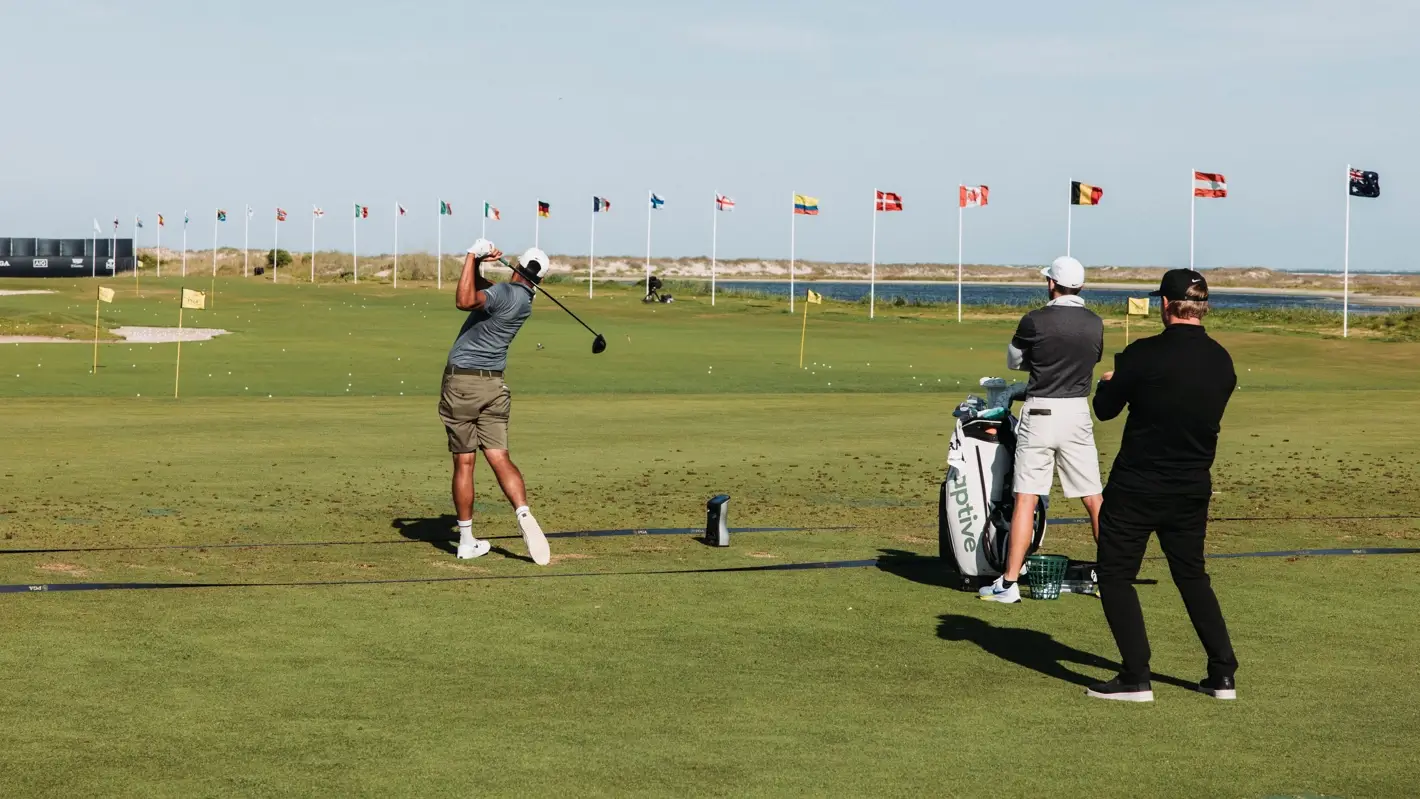
Ten unforgettable golf courses stretching from the Outer Banks to the Lowcountry, because the best rounds of your life shouldn’t be played anywhere but here.
Nobody comes to the Carolina coast just for the golf. Then they play a round with a salt breeze at their back, an egret standing motionless beside the third fairway, and a lighthouse blinking in the distance, and suddenly, nothing else matters.
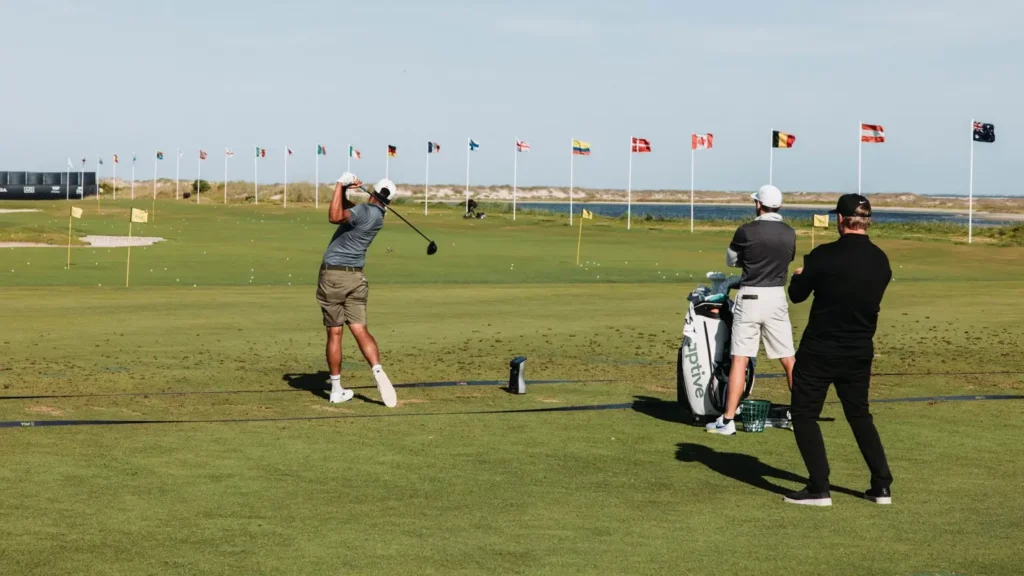
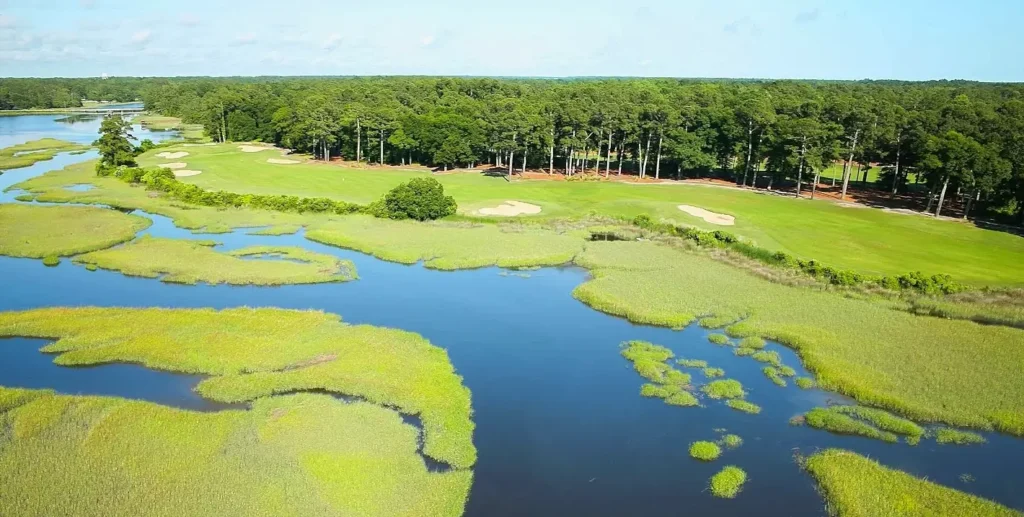
The stretch of coastline running from Corolla in the Outer Banks all the way down to Hilton Head Island is, quietly, one of the greatest golf corridors in America. More than 900 courses exist across the two states. A significant number of the best ones hug the water.
You don’t have to choose between a beach vacation and a golf trip. Down here, they’re the same thing. Here are ten courses, ranked by online reviews and real-world reputation, that make the Carolina coast a bucket-list golf destination.
“The ocean doesn’t negotiate with your short game. Neither does the wind off Roanoke Sound.”
The Outer Banks: Where Wind Rules Everything
Most golfers picture the Outer Banks as a place to eat fish tacos and watch the sunset. Locals know better. The OBX has some of the most atmospheric golf on the East Coast, and the steady wind off the sound means par is a genuine achievement.
Course No. 01: The Currituck Club
Corolla, NC: Northern Outer Banks
Designed by Rees Jones, the 1995 Golf World Architect of the Year, this is the crown jewel of Outer Banks golf. The 6,885-yard layout weaves through dunes, wetlands, maritime forests, and soundside shoreline. Golf Magazine once named it one of the “10 Best New Places You Can Play,” and Golf Digest still ranks it among the top 25 courses in North Carolina.
The shifting coastal wind does most of the heavy lifting in terms of difficulty. Bring patience and a strong wind game, and you’ll leave grinning.
Local’s Take:
Book the first tee time available. The early-morning light over Currituck Sound is genuinely surreal, and you’ll finish before the afternoon gusts pick up speed.
Course No. 02: Nags Head Golf Links
Nags Head, NC
This is the OBX’s classic. A Scottish links-style layout designed by Bob Moore, it runs along the Roanoke Sound and dares you to keep the ball out of the water. Golf Digest calls its windswept holes along the sound “among the most beautiful on the East Coast” and they aren’t wrong. The large clubhouse features an outdoor deck where post-round drinks hit different with that view.
Reviewers consistently praise the greens for rolling true and the staff for being genuinely welcoming. The challenge comes not from length, but from the relentless breeze.
What Most Visitors Don’t Know:
The pro shop stocks Nags Head Golf Links branded gear that’s actually worth buying. Serious collectors of coastal golf swag, this one’s for you.
Course No. 03: Kilmarlic Golf Club
Powells Point, NC: Near the Wright Memorial Bridge
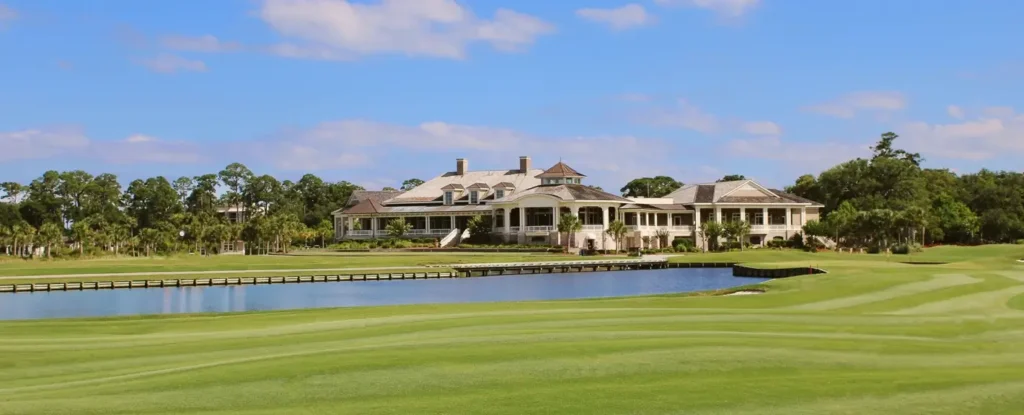
A 605-acre spread of seaside forests and gorgeous wetlands, Kilmarlic is a consistent top-rated OBX course. Designed by Tom Steele, it routes golfers under giant canopies of native oak, dogwood, and pine. The greens are pristinely conditioned year-round. It’s the kind of course where you lose track of score because you’re too busy looking around.
Insider Tip:
Kilmarlic sits just off the mainland near the Wright Memorial Bridge, ideal if you’re arriving from the west and want to play before you even check in.
The NC Golf Coast: Brunswick Islands and Wilmington
Brunswick Islands, the string of barrier islands and mainland communities between Wilmington and the South Carolina line, didn’t earn the nickname “North Carolina’s Golf Coast” by accident. The density of quality courses here rivals anywhere in the country. Sunset Beach, Ocean Isle, and Calabash form a quiet, green corridor that serious golfers have known about for decades.
Course No. 04: Oyster Bay Golf Links
Sunset Beach / Ocean Isle Beach, NC
A longstanding favorite along the Intracoastal Waterway, Oyster Bay is the kind of course that rewards multiple visits. It handles all skill levels without feeling like it’s doing you any favors, the 18 holes are picturesque and genuinely challenging. The Intracoastal is never far from view, and the natural coastal setting keeps things honest.
Local’s Take:
Oyster Bay sits inside the Ocean Ridge Plantation community, the same resort with four championship courses, including the famous “Big Cats.” If you’re spending a few days in the Brunswick Islands, book Ocean Ridge as your base. One price, four world-class courses.
Course No. 05: Wilmington Municipal Golf Course (“The Muni”)
Wilmington, NC
A Donald Ross design that has served the Wilmington golf community since 1926, The Muni is the rare historic public course that’s actually worth your time, thanks to a 2014 restoration by architect John Fought that returned it faithfully to Ross’s original vision. Golf travel writers have called it one of the best municipal courses in the country. The price is right, the history is real, and the Ross fingerprints are everywhere: crowned greens, strategic bunkering, and fairways that punish lazy play.
What Most Visitors Don’t Know:
Many visitors skip The Muni for flashier resort options. That’s a gift to the locals who play it on weekday mornings. Weekday tee times are easy to snag and significantly cheaper.

Course No. 06: Bald Head Island Club
Bald Head Island, NC: Accessible by ferry only
Here’s where it gets genuinely special. The Bald Head Island Club requires a passenger ferry from Southport, no cars allowed on the island, full stop. The George Cobb design from 1974, recently restored by Tim Cate, routes through freshwater lagoons and natural sand dunes. Tim Cate’s restoration was honored as one of America’s top five course renovations by LINKS magazine.
This is a once-in-a-trip experience. The combination of island isolation, fine dining, and a championship course makes it an event rather than just a round.
Insider Tip:
You need to register for a guest pass to play here. Plan ahead. The logistics are part of the adventure, and golfers who make the effort rarely regret it.
“Down here, the course condition isn’t just the grass. It’s the salt air, the sound water, and the ibis standing in the rough daring you to rush your backswing.”
Myrtle Beach and the Grand Strand: The Golf Capital of the East
Myrtle Beach doesn’t need an introduction in golf circles. The Grand Strand has more than 80 courses, stretching from the South Carolina Lowcountry to the NC border. The designers who built here read like a hall of fame: Robert Trent Jones, Jack Nicklaus, Pete Dye, Fred Couples, Arnold Palmer. Think of the Grand Strand in three zones, South, Central, and North, and you can build a week-long itinerary without repeating yourself.
Course No. 07: Caledonia Golf & Fish Club
Pawleys Island, SC
Ask any serious Grand Strand golfer which course they’d play if they could only play one, and Caledonia comes up more than any other. The antebellum plantation setting, draped with Spanish moss, ancient live oaks, and rice field canals, sets a tone that no other course in the region matches. It is, without qualification, one of the most beautiful courses on the East Coast. The routing is equally strong: a Mike Strantz design that uses the natural landscape with precision and imagination.
Local’s Take:
Its sister course, True Blue Golf Club (also Strantz), is a few miles away and frequently bundled in packages. If you play Caledonia, play True Blue the next day. They share design DNA but feel completely different.
Course No. 08: Dunes Golf and Beach Club
Myrtle Beach, SC
The Dunes is the Grand Strand’s most storied classic. Robert Trent Jones Sr. designed it in 1948, and it remains a benchmark for strategic coastal golf. The stretch known as “Alligator Alley”, holes 11 through 13, features water-lined corridors that have humbled thousands of confident golfers. This is a member-owned club that offers public play, which means the course conditions are maintained to a high standard year-round.
What Most Visitors Don’t Know:
The 18th hole plays along Lake Whispering Pines. It looks temptingly open off the tee. It isn’t. Club down, play to the fat part of the fairway, and take your par gratefully.
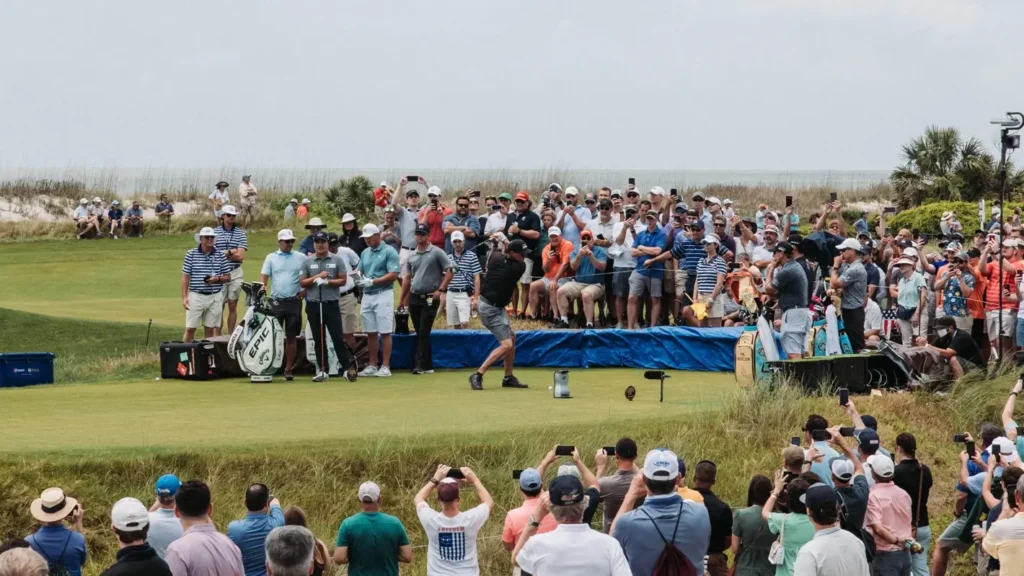
If golf brings you to the Carolina coast, time your trip around the Myrtle Beach World Amateur Championship. Running August 31 through September 4, it’s the largest amateur golf event of its kind, spread across nearly every notable course on the Grand Strand. Get the details in our World Am 2026 guide, including sponsors, celebrity appearances, and lodging picks.
Hilton Head and the Lowcountry: Golf with a Lighthouse in the Background
Hilton Head Island is, by any honest measure, one of the premier golf destinations in the United States. A 12-by-5-mile sea island with 24 championship courses, designs by Pete Dye, Jack Nicklaus, Robert Trent Jones Sr., and Davis Love III, all of it wrapped in the lush, ancient Spanish moss of the South Carolina Lowcountry. Add in the RBC Heritage, a PGA Tour stop hosted here annually, and Hilton Head earns every superlative thrown at it.
Course No. 09: Harbour Town Golf Links
Sea Pines Resort, Hilton Head Island, SC
If the Carolina coast has a single most iconic golf hole, it’s the 18th at Harbour Town, a par-4 played along the Calibogue Sound with the red-and-white-hooped Harbour Town Lighthouse standing directly behind the green. Pete Dye designed it with input from Jack Nicklaus, and it opened in 1969. Since then, it has hosted the PGA Tour annually without interruption. The postage-stamp greens and precise demands on every shot make it as challenging as it is photographed.
Spring and fall bring the ideal conditions, mild temperatures, manageable winds, and no summer humidity to slow your pace.
Insider Tip:
Play from whatever tee box suits your actual game. Harbour Town punishes ego. The course is designed to reward precision over power, which means a mid-handicapper playing from the right tees has just as compelling a round as any scratch golfer.
Course No. 10: The Ocean Course, Kiawah Island Golf Resort
Kiawah Island, SC
This is the big one. Pete Dye’s Ocean Course sits on a barrier island south of Charleston, and it hosted the 1991 Ryder Cup, a week so dramatic it became known as “The War by the Shore.” It has since hosted multiple PGA Championships. Ten holes run directly alongside the Atlantic Ocean. The wind is constant and unpredictable, shifting direction throughout the round. Par, from the correct tees, is a genuine achievement, and a worthy one.
Despite its championship pedigree, the Ocean Course is surprisingly fair for amateurs who choose their tee boxes wisely. The experience: the sound, the salt air, the history underfoot, is unlike anything else on the Carolina coast.
Local’s Take:
Check the wind forecast before you book. The Ocean Course plays entirely differently depending on which way the Atlantic is blowing that morning. A south wind turns certain holes from birdie opportunities to bogey battles. Factor that into your expectations.
Planning Your Carolina Coast Golf Trip: What to Know Before You Go
The Carolina coast’s golf season is essentially year-round, but the sweet spots are clear. Spring (March through May) delivers perfect temperatures, lush course conditions, and manageable crowds. Fall follows the same script. Summer is hot and humid, but the courses fill with families on vacation. Winter offers off-season pricing and uncrowded fairways for those willing to layer up.
Tee times on the most popular courses, Harbour Town, Caledonia, and The Ocean Course, book out weeks or months in advance during peak season. Plan ahead. This isn’t Myrtle Beach’s smaller public tracks; these are courses with genuine demand.
Meanwhile, the midweek advantage is real. Tuesday through Thursday, courses along the Grand Strand frequently drop rates significantly. Myrtle Beach has more than 80 options at every price point, and the value plays, Farmstead Golf Links, Leopard’s Chase Golf Links, just over the NC border, consistently earn strong reviews at a fraction of the resort prices.
Golf isn’t the only reason to head toward Wild Dunes and Isle of Palms. The northern tip near the resort stays surprisingly quiet on the sand, too; see our guide to Charleston’s hidden beach spots for where else to go before or after your round.
Frequently Asked Questions
What is the best time of year to golf on the Carolina coast?
Spring (March through May) and fall (September through November) are the prime windows. Temperatures are mild, conditions are excellent, and the punishing summer humidity has either not yet arrived or mercifully departed. That said, courses operate year-round, winter rounds at reduced rates are a real option for the cold-tolerant golfer.
Is Harbour Town Golf Links open to the public?
Yes, Harbour Town is a resort course at Sea Pines Resort on Hilton Head Island and is open to the public, though green fees are at the higher end of the island’s pricing spectrum. Staying on-property at Sea Pines can reduce costs and simplify logistics. Tee times book quickly during the RBC Heritage week in April, so plan accordingly if you’re visiting then.
How many golf courses are in the Myrtle Beach area?
The Grand Strand area, which stretches from the Horry County coastline north into Brunswick County, NC, has more than 80 golf courses. They range from wallet-friendly public tracks to resort-caliber championship layouts designed by legendary architects. It’s widely considered one of the largest golf destinations by course density in the United States.
Can beginners play at courses like The Ocean Course or The Currituck Club?
Yes, with realistic expectations. Both The Ocean Course at Kiawah and The Currituck Club are open to players of all skill levels, and both offer multiple tee boxes designed to make the courses enjoyable, not just survivable, for higher handicappers. The key is selecting the appropriate tee, keeping pace of play up, and accepting that coastal wind is going to humble you regardless of your handicap.
What makes coastal Carolina golf different from inland courses?
Wind is the defining variable. Sound-side and oceanfront holes don’t play the same way twice. A tailwind on hole 7 can become a gale-force headwind on the back nine. Coastal hazards (salt marshes, lagoons, dune waste areas, and tidal creeks) replace the water and sand features you find inland. And the natural scenery with live oaks, native grasses, egrets walking the fairways, creates an atmosphere that no inland course fully replicates.
What is the best value golf course on the Carolina coast?
Wilmington Municipal Golf Course (“The Muni”) is a perennial answer. It’s a Donald Ross original restored to its historic integrity course, at public course prices. In the Grand Strand, Farmstead Golf Links and Leopard’s Chase Golf Links (just over the NC border from North Myrtle Beach) consistently earn top reviews at rates well under $125. On Hilton Head, Old South Golf Links in Bluffton offers legitimate Lowcountry golf for under $100.
Notes:
- Green fees: All pricing referenced is approximate and sourced from 2024–2025 reports. Confirm current rates directly with each course before publishing especially for Harbour Town, The Ocean Course, and Caledonia, which adjust seasonally.
- Bald Head Island guest pass process: The requirement to register for a guest pass to play the Bald Head Island Club should be confirmed directly with the club, as access policies may have changed.
- LINKS Magazine renovation award (Bald Head Island): The specific year and exact award language sourced here as one of “America’s top five renovations in 2011.”
- The Muni restoration year: Cited as 2014 across multiple sources, but confirm with the City of Wilmington or the course directly.
- Ocean Course Ryder Cup details: The 1991 Ryder Cup and “War by the Shore” nickname are well-documented, but confirm the most recent PGA Championship year hosted there.
- Golf Digest ranking for Nags Head Golf Links: Referenced as Top 50 but verify the current ranking, as Golf Digest updates its rankings periodically.
- Caledonia designer: Multiple sources confirm Mike Strantz as the designer. Verify this is consistent with the course’s own official history page.
- Course access at Bald Head and Country Club of Landfall: Both have private or semi-private elements. Confirm public access details and any guest requirements have not changed.
- Seasonal variation note: Fall and spring recommendations apply broadly across the coast, but Hilton Head and the Lowcountry are generally warmer in winter than the Outer Banks. Consider noting this distinction for planning around specific regions.
Planning a Carolina beach trip? Use our Beach Finder Quiz to get a personalized recommendation, or compare any two beaches side by side with the Carolina Beach Comparison Tool.
📱 Download our free Carolina Beaches app — Get it here