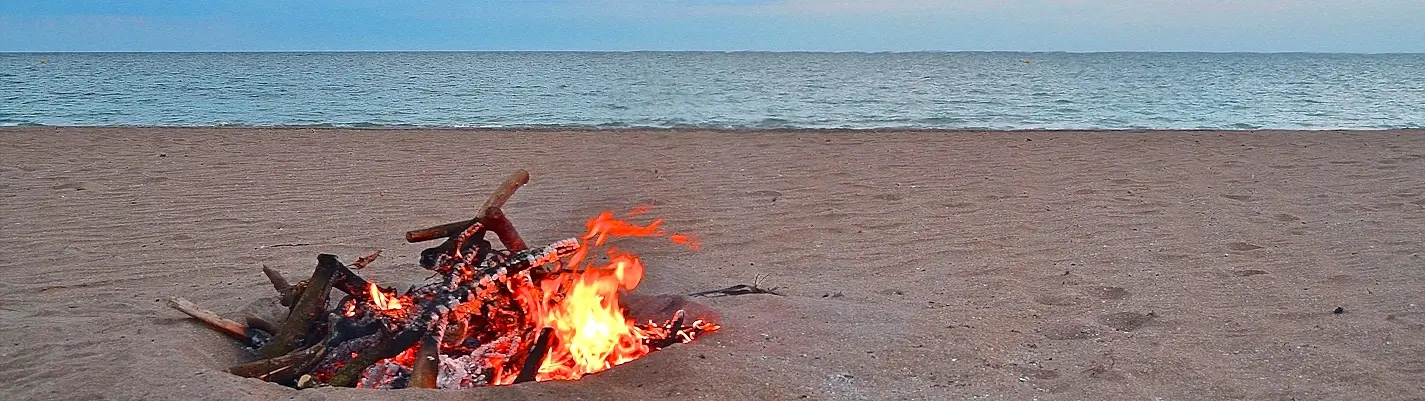
There’s a particular kind of November night on the Carolina coast. The crowds have gone home. The air finally has a bite. And the beach, packed all summer, is suddenly all yours.
That’s bonfire season. But here’s the catch: most Carolina beaches ban open fires outright. Light one in the wrong town, and you’ll meet a police officer instead of a sunset.
So where can you legally have a beach bonfire in the Carolinas? Fewer places than you’d hope, and more than you’d fear. This is the coast-wide guide.
(Affiliate Disclosure: This page contains affiliate links. If you book through them, we may earn a small commission at no extra cost to you.)
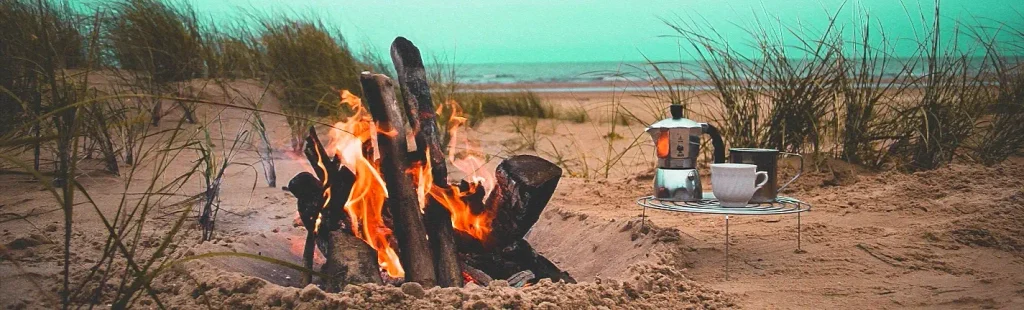
The short answer
Want the fastest path to a legal bonfire? Oak Island, North Carolina issues free permits from mid-November through April. On the Outer Banks, Cape Hatteras National Seashore and Nags Head offer free permits. In South Carolina, Sullivan’s Island is your best bet, though the permit costs real money. Everywhere else, check the town first. Fines run $500 to over $1,000, and some towns add jail time.
North Carolina: where the fires are allowed
Oak Island: the gold standard
Oak Island runs the friendliest bonfire program on the coast. Permits are free from the fire department. The season runs November 16 through April, timed to the end of sea turtle nesting. Apply within 72 hours of your planned fire.
Locals’ take: The 72-hour window means you can watch the forecast and pick the calmest night. That matters more than it sounds. Wind is the number-one fire killer on an open beach.
Cape Hatteras National Seashore: the Outer Banks workhorse
The seashore covers Ocracoke, Hatteras, Frisco, Buxton, Avon, Salvo, Waves, and Rodanthe. Beach fires are allowed with a free National Park Service permit. Keep the fire under three feet across. Build it below the high-tide line. Kill it completely before you leave.
From May 1 through November 15, fires are limited to designated beaches near village day-use areas. From November 16 through April 30, they’re allowed park-wide unless posted closed. No fires between 10 p.m. and 6 a.m. Stay 100 meters clear of turtle nest closures.
What most visitors don’t know: You can grab the permit at tackle shops and grocery stores, not just ranger stations. Screenshot it. Rangers do check.
Nags Head: permit, and you’re golden
Nags Head allows beach bonfires with a town permit, reportedly free. Confirm current details with the town before you haul wood across the bridge.
Bald Head Island: permitted, with polish
On Bald Head Island, get your permit from Village Public Safety. Fires must be out by 11:59 p.m. Burn only natural, untreated wood. If winds top 10 mph, the answer is no. Stick to the designated beach access points.
Caswell Beach: owners only
Here’s the quirky one. Caswell Beach issues bonfire permits only to property owners, with a $300 refundable deposit. Everything must be out by 11 p.m. No fires during turtle season, May through September. Just visiting? Befriend a homeowner.
Honorable mentions
Currituck County (Corolla and Carova) bans open bonfires but allows covered portable fire pits; haul the pit off the beach each evening. At Carolina Beach’s Freeman Park, the drive-on 4×4 beach, locals report fires are allowed in fire containers. Masonboro Island Reserve, reachable only by boat off Wrightsville Beach, allows campfires on its undeveloped shoreline. That’s the adventure pick.
South Carolina: one standout
Sullivan’s Island: the exception that proves the rule
Sullivan’s Island is the only Charleston-area beach that allows bonfires, and it doesn’t make it cheap or casual. Apply in person at Town Hall. You must be 21 or older and stay with the fire the entire time.
Non-residents pay $100 plus a $500 refundable deposit; residents pay $25 plus $250. Apply 24 hours to two weeks ahead. Skip holiday weekends. Call the fire department the day of for final verification. Everything out by 11 p.m., site spotless by 10 a.m. the next day. Skip the permit and the fine is $500.
Local’s take: The deposit is the real rule. The town refunds it only if the site is clean within a 100-foot radius. Bring trash bags and a rake.
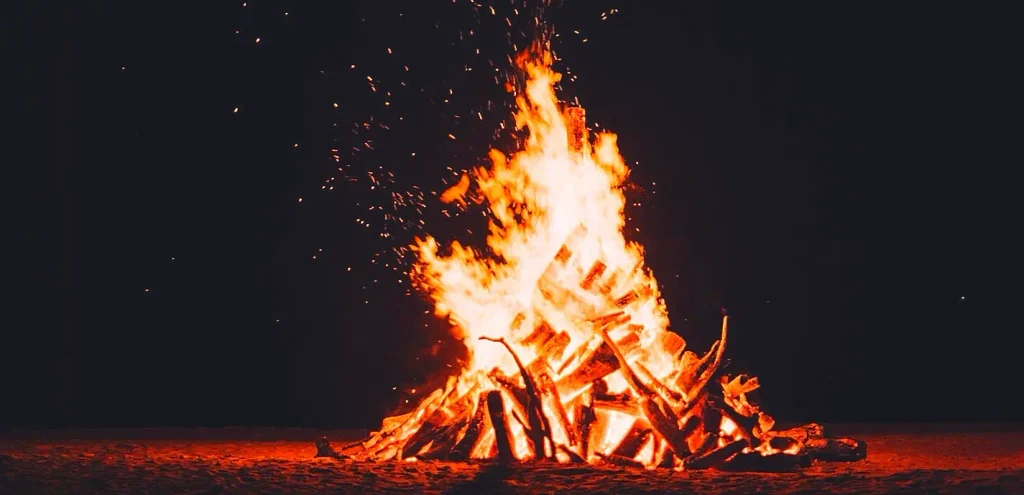
Beach bonfire Outer Banks permit rules, town by town
The Outer Banks confuses everyone because each town writes its own rules. Here’s the cheat sheet, north to south.
Corolla and Carova: no open bonfires, but covered portable fire pits are fine. Remove them nightly. Duck: no. The town’s official beach rules list bonfires as not permitted, full stop. Southern Shores: no. Kitty Hawk: restricted, with conflicting reports on the current ordinance, so call the town first. Kill Devil Hills: no. The town bans open burning entirely, beach included. Nags Head: Yes, with a town permit. Cape Hatteras National Seashore, south of Oregon Inlet: yes, with a free NPS permit and the seasonal zone rules above.
One more wrinkle: statewide burn bans override everything. When North Carolina declares a drought burn ban, even permitted beaches go dark. Always check conditions the week of your trip.
Beaches that ban bonfires outright
Memorize this list before you pack the marshmallows. These towns prohibit beach fires with no permit path, and the penalties are real.
Myrtle Beach: all fires banned, including barbecues. Misdemeanor, up to $500 and possible jail time. North Myrtle Beach: open flames banned. Up to $500 or a month in jail. Hilton Head Island: no fires anywhere on the beach. Fines reach $1,087.50 plus 30 days in jail. Isle of Palms: no open fires. Folly Beach: no. Edisto Beach: no. Kure Beach: no fires or cooking of any kind on the strand, tiki torches included. Wrightsville Beach: banned by town ordinance; no exceptions on the strand. Kiawah Island: no, except approved cooking grills at Beachwalker County Park.
The pattern is simple. Bigger, more developed beach towns almost always say no. The permit beaches tend to be quieter, wilder, or both.

How to do one right
Wood: buy it local
Grab firewood near the beach, not from home. Coastal grocery stores, tackle shops, and hardware stores all stock bundles in season. Hauling wood long distances spreads tree pests. Never burn pallets, painted lumber, or pressure-treated wood. The chemicals are toxic, and the nails become tire-poppers for morning beach drivers. Driftwood looks romantic and burns terribly. Skip it.
Safety: the non-negotiables
Bring a five-gallon bucket of water and a shovel. Set up at least 50 feet from dunes and vegetation. Keep the fire small. A three-foot fire cooks s’mores just as well as a car-sized one. Never leave it unattended. Wind shifts fast on an open beach. When you’re done, drown it, stir the ashes, and drown it again. Then fill in the pit. Buried coals have burned morning walkers badly. Leave no trace means the ashes too.
S’mores logistics: think like a caterer
The classic kit is graham crackers, chocolate bars, and marshmallows. Buy the chocolate last so it doesn’t melt in a warm car. Bring extendable roasting sticks. Cheap bamboo skewers snap and drop marshmallows into the coals. A cast-iron pie iron makes next-level s’mores with zero mess. Pack a trash bag for sticky wrappers. And check the alcohol rules before you pack the cooler. Many Carolina beaches ban alcohol and glass entirely.
Make a night of it
A November bonfire pairs perfectly with an off-season beach weekend. Hotel rates drop hard after Labor Day. Compare nearby stays on Travelocity to find the best deal near your bonfire beach.
Bringing the dog? Red Roof Inn is famously pet-friendly with no pet fees at most locations, a budget-smart basecamp for a coastal weekend. Book the room, build the fire, and sleep well.

Frequently asked questions
Do I need a beach bonfire Outer Banks permit?
Cape Hatteras National Seashore and Nags Head require free permits. Kill Devil Hills, Duck, and Southern Shores ban beach fires entirely. Verify with the specific town before you go.
When is bonfire season on the Carolina coast?
Most permit seasons run November through April, timed around sea turtle nesting season. Oak Island’s season starts November 16. Cape Hatteras allows park-wide fires November 16 through April 30. Summer is almost universally a no.
How much does a beach bonfire permit cost?
Often nothing. Oak Island, Cape Hatteras, and Nags Head permits are free. Sullivan’s Island is the pricey outlier at $100 plus a $500 deposit for non-residents.
Can I just dig a pit anywhere and light it?
No. Every legal bonfire beach has rules about location, size, materials, and hours. Fires generally must stay small, use clean wood only, and sit well clear of dunes and vegetation.
What wood should I burn?
Clean, dry, untreated firewood bought locally. Never burn pallets, painted or pressure-treated lumber, trash, or driftwood full of nails and salt.
What happens if I get caught without a permit?
Fines run $500 to over $1,000 depending on the town, and some add possible jail time. It is never worth the gamble.
The Carolina coast does winter better than almost anywhere. Empty beaches, sharp stars, and a legal fire at your feet. Pick your town, pull your permit, and go make some smoke.
For more Carolina vacation area guides and Carolina coastal travel inspiration, dive deeper into explorecarolinabeaches.com and our Festival Guides.

Planning a Carolina beach trip? Use our Beach Finder Quiz to get a personalized recommendation, or compare any two beaches side by side with the Carolina Beach Comparison Tool.
📱 Download our free Carolina Beaches app — Get it here