
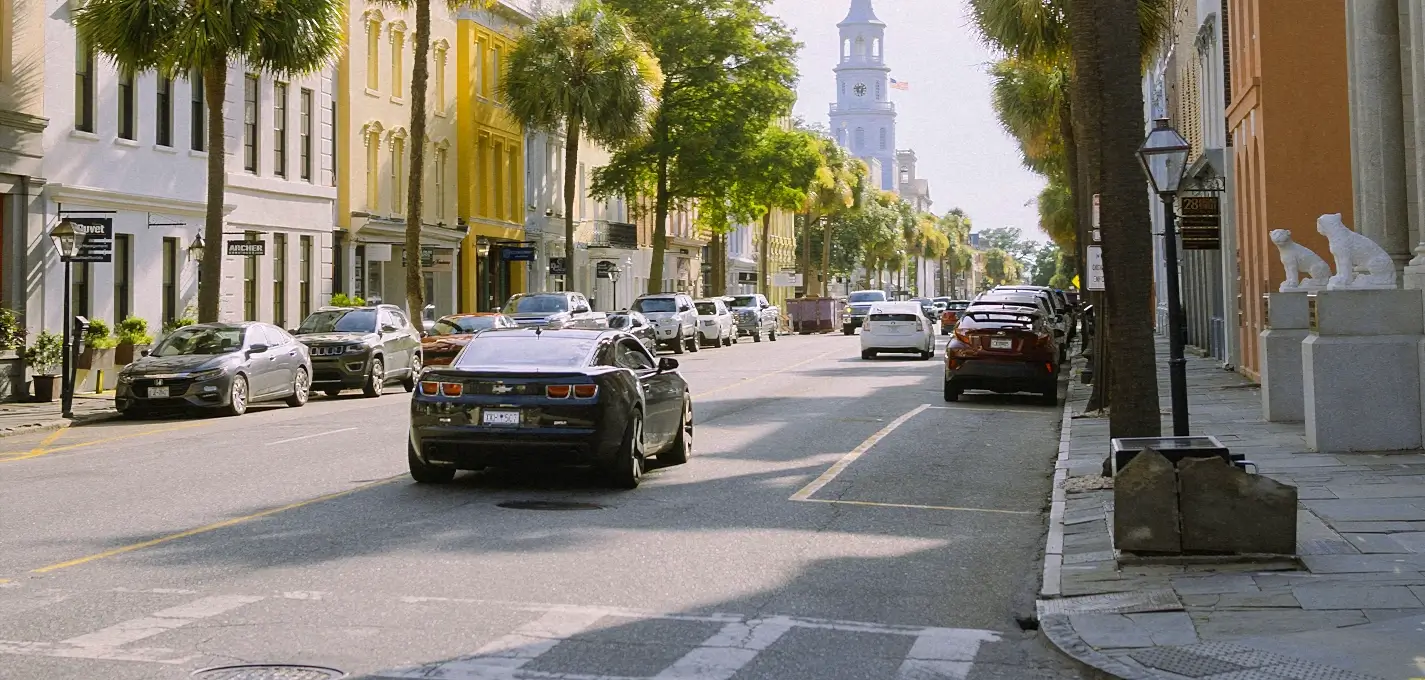
This year, a little camera mounted on a pole has already taken a picture of your license plate if you drive on practically any road along the Carolina coast. From Corolla to Hilton Head, intersections are now covered by Flock Safety cameras, which covertly create a permanent record of your driving habits. Police agencies maintain that the technology targets only criminals. That assertion is untrue. Whether you’ve ever broken the law or not, every camera scans every car and records that information. It is hard to overlook the pattern after a year of town hall disputes, at least one verified instance of misuse, and silent contract renewals that no one voted on: surveillance comes first, safety comes second.
Affiliate Disclosure: This page contains affiliate links. If you book through them, we may earn a small commission at no extra cost to you.
What These Cameras Actually Track
Every passing car is instantly captured on camera by a Flock camera. After recording the car’s make, color, and license plate, it enters all of the data into a searchable database. Although departments assert that the system does not directly identify drivers, in reality, this distinction is meaningless. When enough license plate scans are combined, detectives may piece together a person’s whole schedule, including work, home, doctor’s appointments, and even a late-night drive that is only their own.
In March 2026, Wrightsville Beach turned on its cameras, promising meticulous monitoring right away. That promise fell apart in a matter of months. An internal audit discovered that a previous officer had obtained information from two car tags without a valid reason. She was charged by the State Bureau of Investigation in September and is no longer employed by the agency. This is referred to by town officials as evidence that the system is effective. In actuality, it demonstrates the opposite: nothing prevented the abuse other than the chance that someone might happen to notice.
Locals’ take:
Longtime Wrightsville Beach residents describe an uneasy shift since March. A quick grocery run now means getting logged at multiple intersections, whether or not anyone’s watching for the right reasons.
The Outer Banks Divide
Dare County is one of the most frequently monitored areas of North Carolina per resident, with approximately 50 Flock cameras packed into Kill Devil Hills, Nags Head, Kitty Hawk, and Southern Shores. For a town of only a few thousand residents, Southern Shores alone recorded over 35,000 distinct vehicles in a single month.
When locals saw it, they pushed back. Commissioners at Kill Devil Hills publicly disagreed on the program in August. A commissioner referred to it as “ripe for abuse.” That annoyance was not limited to a single meeting. A few weeks later, when over a dozen irate people attended a single public comment session, Dare County commissioners decided to completely remove cameras from the county’s unincorporated areas.
The majority of visitors never notice any of this. Driving on Highway 12, visitors believe that any surveillance is related to storm evacuations rather than year-round tracking. Before lunch, a few people are unaware that their plate has been logged once in Kitty Hawk, once more in Kill Devil Hills, and once more in Nags Head.
Your route in is repeatedly examined before you even unpack the car if you’re staying close to Kill Devil Hills, making reservations through Travelocity, or settling into an inexpensive stop like Red Roof Inn.
Wilmington’s Wider Web
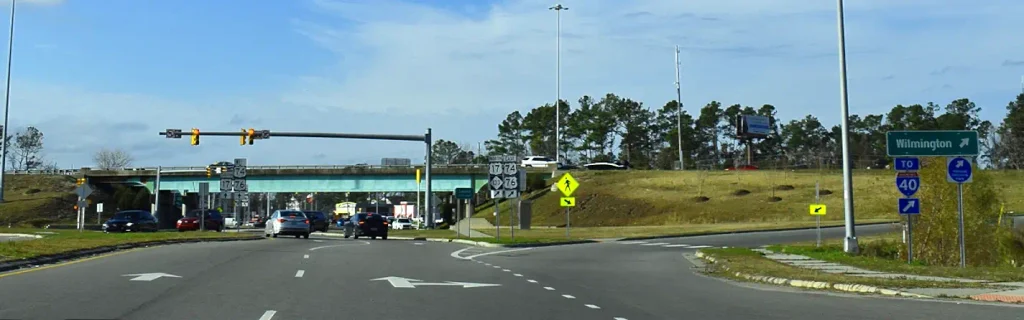
Compared to nearly every other location along the shore, New Hanover County advanced the idea. In addition to running 36 of its own license plate readers, the sheriff’s office uses a different networked system to add access to over 2,100 private and commercial cameras. With significantly less public accountability, this combination gives investigators real-time access to thousands of video feeds, far more than what the government itself placed.
An even greater issue is revealed by Kure Beach‘s own records. The little camera network in that one town was the subject of almost 31,000 searches by federal authorities, including the FBI and the U.S. Postal Inspection Service. Researchers believe that entities outside of North Carolina account for about 90% of all queries conducted against the state’s camera systems. Your information is not local.
What most visitors don’t know:
A warrant is not needed for any of these searches. The only true check is an after-the-fact audit, which detects abuse after it has already occurred rather than before. An officer merely needs to fill in a reason.
Grand Strand and Charleston Push Back
Although South Carolina prohibits these cameras from being used just for traffic enforcement, the issue of spying is as pervasive. After locals expressed concern, Horry County police defended the Grand Strand‘s camera network in a Facebook video in August. More than a thousand dubious comments were made after it backfired. The department’s “you shouldn’t be nervous” messaging was criticized by the South Carolina ACLU as precisely the kind of assurance that ought to increase anxiety rather than decrease it.
Charleston has been using cameras since a trial project in 2019, longer than almost any other location on our list, but even that early advantage hasn’t yielded clear outcomes. In a covert acknowledgment that the previous window retained much too much information for far too long, the agency recently reduced its default data retention from thirty days to seven. This modification came after a number of instances of wrongdoing by officers in other parts of the state, such as the dismissal of an officer from the Greenville region for utilizing the same technology to track a former partner over 160 times.

Hilton Head’s Growing Camera Footprint
There are now about 10 mapped Flock cameras on Hilton Head Island, which is a small number when compared to the Outer Banks. That won’t last for long. With little public discussion before construction began, municipal officials expedited a considerably larger camera expansion at the island’s biggest beach access points following a July 4th shooting near Coligny Beach that left seven people injured.
Town officials present this as a simple safety measure. It fits with a larger, more concerning pattern throughout both coastlines: when something goes wrong, the number of cameras increases overnight, and locals are rarely asked first. Even before the new hardware is installed, regular visitors to Coligny’s parking lots report that the atmosphere has already changed.
Why This Should Bother You
There isn’t a true off-ramp for any of this. The removal of Flock cameras requires a level of public indignation comparable to Dare County’s, and most towns never assemble such a backlash. In the meanwhile, almost everyplace you stop, refuel, or eat dinner along the coast, your license plate leaves a digital trail that travels farther and lasts longer than most people realize.
There shouldn’t be a surveillance disclosure when you book a beach vacation, but here we are. Whether you book your rental through Travelocity or at a roadside Red Roof Inn, it’s important to be aware that the trip is recorded, cataloged, and possibly searched by an unfamiliar organization.
Accuracy Note
Local legislation, camera numbers, and retention policies are subject to frequent changes, often on a monthly basis. In September 2026, the unincorporated villages in Dare County withdrew their cameras; however, as of this writing, Kill Devil Hills and Nags Head had not done so, despite comparable public pressure. Each state has its own retention windows and sharing agreements, and South Carolina and North Carolina have very different laws regarding permissible uses. Since neighboring towns frequently treat things quite differently, it is always advisable to personally examine the current policy of a particular town.
The Carolina Coast Is Still Worth the Drive
Cameras or not, sunrise over the Outer Banks and low tide on Hilton Head haven’t lost their pull. But the surveillance creeping into that experience deserves real scrutiny, not just a company’s reassurance that “it’s not tracking you.” Ask questions at the next town meeting. Push for real limits before your town becomes the next Wrightsville Beach headline. The Carolina coast remains one of the most rewarding stretches of shoreline in the country; just know your plate might beat you to the beach, and it’s not leaving anytime soon.
Frequently Asked Questions
Are there any municipalities in Carolina that have taken down their cameras?
Yes, but only in response to persistent public indignation. Following strong opposition at commissioner meetings, Dare County commissioners decided in September 2026 to remove cameras from the county’s unincorporated areas.
Has anyone been found to be abusing the system?
Indeed. A Greenville-area police officer was fired for tracking a former partner more than 160 times, while a former Wrightsville Beach officer was convicted in September 2026 for accessing license plate data without a valid purpose.
Do the laws of North Carolina and South Carolina differ?
Yes, particularly, but neither state has enacted comprehensive legislation that significantly restricts the technology. Although pure traffic enforcement uses are restricted in South Carolina, supervision in both states still mostly depends on internal audits rather than external accountability.
Are facial recognition cameras used by Flock?
No, they only take still photos of cars and license plates. The resulting database nevertheless creates a picture of a person’s everyday movements over time, despite this limited technological differentiation.
For what length of time do towns retain the data?
Varies greatly and frequently for untrustworthy reasons. Kill Devil Hills only permits 30 days, although North Carolina permits up to 90. Charleston recently reduced its own 30-day limit to seven after realizing it was too long.
Can local Flock data be accessed by federal agencies?
Yes, regularly. Federal authorities execute tens of thousands of searches against Kure Beach’s local network, according to the company’s own statistics, and researchers estimate that the vast majority of queries in North Carolina come from organizations outside the state.
For more Carolina vacation area guides and Carolina coastal travel inspiration, keep exploring explorecarolinabeaches.com
Planning a Carolina beach trip? Use our Beach Finder Quiz to get a personalized recommendation, or compare any two beaches side by side with the Carolina Beach Comparison Tool.