
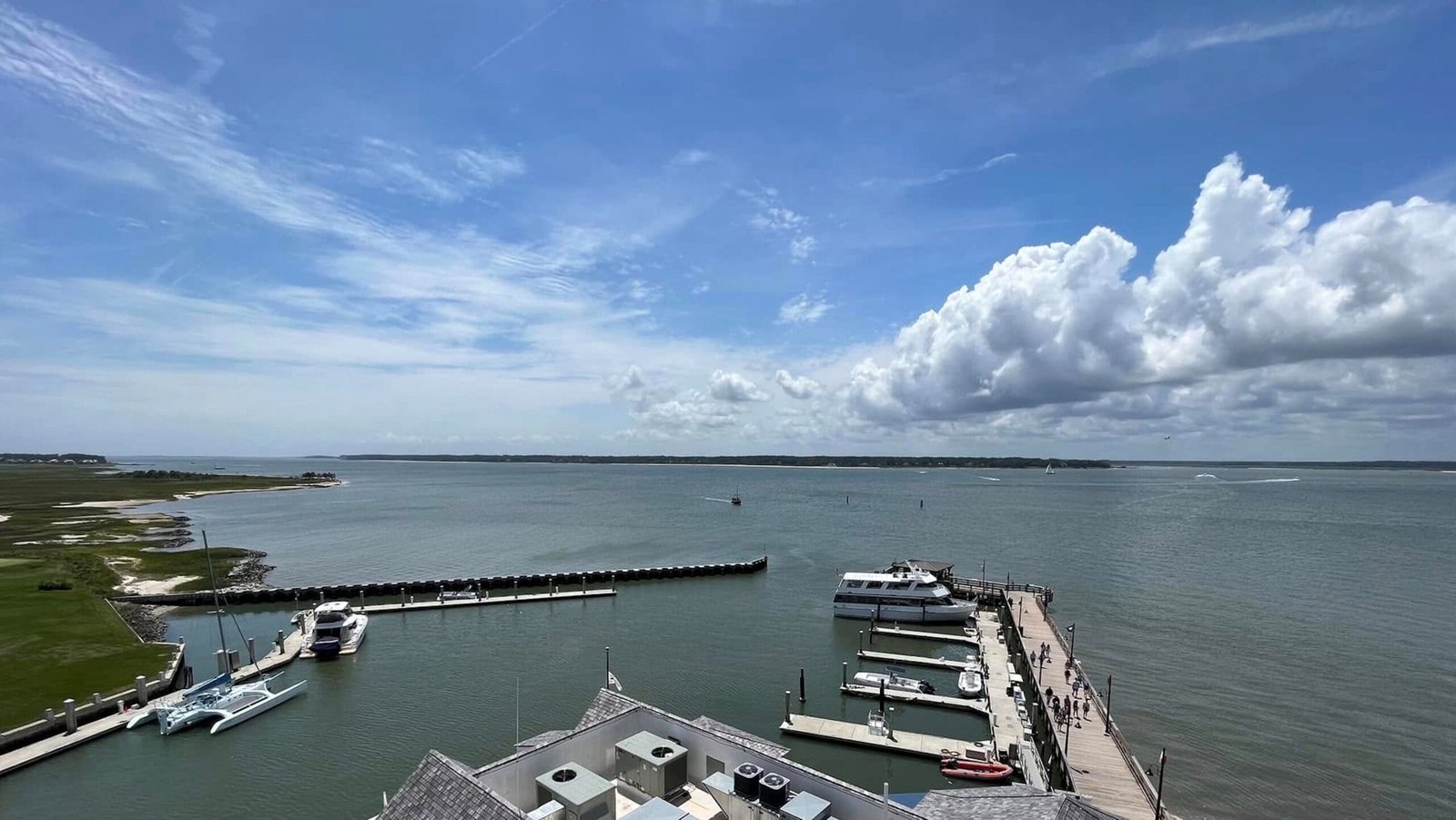
Most resort destinations pick one thing and lean into it hard.
Hilton Head Island refuses that logic entirely. It gives you 12 miles of pristine Atlantic beach, over 50 miles of public bike trails, 24 championship golf courses, Lowcountry dining that rivals what you’d find in Charleston, dolphin tours through tidal creeks, and a natural landscape so deliberately preserved that you won’t find a single billboard anywhere on the island.
Then it lets you decide what kind of vacation you actually want.
Located at the southern tip of South Carolina, about 45 minutes from Savannah, Georgia, and roughly two hours from Charleston, Hilton Head Island draws approximately 2.5 million visitors annually. That number sounds alarming until you arrive and realize the island handles its popularity with a calm, organized grace that most popular destinations completely fail to manage.
The Beach: 12 Miles of Wide, Accessible Atlantic Shoreline
Hilton Head’s beach runs 12 miles along the Atlantic and earns its reputation immediately. The sand runs wide, often 100 feet or more from the dune line to the water at low tide. The shoreline stays clean and well-maintained. The water runs warm from late spring through early fall, reaching the mid-80s Fahrenheit in peak summer.
One thing to understand about Hilton Head beach access before you go: all 12 miles of beach are public by South Carolina law. However, many of the access points route through private resort communities. That distinction matters practically for parking.
Coligny Beach on the southern end serves as the island’s main public beach hub. Free parking is available at Coligny year-round. It’s the only public beach access point with free parking on the island. Restrooms, outdoor showers, a playground, and a beach shop cluster near the access point. Additionally, Coligny Beach Park sits steps away with covered picnic areas and a children’s water play feature.
All other public beach access points charge parking fees. Since March 1, 2025, fees run $3 per hour Monday through Friday and $5 per hour on Saturdays and Sundays during peak season from March 1 through September 7.
The beach itself varies by location in ways worth knowing. The southern end near Coligny stays lively and social. The northern end runs quieter and more residential: wide, natural, and noticeably less crowded. Families seeking a calmer experience often prefer the northern stretches significantly.
Loggerhead sea turtles nest on Hilton Head beaches from May through October. The island actively participates in sea turtle protection programs, and finding a marked nest on a morning walk represents one of the quiet highlights of any Hilton Head visit.
Biking: The Best Way to Experience the Island
Hilton Head Island offers over 50 miles of public paved bike trails, and biking genuinely represents the best way to experience the island’s landscape. The trails wind through maritime forest, along the beach, past marshes and lagoons, and through resort communities with a seamlessness that feels almost too good to be true.
The sand here is compact enough for beach biking, too. Riding along the waterline at low tide, dolphins occasionally surfacing just offshore, delivers a travel moment most people describe as one of the best of any Carolina coast trip.
Bike rentals are available throughout the island from multiple shops, including Coastal Bike and Foot. Many vacation rental packages through resort communities like Sea Pines and Palmetto Dunes include bike rentals as part of the accommodation. Furthermore, e-bike tours of the island provide a guided option for visitors who want context along with the exercise.
One practical note: resort communities, including Sea Pines, Palmetto Dunes, and Shipyard, each maintain additional private trail networks inside their gates. Guests staying within those communities access substantially more trail mileage beyond the 50-plus public miles. Factor that into your rental location decision.
Rentals: Understanding Hilton Head’s Distinct Communities
Hilton Head organizes itself into distinct resort communities called plantations, and your choice of community shapes your entire experience. This is the most important planning decision you’ll make for a Hilton Head trip.
Sea Pines Resort anchors the southern tip of the island. Famous for Harbour Town, with its iconic candy-striped lighthouse, marina, shops, and restaurants, Sea Pines delivers the most complete resort experience on the island. Golf, biking, pools, tennis, beach access, and dining all sit within the community. Families, couples, and golfers all find it works exceptionally well.
Palmetto Dunes offers luxury oceanfront resorts alongside vacation rental homes and villas. The Omni Hilton Head Oceanfront Resort and the Hilton Head Marriott Resort & Spa both operate within Palmetto Dunes. World-class golf, tennis, and kayaking through the community’s lagoon system round out an impressive package. Additionally, rental properties here tend to be larger and suit multi-generational family trips particularly well.
Forest Beach sits closest to Coligny Beach and suits visitors who want walkable access to restaurants, shopping, and nightlife alongside their beach time. It’s the most social and least gated of the island’s neighborhoods, less resort, more beach town.
Shipyard Plantation provides a quieter mid-island option with golf, tennis, and beach access at generally lower price points than Sea Pines or Palmetto Dunes.
Booking realities: Summer weeks fill well in advance, especially the weeks surrounding July Fourth and Labor Day. Book four to six months out for peak summer stays. The off-season from December through February offers exceptional value: the weather stays mild, and the island’s facilities remain fully operational.
VRBO and Airbnb carry thousands of Hilton Head listings. Established local agencies, including Destination Vacation Hilton Head and Vacation Company, also manage extensive inventories across all communities and price points.
Food: Lowcountry Dining Done Right
Hilton Head’s restaurant scene delivers genuine quality across every price point and cuisine category. The island’s Lowcountry culinary tradition, built on fresh local shrimp, oysters, crab, and fish with Gullah-Geechee cultural roots, produces some of the most satisfying coastal food in the Southeast.
Hudson’s Seafood House on the Docks earns its legendary status with every meal. Opened in 1967, it sits on Skull Creek and serves shrimp and grits, fresh local oysters, and whole fried flounder to a loyal crowd that has been coming back for generations. Sunsets over the Intracoastal Waterway from the dock tables rank among the best free shows on the island. Go early, the wait gets serious.
Michael Anthony’s Cucina Italiana on New Orleans Road earns consistent best-of recognition from local and regional food publications for its handmade pasta and Italian-inspired menu. It’s a legitimate fine dining option that surprises visitors expecting only seafood.
Skull Creek Boathouse combines waterfront views, a raw bar, craft cocktails, and a casual-upscale atmosphere that works for everything from a post-beach lunch to a proper dinner. The shrimp cocktail is worth ordering immediately upon arrival.
Coligny Plaza on the southern end clusters multiple casual dining options within walking distance of the beach, useful for families who want variety without a long drive.
For Gullah-Geechee cultural dining, seek out local shrimp and grits, red rice, and Frogmore stew at restaurants around the island. The Gullah heritage runs deep in the Lowcountry, and the food reflects centuries of tradition worth honoring.
Beyond the Beach: What Else Earns Your Time
Golf defines Hilton Head’s national reputation. The island hosts 24 championship courses, including Harbour Town Golf Links, host of the annual RBC Heritage PGA Tour event every April. Non-golfers find the Harbour Town area worth visiting purely for the marina, the shops, and the iconic lighthouse climb.
Dolphin tours run daily from multiple marinas. Atlantic bottlenose dolphins feed in Hilton Head’s tidal creeks regularly, and dolphin tour companies, including Dolphin and Nature Tour, offer guaranteed sighting experiences. Plan at least one morning on the water.
The Coastal Discovery Museum provides the island’s best introduction to Gullah-Geechee history, Lowcountry ecology, and Hilton Head’s unique cultural heritage. Trail tours, crab discovery experiences, and educational programming suit all ages.
Pinckney Island National Wildlife Refuge sits just off the island and offers miles of trails through maritime forest and salt marsh with exceptional birding.
Practical Planning
Getting there: Hilton Head Island Airport handles limited regional flights. Savannah/Hilton Head International Airport in Savannah, Georgia, sits about 45 minutes away and offers far more flight options. A car is useful on the island, though biking handles most local movement within resort communities.
Best time to visit: May through June and September through October hit the sweet spot: warm weather, swimmable water, manageable crowds, and lower prices than peak July and August. Winter runs mild, and golf conditions stay excellent year-round.
Budget reality: Hilton Head is expensive. Peak summer rental rates within resort communities like Sea Pines carry premium price tags. Coligny Beach area properties and Shipyard offer more accessible price points. Factor in parking fees, restaurant costs, activity spending, and any golf into your total budget carefully.
The Bottom Line
Hilton Head Island earns its 2.5 million annual visitors without compromising what makes it worth visiting.
Twelve miles of Atlantic beach. Over 50 miles of trails. Two dozen championship golf courses. Lowcountry dining that makes every meal feel like an occasion. And a commitment to environmental preservation that keeps the whole island looking like it did decades ago: no billboards, no visual clutter, just the Lowcountry coast at its best.
Plan it well. Book it early. Rent the bikes immediately.
For more Lowcountry beach guides and South Carolina coastal travel inspiration, keep exploring explorecarolinabeaches.com
FAQ
Is Hilton Head Island good for families with young children?
Yes. Hilton Head is one of the most family-friendly beach destinations in the Southeast, offering wide beaches, gentle waves, bike paths, nature preserves, and plenty of kid-friendly activities.
When is the best time to visit Hilton Head Island?
April through June and September through October offer warm weather, lower humidity, and fewer crowds than peak summer. Summer is ideal for beach vacations but is the busiest season.
Are dogs allowed on Hilton Head Island beaches?
Yes. Dogs are allowed on many Hilton Head beaches, though seasonal leash and time-of-day restrictions apply. Check local regulations before visiting.
Is parking free at Hilton Head Island beaches?
Some beach parks offer free parking, while others charge fees or have limited public spaces. Arriving early is recommended during the summer season.
How far is Hilton Head Island from Charlotte, Raleigh, Cleveland, and Nashville?
Charlotte: about 275 miles (4.5–5 hours)
Raleigh: about 330 miles (5–6 hours)
Cleveland, Ohio: about 800 miles (12–13 hours)
Nashville, Tennessee: about 550 miles (8–9 hours)
What is Hilton Head Island known for?
Hilton Head is famous for beautiful beaches, world-class golf courses, miles of bike trails, Lowcountry scenery, upscale resorts, boating, and a relaxed coastal atmosphere.
What are the best restaurants on Hilton Head Island?
Popular local favorites include Skull Creek Boathouse for waterfront dining, Hudson’s Seafood House on the Docks for fresh local seafood, The Old Oyster Factory for sunset views, and Fishcamp on Broad Creek for Lowcountry cuisine and waterfront scenery.
Planning a Carolina beach trip? Use our Beach Finder Quiz to get a personalized recommendation, or compare any two beaches side by side with the Carolina Beach Comparison Tool.
📱 Download our free Carolina Beaches app — Get it here